
碱性胁迫和缺铁对根和叶组织中铁吸收及核黄素合成基因表达的调控存在差异:对缺铁黄化的影响
Alkaline stress and iron deficiency regulate iron uptake and riboflavin synthesis gene expression differently in root and leaf tissue: implications for iron deficiency chlorosis.
作者信息
Hsieh En-Jung, Waters Brian M
机构信息
Department of Agronomy and Horticulture, University of Nebraska-Lincoln, Lincoln, NE 68583-0915, USA.
Department of Agronomy and Horticulture, University of Nebraska-Lincoln, Lincoln, NE 68583-0915, USA
出版信息
J Exp Bot. 2016 Oct;67(19):5671-5685. doi: 10.1093/jxb/erw328. Epub 2016 Sep 7.
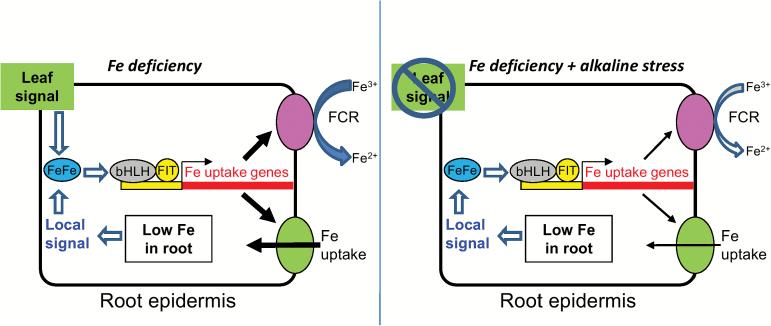
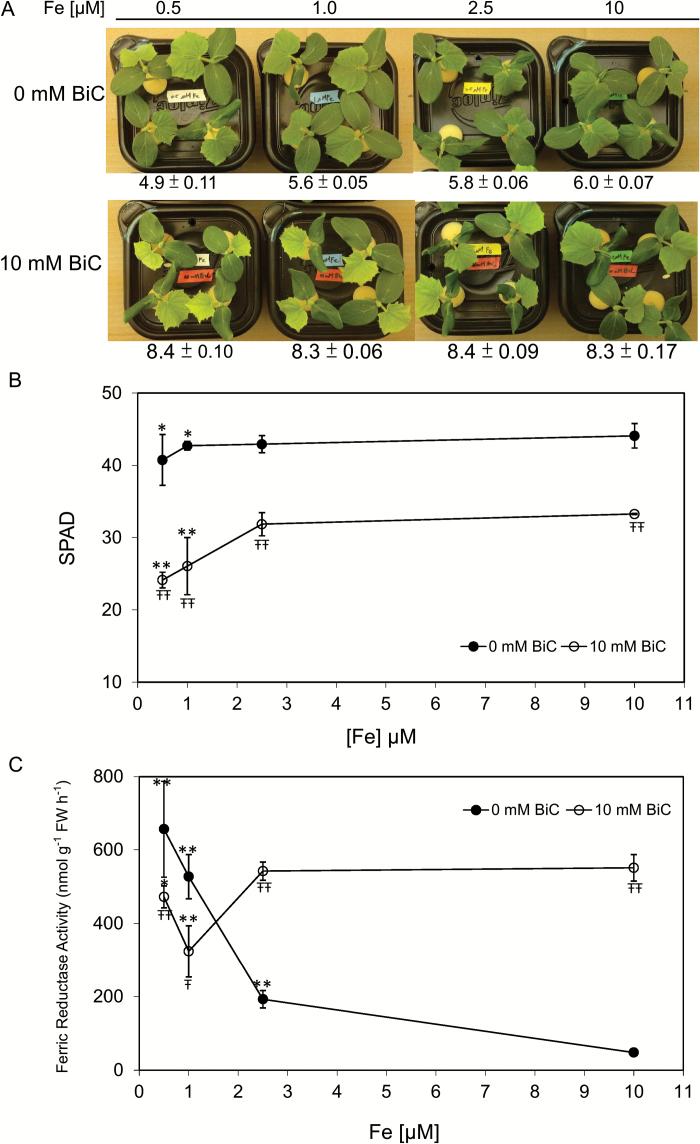
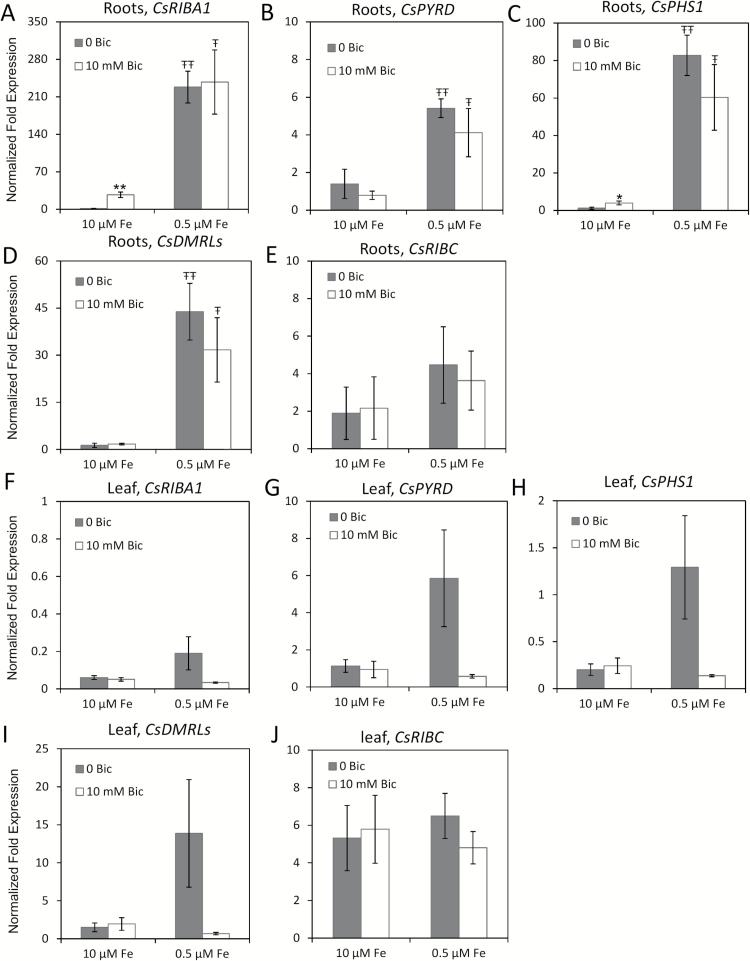
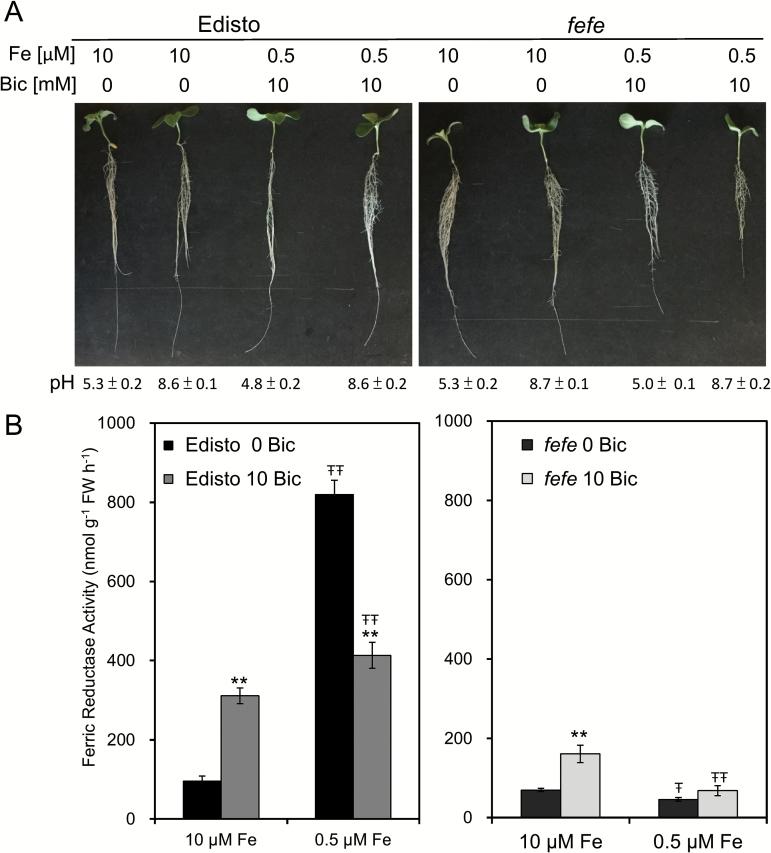
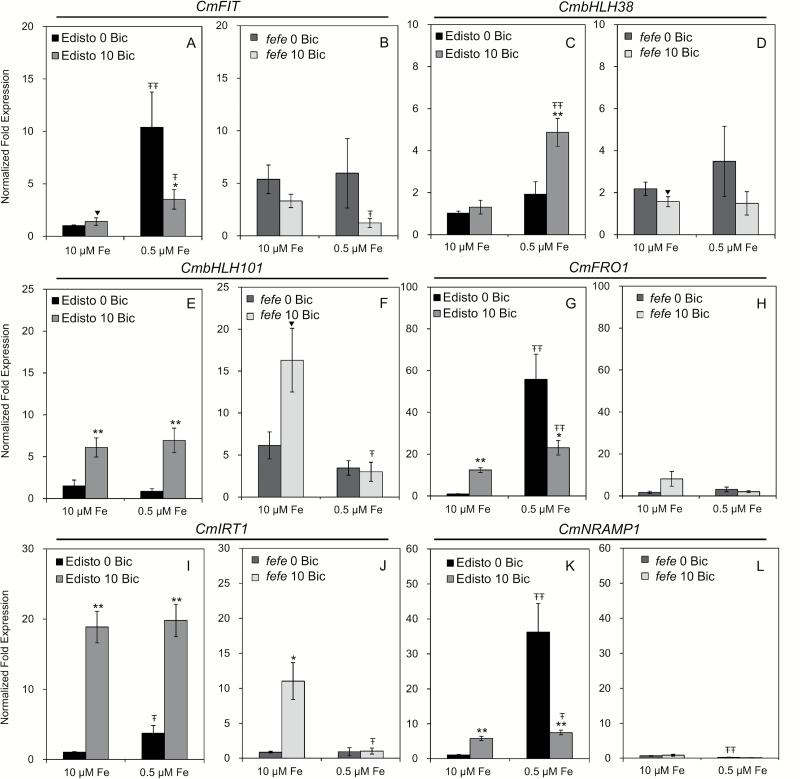
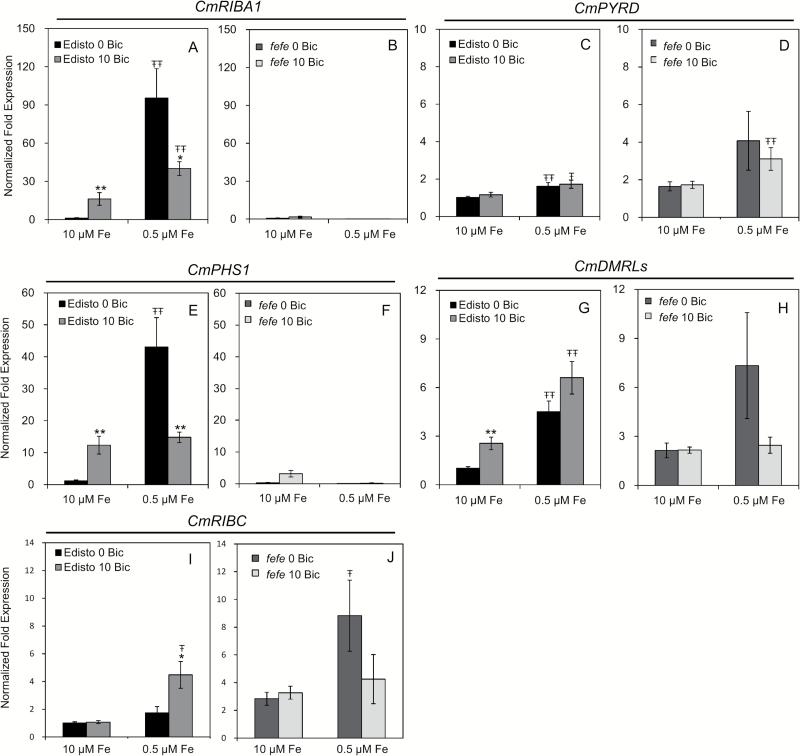
Iron (Fe) is an essential mineral that has low solubility in alkaline soils, where its deficiency results in chlorosis. Whether low Fe supply and alkaline pH stress are equivalent is unclear, as they have not been treated as separate variables in molecular physiological studies. Additionally, molecular responses to these stresses have not been studied in leaf and root tissues simultaneously. We tested how plants with the Strategy I Fe uptake system respond to Fe deficiency at mildly acidic and alkaline pH by measuring root ferric chelate reductase (FCR) activity and expression of selected Fe uptake genes and riboflavin synthesis genes. Alkaline pH increased cucumber (Cucumis sativus L.) root FCR activity at full Fe supply, but alkaline stress abolished FCR response to low Fe supply. Alkaline pH or low Fe supply resulted in increased expression of Fe uptake genes, but riboflavin synthesis genes responded to Fe deficiency but not alkalinity. Iron deficiency increased expression of some common genes in roots and leaves, but alkaline stress blocked up-regulation of these genes in Fe-deficient leaves. In roots of the melon (Cucumis melo L.) fefe mutant, in which Fe uptake responses are blocked upstream of Fe uptake genes, alkaline stress or Fe deficiency up-regulation of certain Fe uptake and riboflavin synthesis genes was inhibited, indicating a central role for the FeFe protein. These results suggest a model implicating shoot-to-root signaling of Fe status to induce Fe uptake gene expression in roots.
铁(Fe)是一种必需矿物质,在碱性土壤中溶解度较低,其缺乏会导致黄化。低铁供应和碱性pH胁迫是否等同尚不清楚,因为在分子生理学研究中它们并未被视为独立变量。此外,尚未同时在叶和根组织中研究对这些胁迫的分子反应。我们通过测量根铁螯合物还原酶(FCR)活性以及所选铁吸收基因和核黄素合成基因的表达,测试了具有策略I铁吸收系统的植物在轻度酸性和碱性pH条件下对缺铁的反应。在铁供应充足时,碱性pH提高了黄瓜(Cucumis sativus L.)根的FCR活性,但碱性胁迫消除了FCR对低铁供应的反应。碱性pH或低铁供应导致铁吸收基因表达增加,但核黄素合成基因对缺铁有反应,对碱度无反应。缺铁增加了根和叶中一些常见基因的表达,但碱性胁迫阻止了缺铁叶片中这些基因的上调。在甜瓜(Cucumis melo L.)的fefe突变体根中,铁吸收反应在铁吸收基因上游受阻,碱性胁迫或缺铁对某些铁吸收和核黄素合成基因的上调受到抑制,表明FeFe蛋白起核心作用。这些结果表明了一个模型,即铁状态的地上部到根部信号传导诱导根中铁吸收基因的表达。


 Zotero 插件