
在液体衰减反转恢复(FLAIR)磁共振成像中使用基于超像素的极端随机树进行脑肿瘤自动检测与分割
Automated brain tumour detection and segmentation using superpixel-based extremely randomized trees in FLAIR MRI.
作者信息
Soltaninejad Mohammadreza, Yang Guang, Lambrou Tryphon, Allinson Nigel, Jones Timothy L, Barrick Thomas R, Howe Franklyn A, Ye Xujiong
机构信息
Laboratory of Vision Engineering, School of Computer Science, University of Lincoln, Lincoln, LN6 7TS, UK.
Neurosciences Research Centre, Molecular and Clinical Sciences Institute, St. George's, University of London, London, SW17 0RE, UK.
出版信息
Int J Comput Assist Radiol Surg. 2017 Feb;12(2):183-203. doi: 10.1007/s11548-016-1483-3. Epub 2016 Sep 20.
PURPOSE
We propose a fully automated method for detection and segmentation of the abnormal tissue associated with brain tumour (tumour core and oedema) from Fluid- Attenuated Inversion Recovery (FLAIR) Magnetic Resonance Imaging (MRI).
METHODS
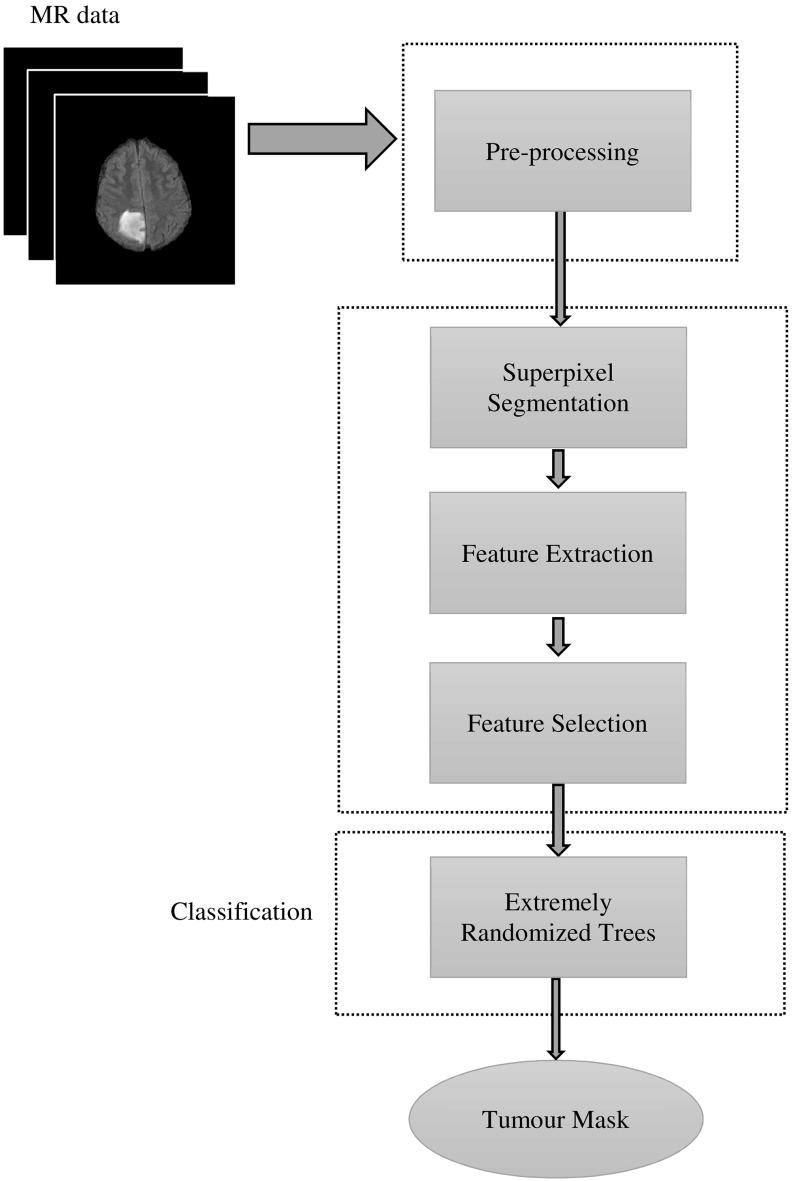
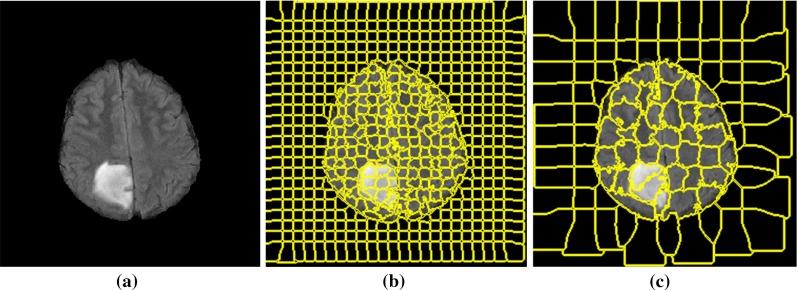
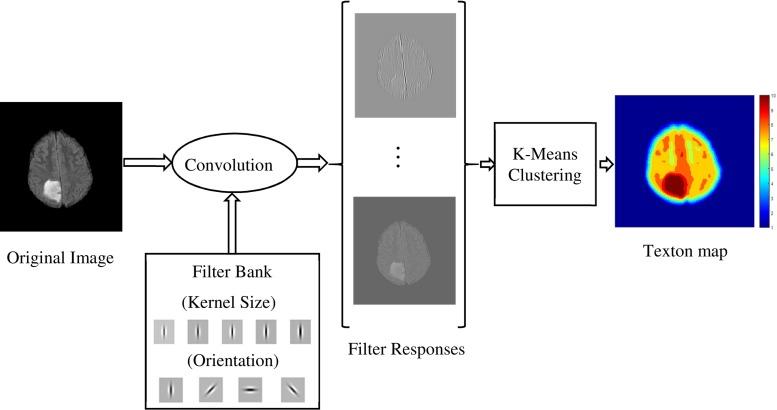
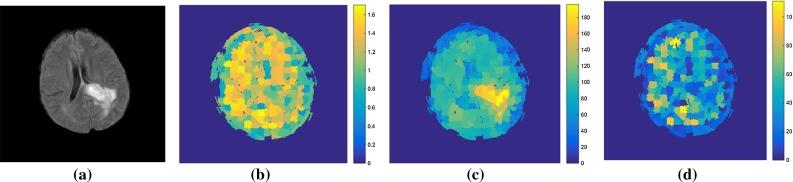
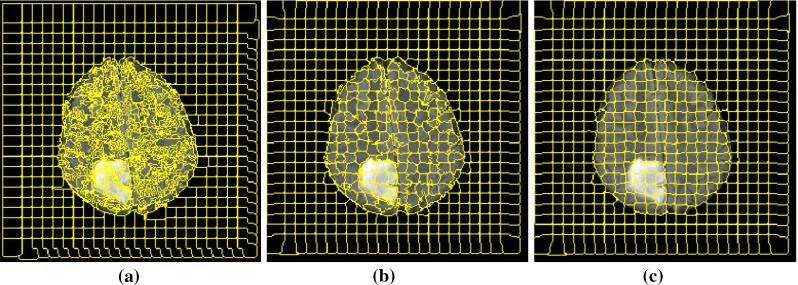
The method is based on superpixel technique and classification of each superpixel. A number of novel image features including intensity-based, Gabor textons, fractal analysis and curvatures are calculated from each superpixel within the entire brain area in FLAIR MRI to ensure a robust classification. Extremely randomized trees (ERT) classifier is compared with support vector machine (SVM) to classify each superpixel into tumour and non-tumour.
RESULTS
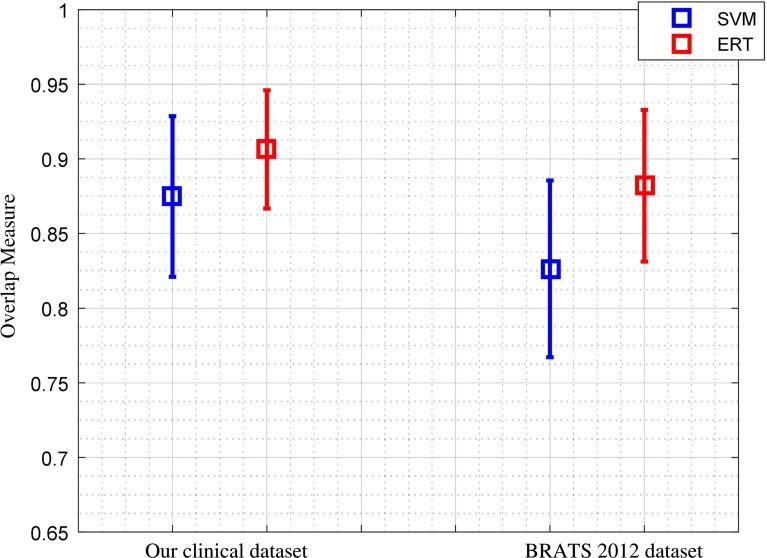
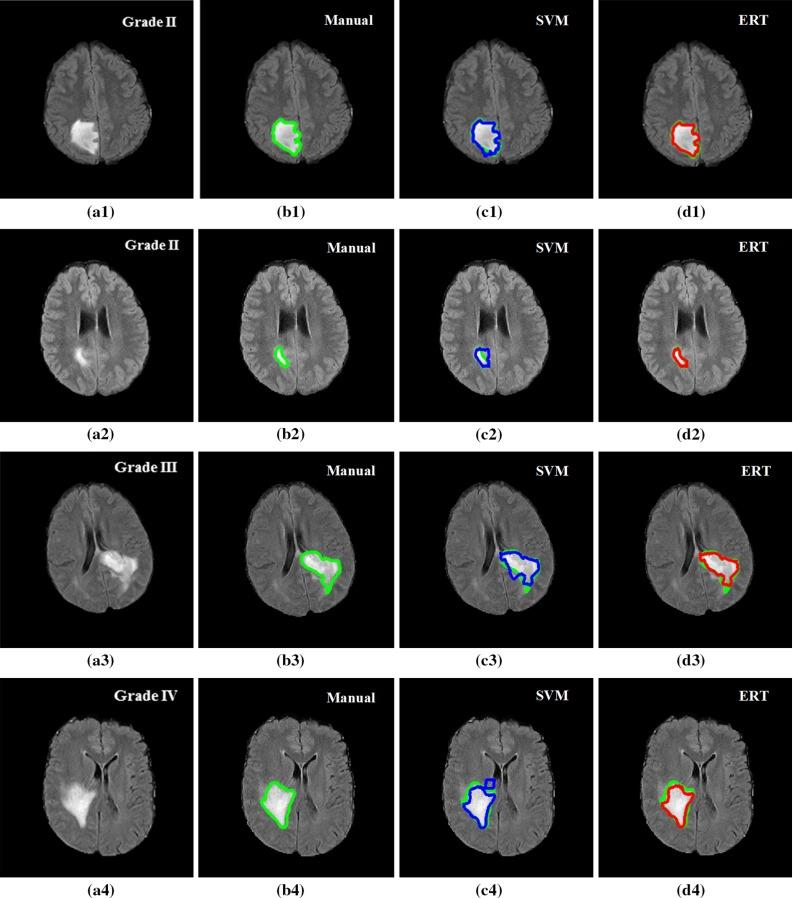
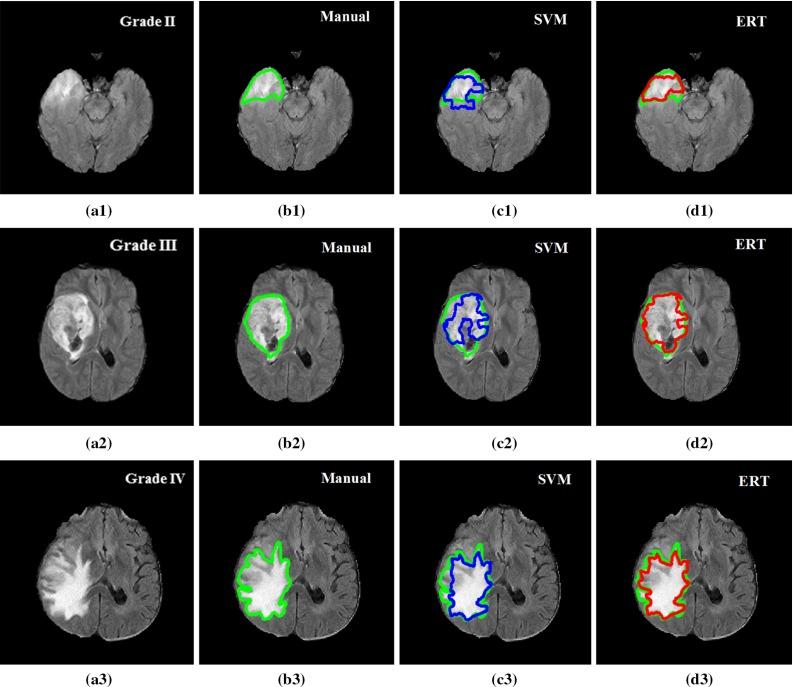
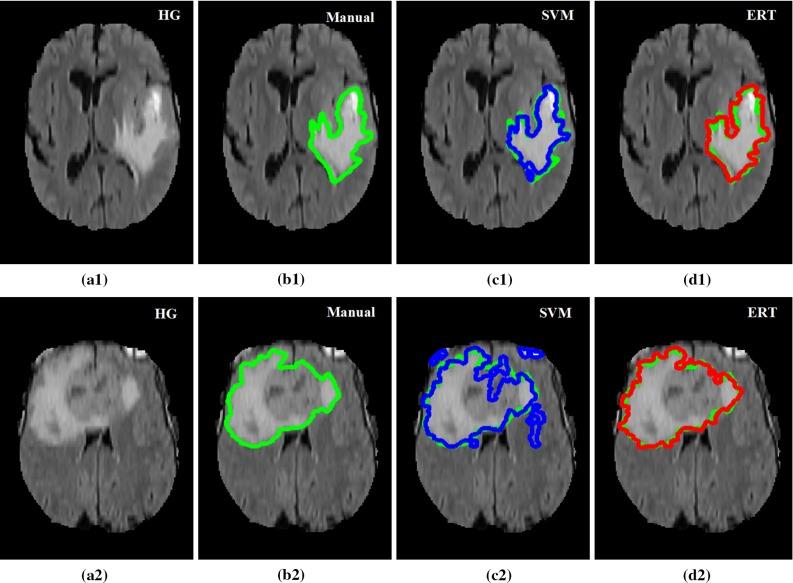
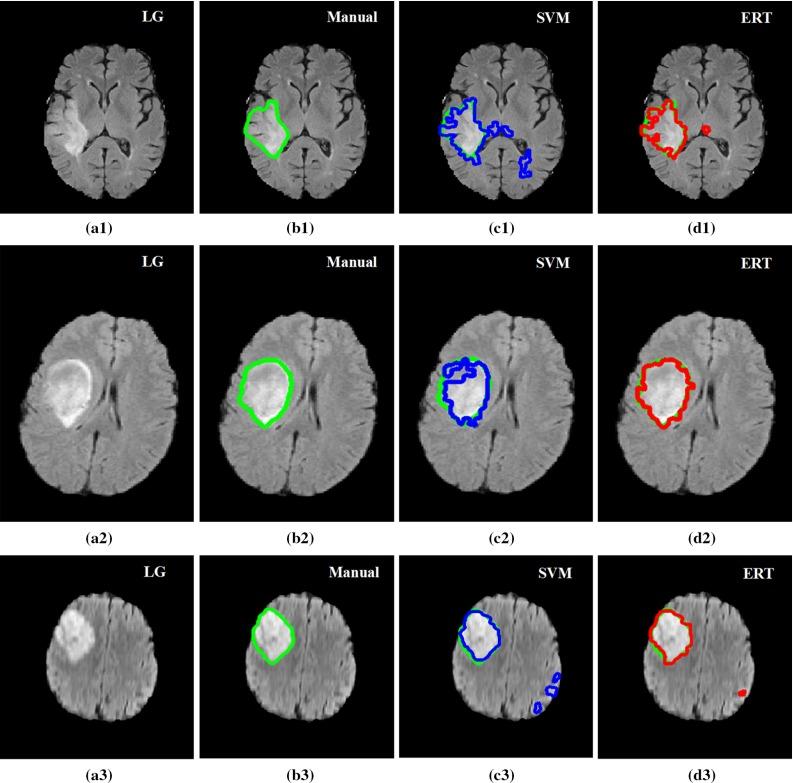
The proposed method is evaluated on two datasets: (1) Our own clinical dataset: 19 MRI FLAIR images of patients with gliomas of grade II to IV, and (2) BRATS 2012 dataset: 30 FLAIR images with 10 low-grade and 20 high-grade gliomas. The experimental results demonstrate the high detection and segmentation performance of the proposed method using ERT classifier. For our own cohort, the average detection sensitivity, balanced error rate and the Dice overlap measure for the segmented tumour against the ground truth are 89.48 %, 6 % and 0.91, respectively, while, for the BRATS dataset, the corresponding evaluation results are 88.09 %, 6 % and 0.88, respectively.
CONCLUSIONS
This provides a close match to expert delineation across all grades of glioma, leading to a faster and more reproducible method of brain tumour detection and delineation to aid patient management.
目的
我们提出一种全自动方法,用于从液体衰减反转恢复(FLAIR)磁共振成像(MRI)中检测和分割与脑肿瘤相关的异常组织(肿瘤核心和水肿)。
方法
该方法基于超像素技术和每个超像素的分类。从FLAIR MRI整个脑区的每个超像素中计算出许多新颖的图像特征,包括基于强度的特征、Gabor纹理、分形分析和曲率,以确保进行稳健的分类。将极端随机树(ERT)分类器与支持向量机(SVM)进行比较,以将每个超像素分类为肿瘤和非肿瘤。
结果
在两个数据集上对所提出的方法进行了评估:(1)我们自己的临床数据集:19例II至IV级胶质瘤患者的MRI FLAIR图像,以及(2)BRATS 2012数据集:30张FLAIR图像,其中有10例低级别胶质瘤和20例高级别胶质瘤。实验结果表明,使用ERT分类器的所提出方法具有较高的检测和分割性能。对于我们自己的队列,分割肿瘤相对于真实情况的平均检测灵敏度、平衡错误率和Dice重叠度量分别为89.48%、6%和0.91,而对于BRATS数据集,相应的评估结果分别为88.09%、6%和0.88。
结论
这与所有级别胶质瘤的专家划定结果非常匹配,从而产生了一种更快且更具可重复性的脑肿瘤检测和划定方法,以辅助患者管理。





 Zotero 插件