
膳食补充雷帕霉素可逆转与年龄相关的血管功能障碍和氧化应激,同时调节营养感知、细胞周期和衰老途径。
Dietary rapamycin supplementation reverses age-related vascular dysfunction and oxidative stress, while modulating nutrient-sensing, cell cycle, and senescence pathways.
作者信息
Lesniewski Lisa A, Seals Douglas R, Walker Ashley E, Henson Grant D, Blimline Mark W, Trott Daniel W, Bosshardt Gary C, LaRocca Thomas J, Lawson Brooke R, Zigler Melanie C, Donato Anthony J
机构信息
Division of Geriatrics, Department of Internal Medicine, Salt Lake City, UT, USA.
Veteran's Affairs Medical Center-Salt Lake City, Geriatrics Research Education and Clinical Center, Salt Lake City, UT, USA.
出版信息
Aging Cell. 2017 Feb;16(1):17-26. doi: 10.1111/acel.12524. Epub 2016 Sep 22.
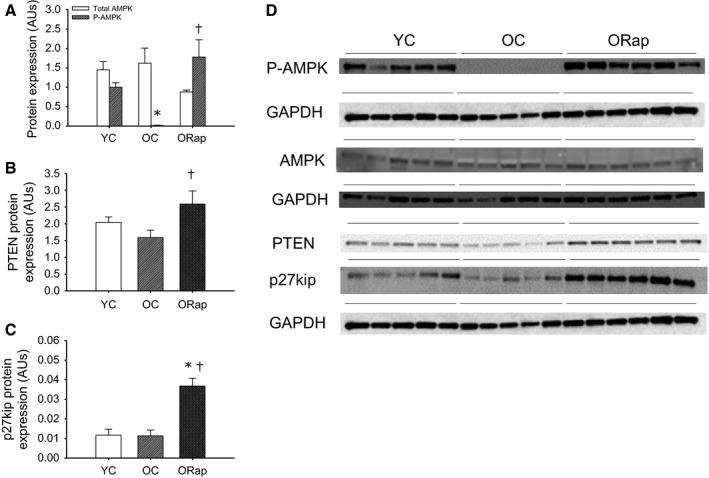
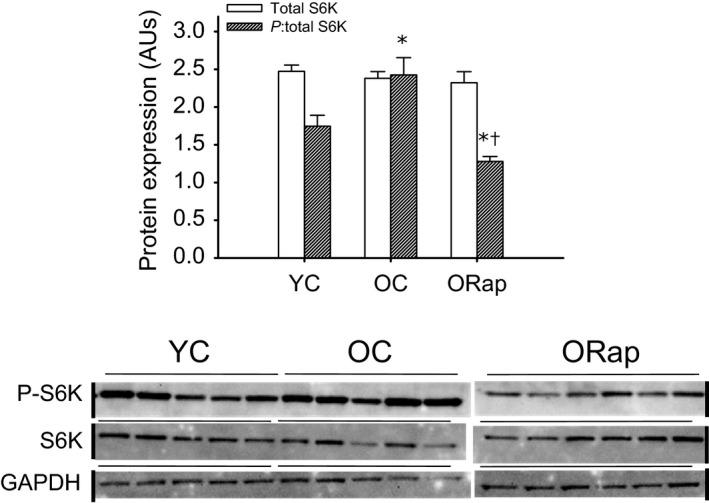
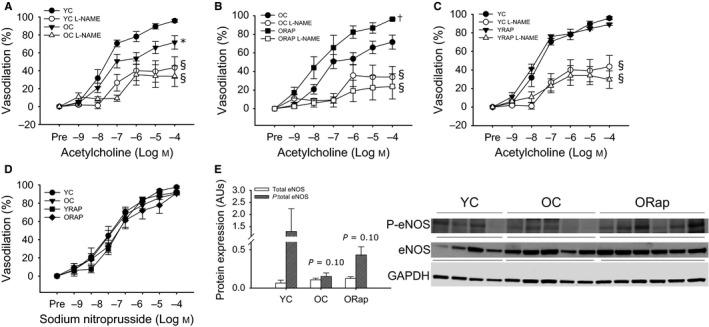
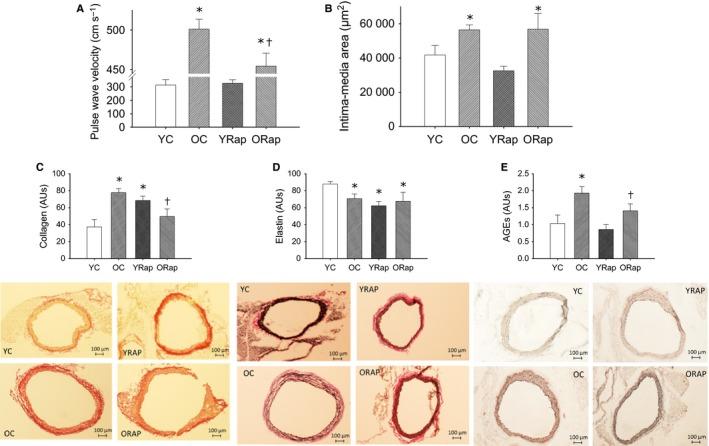
Inhibition of mammalian target of rapamycin, mTOR, extends lifespan and reduces age-related disease. It is not known what role mTOR plays in the arterial aging phenotype or if mTOR inhibition by dietary rapamycin ameliorates age-related arterial dysfunction. To explore this, young (3.8 ± 0.6 months) and old (30.3 ± 0.2 months) male B6D2F1 mice were fed a rapamycin supplemented or control diet for 6-8 weeks. Although there were few other notable changes in animal characteristics after rapamycin treatment, we found that glucose tolerance improved in old mice, but was impaired in young mice, after rapamycin supplementation (both P < 0.05). Aging increased mTOR activation in arteries evidenced by elevated S6K phosphorylation (P < 0.01), and this was reversed after rapamycin treatment in old mice (P < 0.05). Aging was also associated with impaired endothelium-dependent dilation (EDD) in the carotid artery (P < 0.05). Rapamycin improved EDD in old mice (P < 0.05). Superoxide production and NADPH oxidase expression were higher in arteries from old compared to young mice (P < 0.05), and rapamycin normalized these (P < 0.05) to levels not different from young mice. Scavenging superoxide improved carotid artery EDD in untreated (P < 0.05), but not rapamycin-treated, old mice. While aging increased large artery stiffness evidenced by increased aortic pulse-wave velocity (PWV) (P < 0.01), rapamycin treatment reduced aortic PWV (P < 0.05) and collagen content (P < 0.05) in old mice. Aortic adenosine monophosphate-activated protein kinase (AMPK) phosphorylation and expression of the cell cycle-related proteins PTEN and p27kip were increased with rapamycin treatment in old mice (all P < 0.05). Lastly, aging resulted in augmentation of the arterial senescence marker, p19 (P < 0.05), and this was ameliorated by rapamycin treatment (P < 0.05). These results demonstrate beneficial effects of rapamycin treatment on arterial function in old mice and suggest these improvements are associated with reduced oxidative stress, AMPK activation and increased expression of proteins involved in the control of the cell cycle.
雷帕霉素的哺乳动物靶点mTOR的抑制可延长寿命并减少与年龄相关的疾病。目前尚不清楚mTOR在动脉衰老表型中起什么作用,也不清楚饮食中的雷帕霉素对mTOR的抑制是否能改善与年龄相关的动脉功能障碍。为了探究这一点,给年轻(3.8±0.6个月)和年老(30.3±0.2个月)的雄性B6D2F1小鼠喂食添加了雷帕霉素的饮食或对照饮食6 - 8周。虽然雷帕霉素治疗后动物特征几乎没有其他显著变化,但我们发现,补充雷帕霉素后,老年小鼠的葡萄糖耐量得到改善,而年轻小鼠的葡萄糖耐量受损(两者P<0.05)。衰老会增加动脉中mTOR的激活,这可通过S6K磷酸化升高得到证明(P<0.01),而在老年小鼠中雷帕霉素治疗后这种情况得到逆转(P<0.05)。衰老还与颈动脉中内皮依赖性舒张(EDD)受损有关(P<0.05)。雷帕霉素改善了老年小鼠的EDD(P<0.05)。与年轻小鼠相比,老年小鼠动脉中的超氧化物产生和NADPH氧化酶表达更高(P<0.05),雷帕霉素使这些指标恢复正常(P<0.05),达到与年轻小鼠无异的水平。清除超氧化物改善了未治疗老年小鼠的颈动脉EDD(P<0.05),但对雷帕霉素治疗的老年小鼠无效。衰老会增加大动脉僵硬度,这可通过主动脉脉搏波速度(PWV)增加得到证明(P<0.01),雷帕霉素治疗降低了老年小鼠的主动脉PWV(P<0.05)和胶原蛋白含量(P<0.05)。雷帕霉素治疗使老年小鼠主动脉中的腺苷单磷酸激活蛋白激酶(AMPK)磷酸化以及细胞周期相关蛋白PTEN和p27kip的表达增加(均P<0.05)。最后,衰老导致动脉衰老标志物p19增加(P<0.05),而雷帕霉素治疗改善了这种情况(P<0.05)。这些结果证明了雷帕霉素治疗对老年小鼠动脉功能的有益作用,并表明这些改善与氧化应激降低、AMPK激活以及细胞周期调控相关蛋白表达增加有关。

 Zotero 插件