
通过调节性T细胞抑制实现对自身/非自身抗原呈递的稳健且准确的区分
Robust and Accurate Discrimination of Self/Non-Self Antigen Presentations by Regulatory T Cell Suppression.
作者信息
Furusawa Chikara, Yamaguchi Tomoyuki
机构信息
Quantitative Biology Center, RIKEN, 6-2-3 Furuedai, Suita, Osaka 565-0874, Japan.
Department of Physics, University of Tokyo, 7-3-1 Hongo, Bunkyo-ku, Tokyo 113-0033, Japan.
出版信息
PLoS One. 2016 Sep 26;11(9):e0163134. doi: 10.1371/journal.pone.0163134. eCollection 2016.
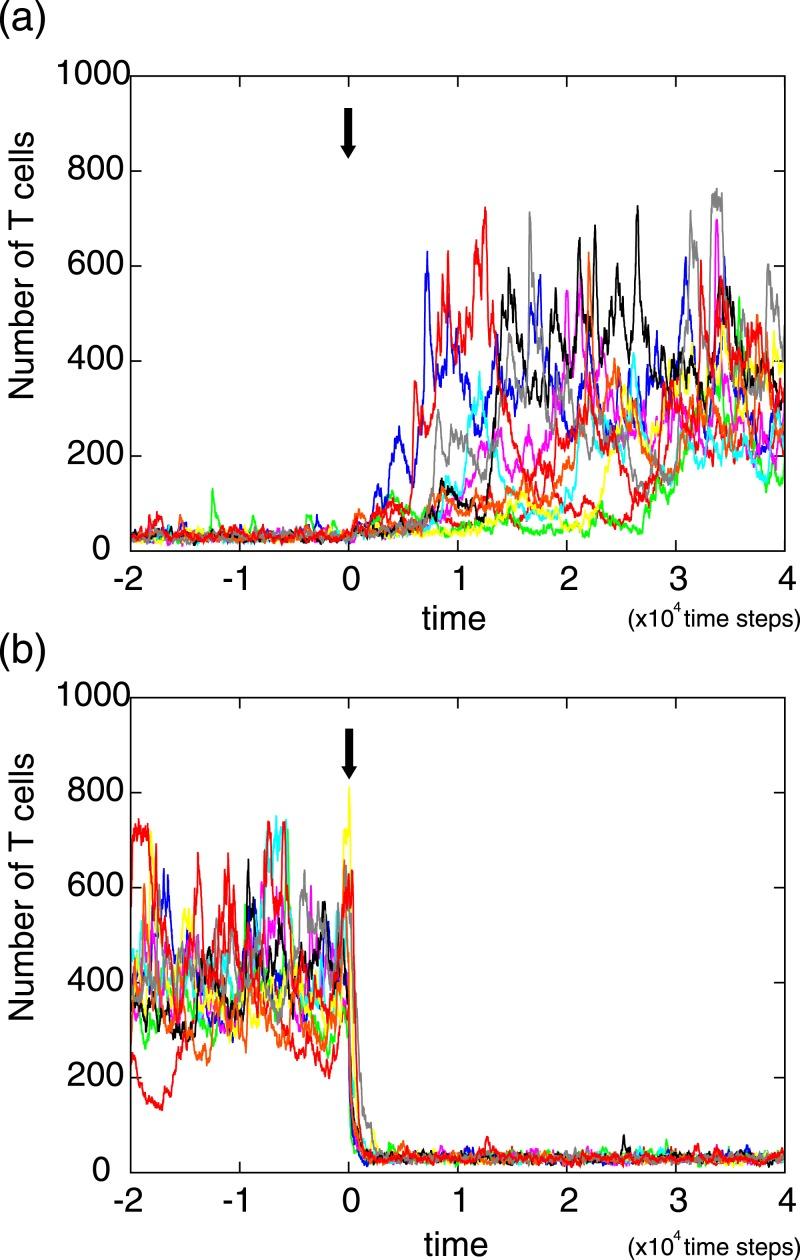
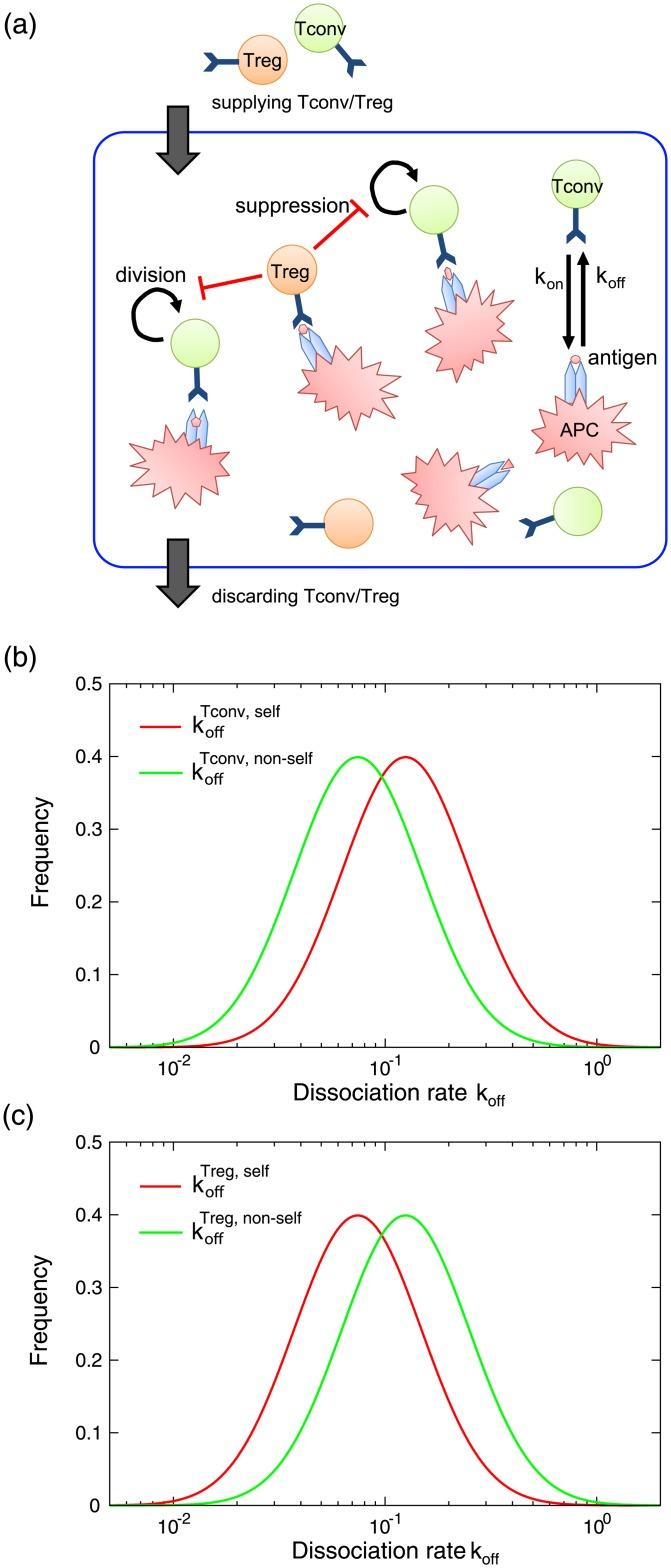
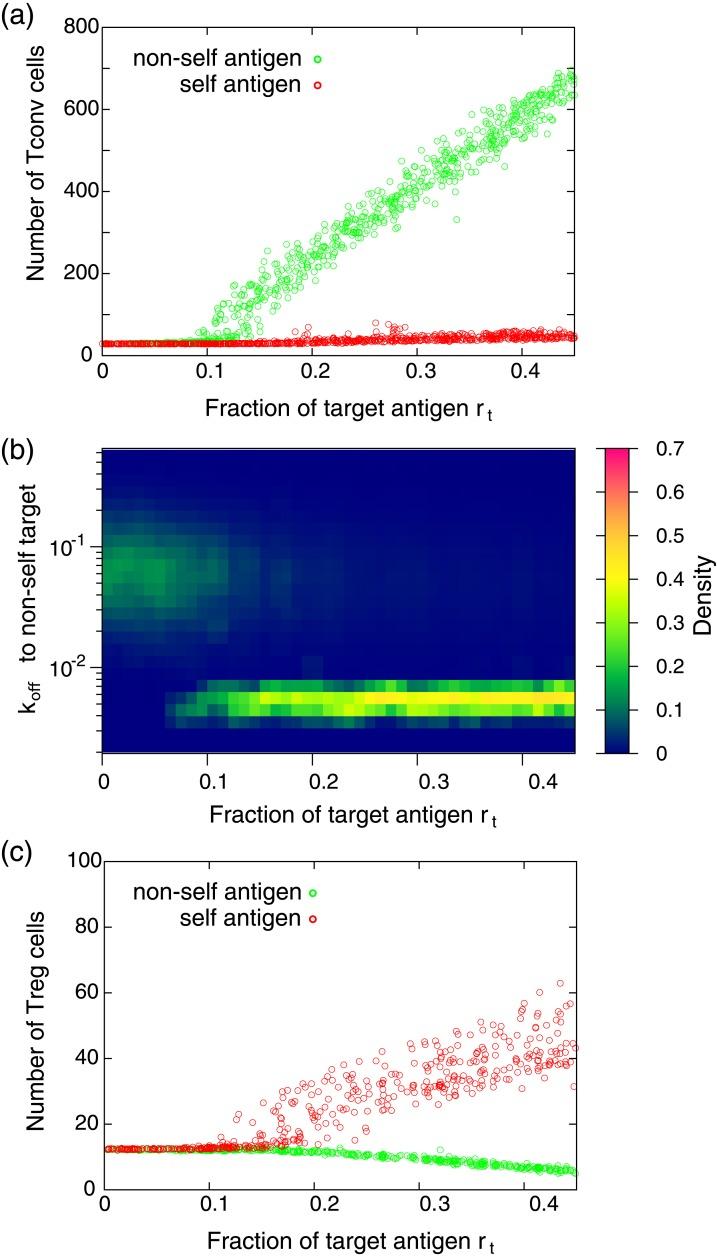
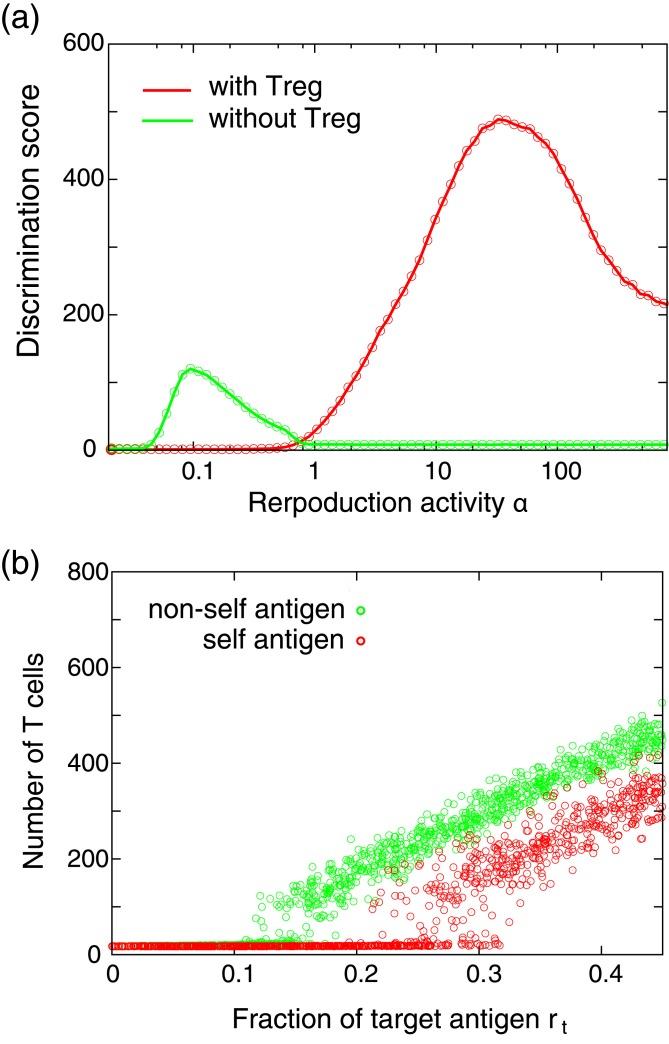
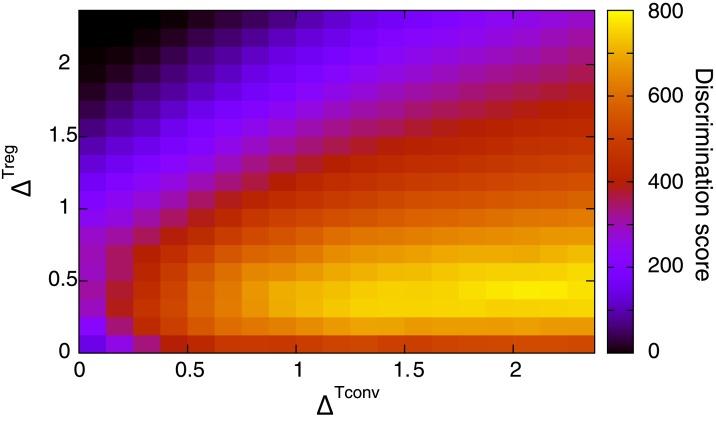
The immune response by T cells usually discriminates self and non-self antigens, even though the negative selection of self-reactive T cells is imperfect and a certain fraction of T cells can respond to self-antigens. In this study, we construct a simple mathematical model of T cell populations to analyze how such self/non-self discrimination is possible. The results demonstrate that the control of the immune response by regulatory T cells enables a robust and accurate discrimination of self and non-self antigens, even when there is a significant overlap between the affinity distribution of T cells to self and non-self antigens. Here, the number of regulatory T cells in the system acts as a global variable controlling the T cell population dynamics. The present study provides a basis for the development of a quantitative theory for self and non-self discrimination in the immune system and a possible strategy for its experimental verification.
T细胞的免疫反应通常能够区分自身和非自身抗原,尽管对自身反应性T细胞的阴性选择并不完美,仍有一定比例的T细胞会对自身抗原产生反应。在本研究中,我们构建了一个简单的T细胞群体数学模型,以分析这种自身/非自身区分是如何实现的。结果表明,调节性T细胞对免疫反应的控制能够实现对自身和非自身抗原的稳健而准确的区分,即使T细胞对自身和非自身抗原的亲和力分布存在显著重叠。在此,系统中调节性T细胞的数量作为控制T细胞群体动态的全局变量。本研究为免疫系统中自身和非自身区分的定量理论发展提供了基础,并为其实验验证提供了一种可能的策略。
 Zotero 插件