
通过核孔复合体进行被动扩散的简单规则。
Simple rules for passive diffusion through the nuclear pore complex.
作者信息
Timney Benjamin L, Raveh Barak, Mironska Roxana, Trivedi Jill M, Kim Seung Joong, Russel Daniel, Wente Susan R, Sali Andrej, Rout Michael P
机构信息
Laboratory of Cellular and Structural Biology, The Rockefeller University, New York, NY 10065.
Department of Bioengineering and Therapeutic Sciences, California Institute for Quantitative Biosciences, University of California, San Francisco, San Francisco, CA 94158 Department of Pharmaceutical Chemistry, California Institute for Quantitative Biosciences, University of California, San Francisco, San Francisco, CA 94158.
出版信息
J Cell Biol. 2016 Oct 10;215(1):57-76. doi: 10.1083/jcb.201601004. Epub 2016 Oct 3.
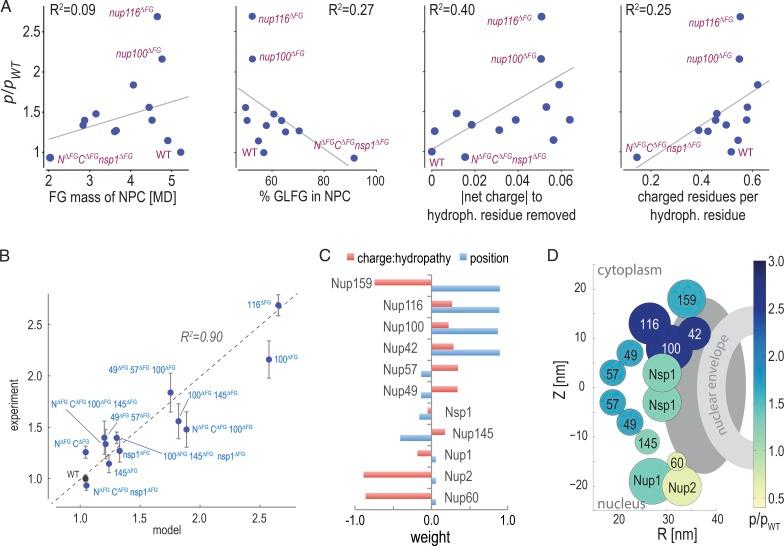
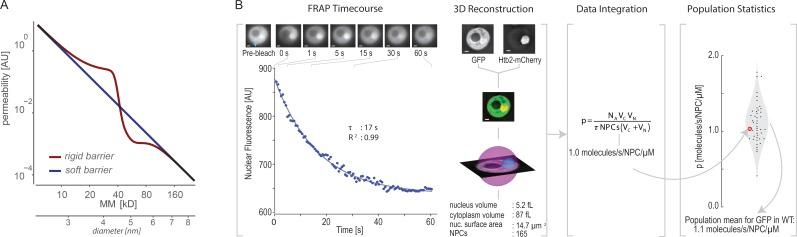
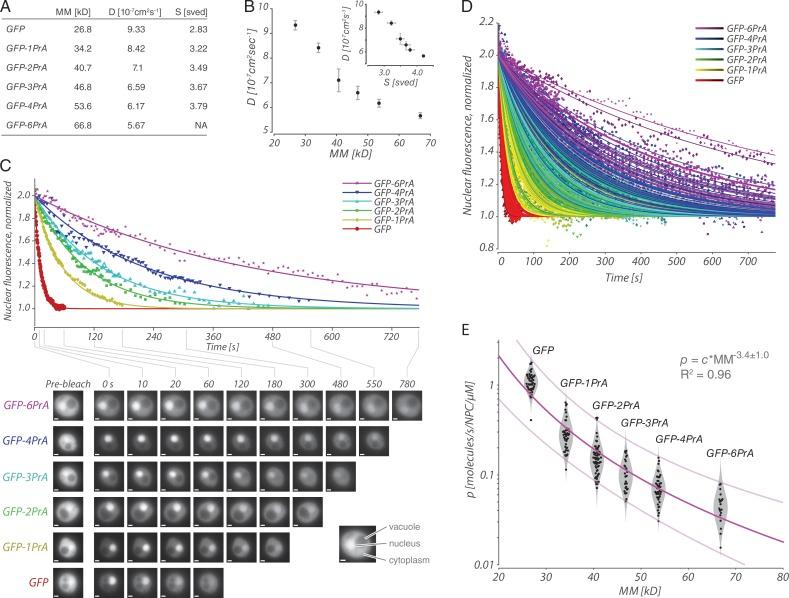
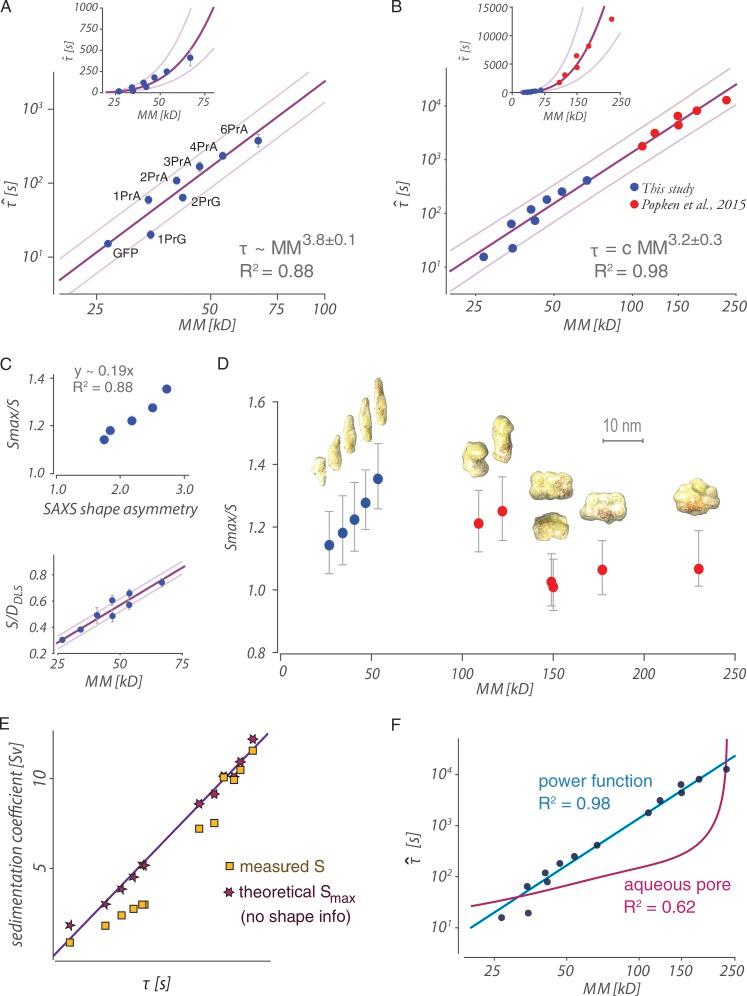
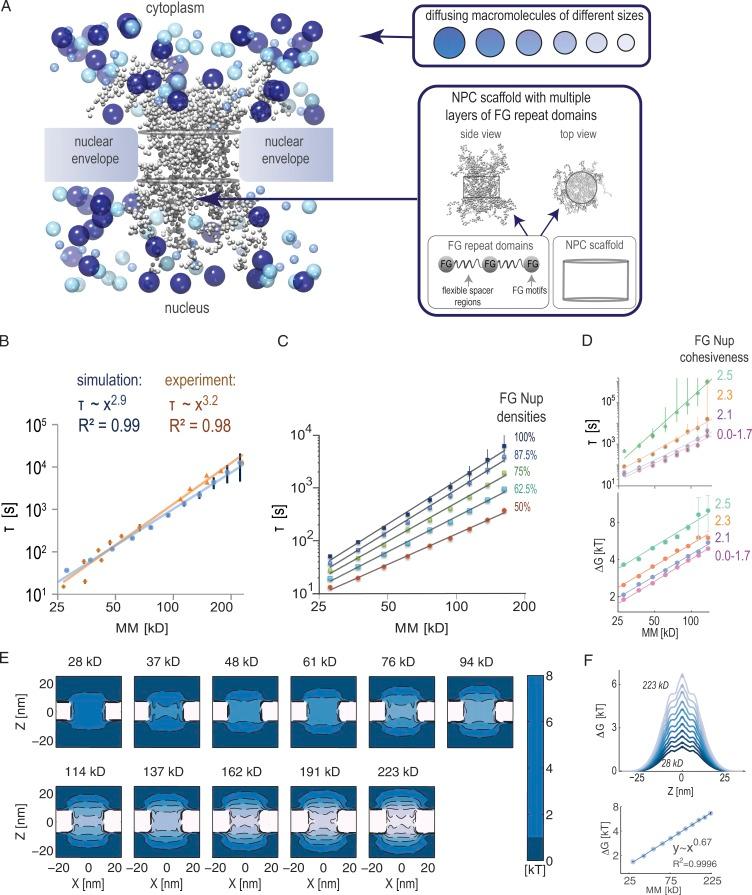
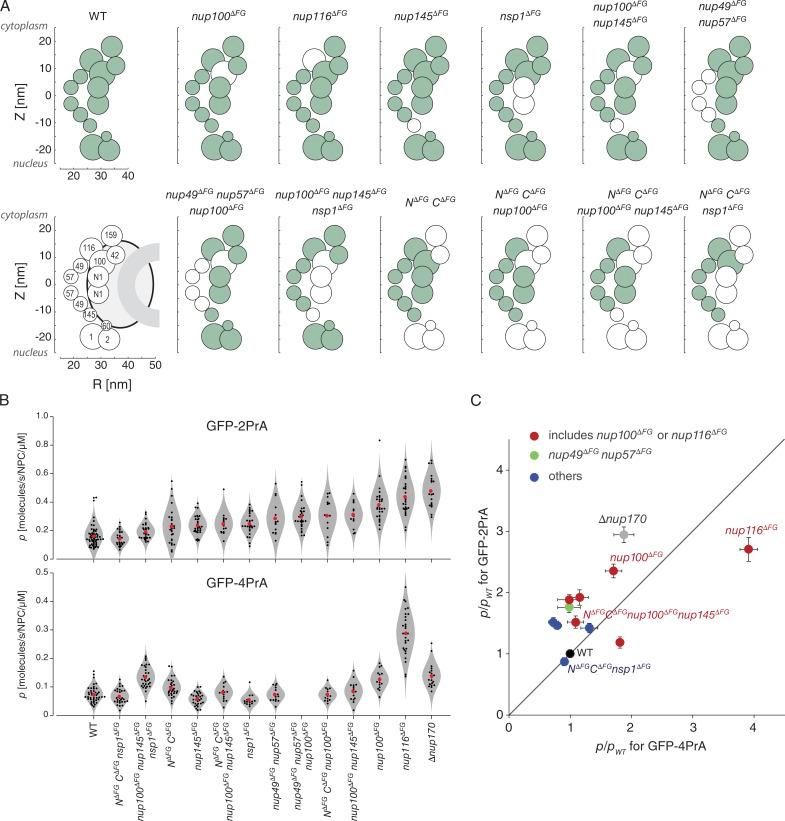
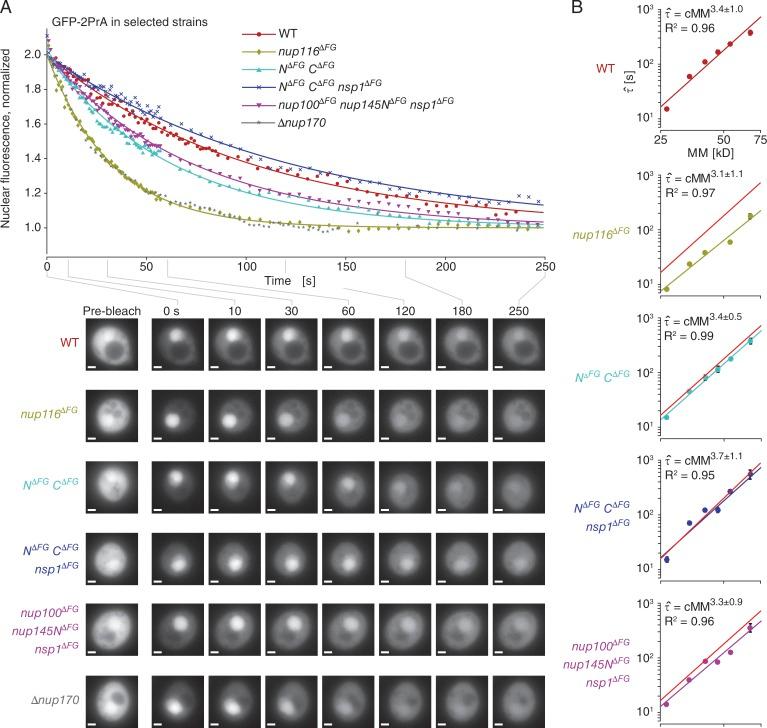
Passive macromolecular diffusion through nuclear pore complexes (NPCs) is thought to decrease dramatically beyond a 30-60-kD size threshold. Using thousands of independent time-resolved fluorescence microscopy measurements in vivo, we show that the NPC lacks such a firm size threshold; instead, it forms a soft barrier to passive diffusion that intensifies gradually with increasing molecular mass in both the wild-type and mutant strains with various subsets of phenylalanine-glycine (FG) domains and different levels of baseline passive permeability. Brownian dynamics simulations replicate these findings and indicate that the soft barrier results from the highly dynamic FG repeat domains and the diffusing macromolecules mutually constraining and competing for available volume in the interior of the NPC, setting up entropic repulsion forces. We found that FG domains with exceptionally high net charge and low hydropathy near the cytoplasmic end of the central channel contribute more strongly to obstruction of passive diffusion than to facilitated transport, revealing a compartmentalized functional arrangement within the NPC.
人们认为,通过核孔复合体(NPCs)的被动大分子扩散在超过30 - 60千道尔顿的大小阈值后会急剧下降。我们在体内进行了数千次独立的时间分辨荧光显微镜测量,结果表明NPC不存在如此严格的大小阈值;相反,它对被动扩散形成了一个软屏障,在野生型和突变菌株中,随着分子量的增加,该屏障会逐渐增强,这些菌株具有不同的苯丙氨酸 - 甘氨酸(FG)结构域子集和不同水平的基线被动通透性。布朗动力学模拟重现了这些发现,并表明软屏障是由高度动态的FG重复结构域和扩散的大分子相互约束并争夺NPC内部的可用空间所导致的,从而产生了熵排斥力。我们发现,中央通道细胞质端附近具有异常高净电荷和低亲水性的FG结构域,对被动扩散阻碍的贡献比对易化运输的贡献更大,这揭示了NPC内部分区的功能排列。
 Zotero 插件