
运动训练可减轻久坐男性淋巴细胞中缺氧诱导的线粒体功能障碍。
Exercise Training Alleviates Hypoxia-induced Mitochondrial Dysfunction in the Lymphocytes of Sedentary Males.
作者信息
Tsai Hsing-Hua, Chang Shao-Chiang, Chou Cheng-Hsien, Weng Tzu-Pin, Hsu Chih-Chin, Wang Jong-Shyan
机构信息
Healthy Aging Research Center, Graduate Institute of Rehabilitation Science, Medical Collage, Chang Gung University, Tao-Yuan, Taiwan.
Department of Physical Medicine and Rehabilitation, Chang Gung Memorial Hospital, Keelung, Taiwan.
出版信息
Sci Rep. 2016 Oct 12;6:35170. doi: 10.1038/srep35170.
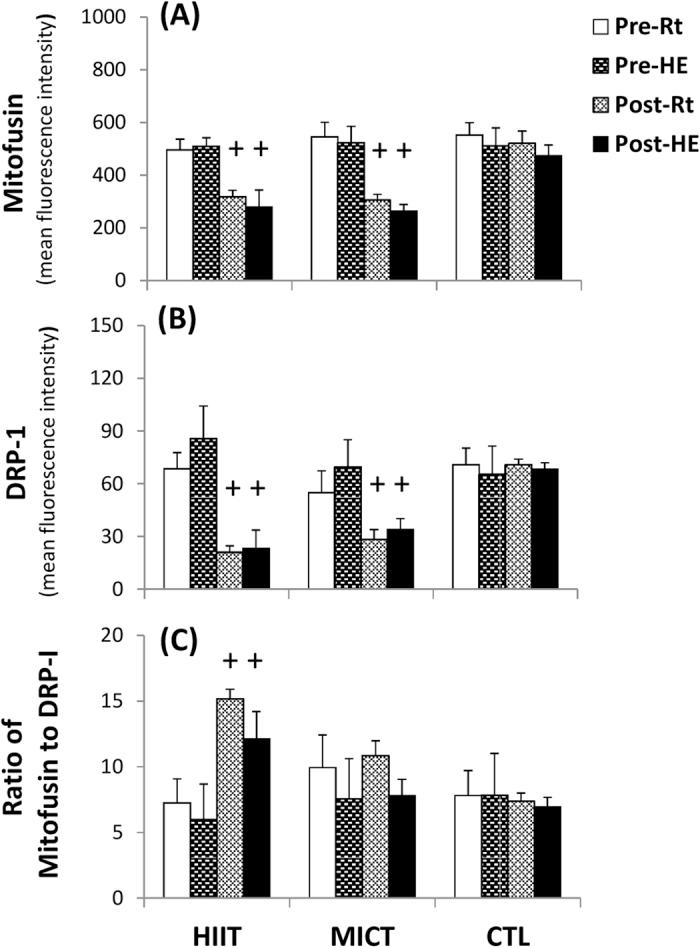
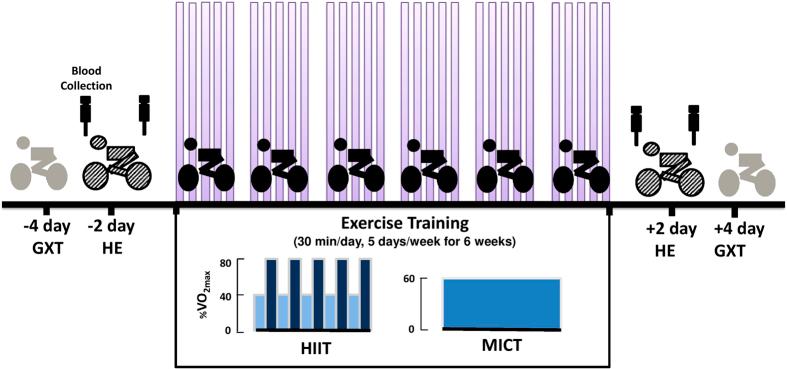
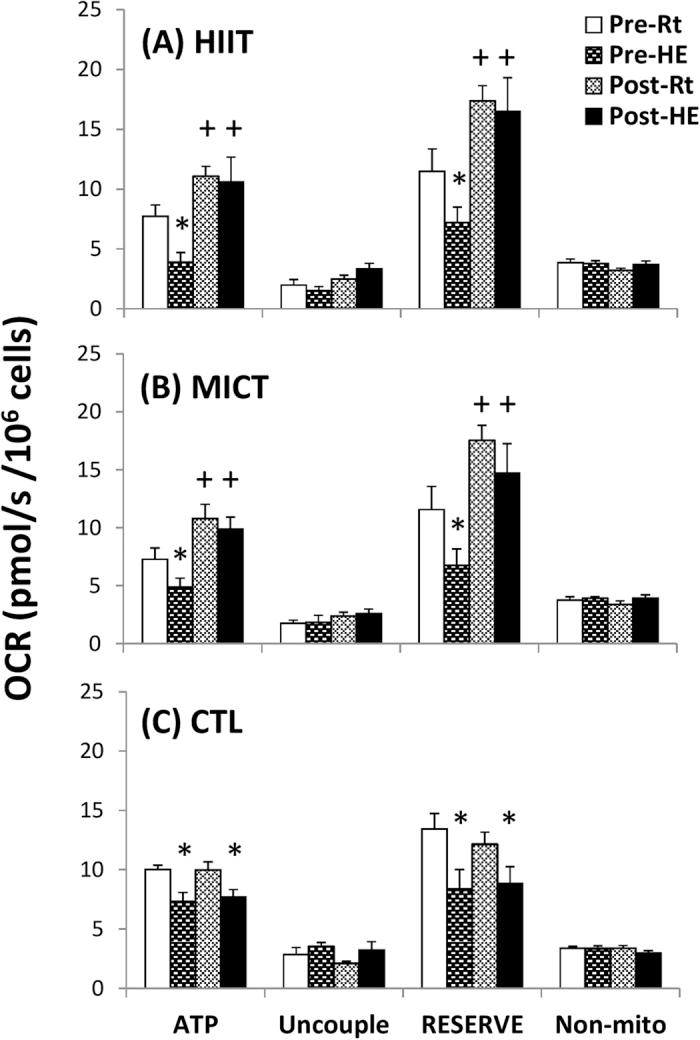
This study elucidates how interval and continuous exercise regimens affect the mitochondrial functionality of lymphocytes under hypoxic stress. Sixty healthy sedentary males were randomly assigned to engage in either high-intensity interval training (HIIT, 3 min intervals at 80% and 40% VO, n = 20) or moderate-intensity continuous training (MICT, sustained 60% VO, n = 20) for 30 min/day, 5 days/week for 6 weeks or were assigned to a control group that did not receive exercise intervention (n = 20). Lymphocyte phenotypes/mitochondrial functionality under hypoxic exercise (HE, 100 W under 12% O) were determined before and after the various interventions. Before the intervention, HE (i) increased the mobilization of senescent (CD57/CD28) lymphocytes into the blood, (ii) decreased the ATP-linked O consumption rate (OCR), the reserve capacity of OCR, and the citrate synthase activity in the mitochondria, and (iii) lowered the mitochondrial membrane potential (MP) and elevated the matrix oxidant burden (MOB) of lymphocytes. However, both HIIT and MICT significantly (i) decreased blood senescent lymphocyte counts, (ii) enhanced the mitochondrial OCR with increased citrate synthase and succinate dehydrogenase activities, (iii) increased mitochondrial MP and decreased MOB and (iv) increased the ratio of mitofusin to DRP-1 in lymphocytes after HE. Thus, we concluded that either HIIT or MICT effectively improves lymphocyte mitochondrial functionality by enhancing oxidative phosphorylation and suppressing oxidative damage under hypoxic conditions.
本研究阐明了间歇运动和持续运动方案如何影响低氧应激下淋巴细胞的线粒体功能。60名健康的久坐男性被随机分配,分别进行高强度间歇训练(HIIT,以80%和40%的最大摄氧量进行3分钟的间歇训练,n = 20)或中等强度持续训练(MICT,持续以60%的最大摄氧量进行训练,n = 20),每天训练30分钟,每周训练5天,共训练6周,或被分配到不接受运动干预的对照组(n = 20)。在各种干预前后,测定低氧运动(HE,在12%氧气浓度下100瓦功率)时的淋巴细胞表型/线粒体功能。在干预前,低氧运动(i)增加了衰老(CD57/CD28)淋巴细胞向血液中的动员,(ii)降低了与ATP相关的氧消耗率(OCR)、OCR的储备能力以及线粒体中的柠檬酸合酶活性,(iii)降低了淋巴细胞的线粒体膜电位(MP)并提高了其基质氧化应激负担(MOB)。然而,HIIT和MICT均显著(i)降低了血液中衰老淋巴细胞的数量,(ii)通过增加柠檬酸合酶和琥珀酸脱氢酶的活性增强了线粒体OCR,(iii)增加了线粒体MP并降低了MOB,以及(iv)在低氧运动后增加了淋巴细胞中融合素与动力相关蛋白1(DRP-1)的比例。因此,我们得出结论,HIIT或MICT均可通过增强氧化磷酸化并抑制低氧条件下的氧化损伤,有效改善淋巴细胞的线粒体功能。



 Zotero 插件