
酯水解差异性降低乌头碱诱导的抗过敏作用和急性神经毒性:脊髓小胶质细胞强啡肽表达的参与及其处理意义
Ester Hydrolysis Differentially Reduces Aconitine-Induced Anti-hypersensitivity and Acute Neurotoxicity: Involvement of Spinal Microglial Dynorphin Expression and Implications for Processing.
作者信息
Li Teng-Fei, Gong Nian, Wang Yong-Xiang
机构信息
King's Lab, Shanghai Jiao Tong University School of Pharmacy Shanghai, China.
出版信息
Front Pharmacol. 2016 Oct 5;7:367. doi: 10.3389/fphar.2016.00367. eCollection 2016.
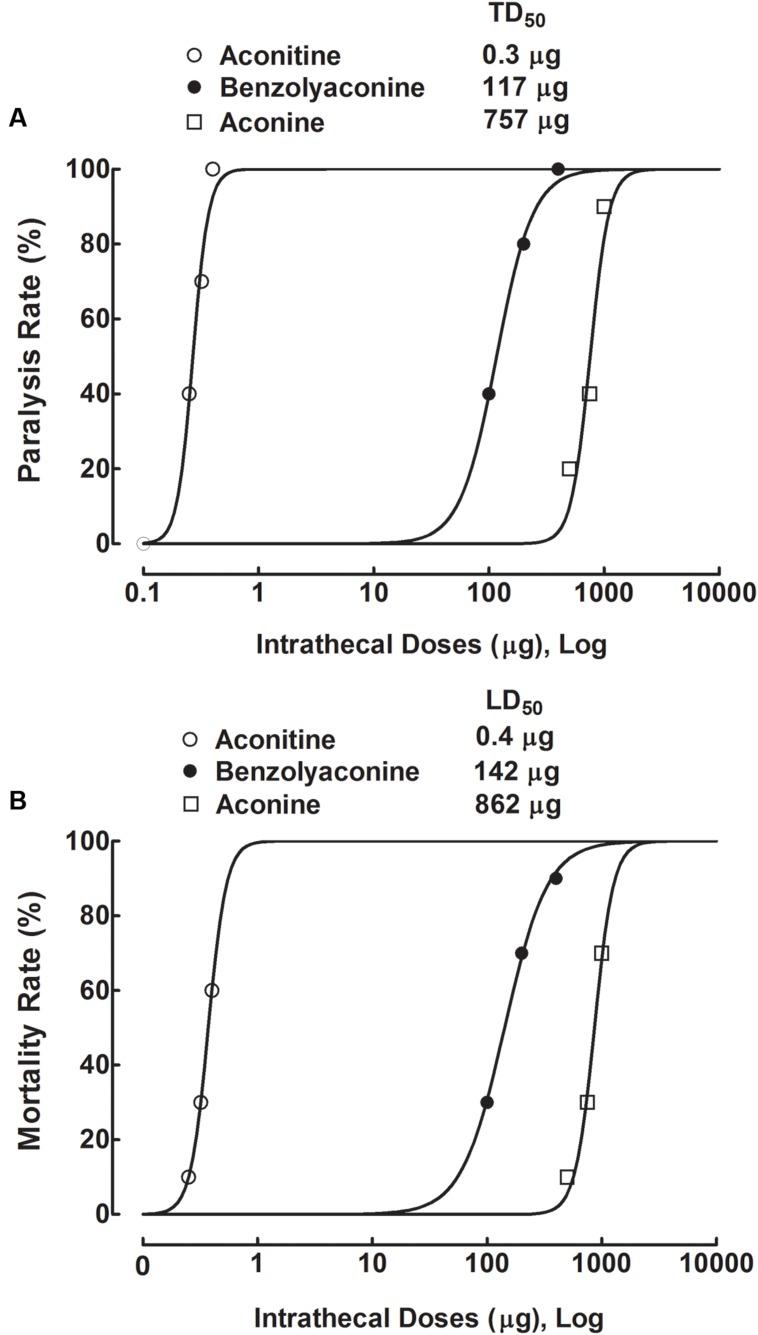
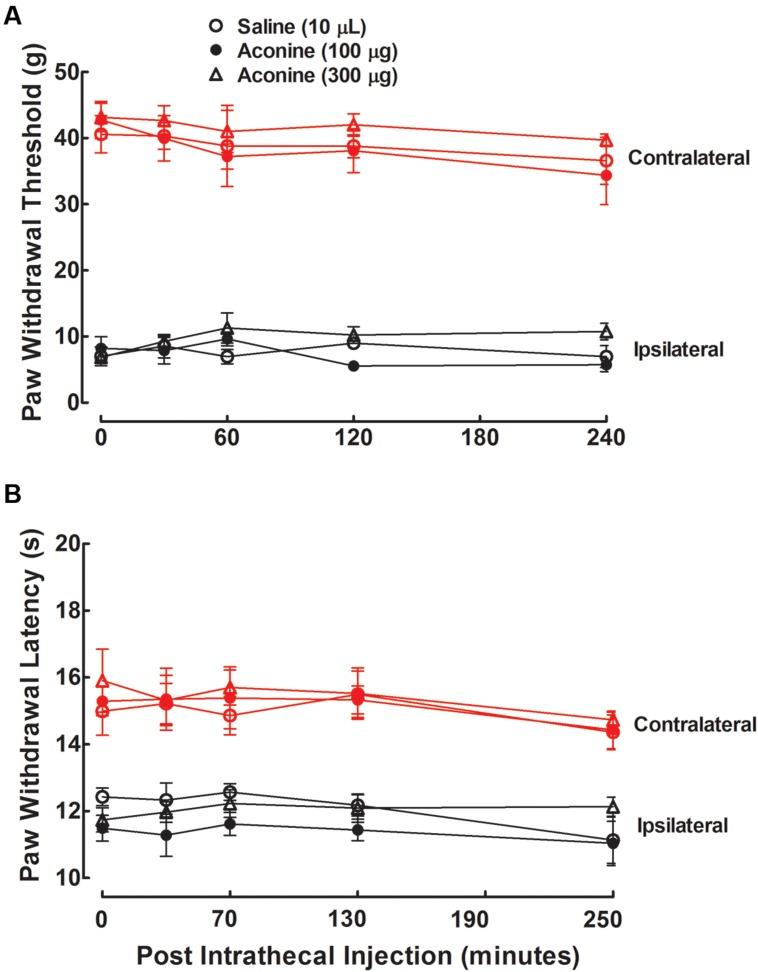
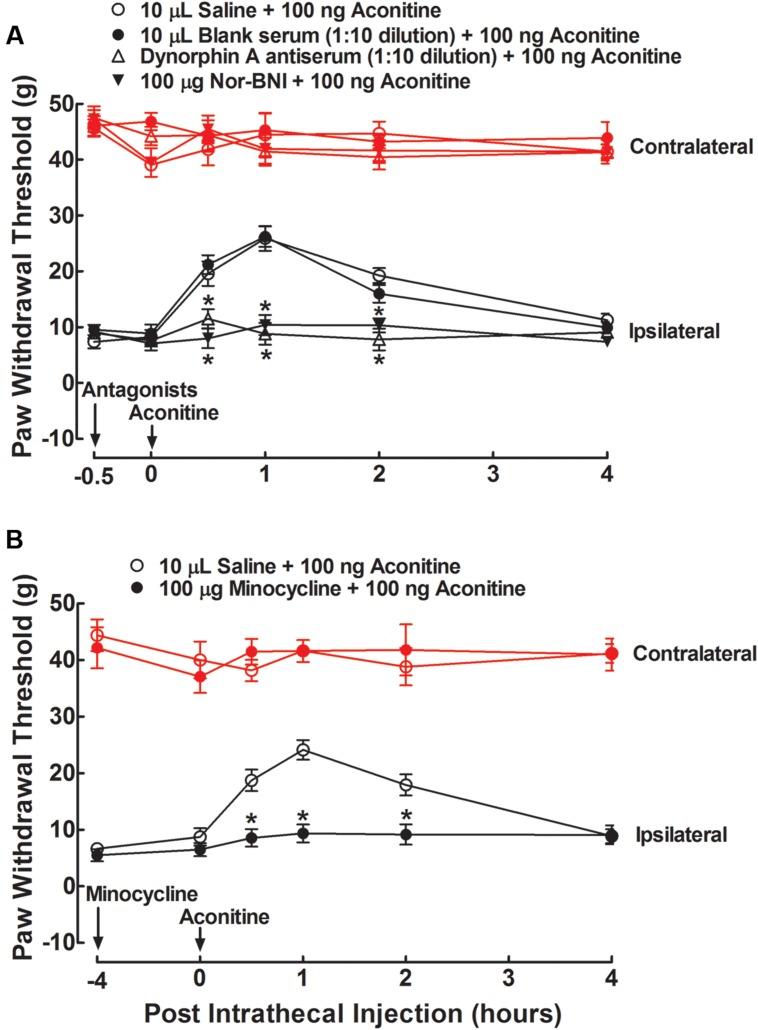
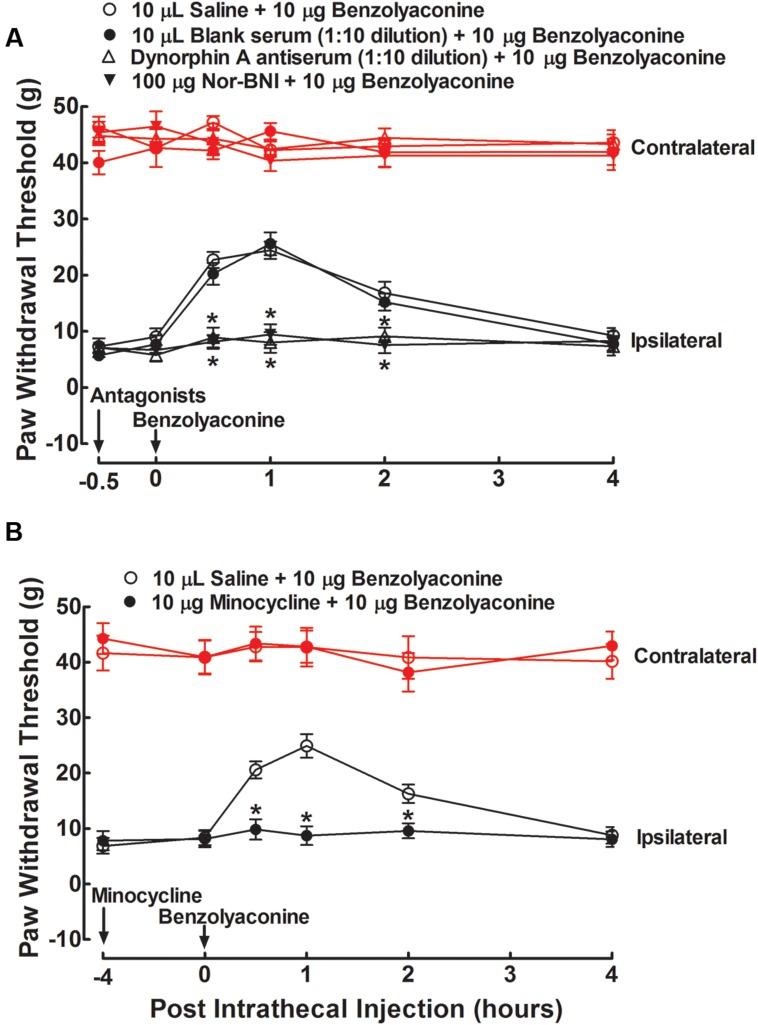
Aconitines, including bulleyaconitine A, probably the most bioactive and abundant alkaloids in plant, are a group of diester C19-diterpenoid alkaloids with one acetylester group attached to C8 of the diterpenoid skeleton and one benzoylester group to C14. Hydrolysis of both groups is involved in the processing of , a traditional Chinese medicinal approach. We recently demonstrated that bulleyaconitine A produced anti-hypersensitivity, which was mediated by stimulation of spinal microglial dynorphin A expression. This study aimed to elucidate whether the acetylester and benzoylester groups are involved in aconitine-induced dynorphin A expression, anti-hypersensitivity, neurotoxicity in neuropathic rats. Intrathecal administration of aconitine and benzoylaconine (but not aconine) attenuated mechanical allodynia and heat hyperalgesia, with normalized ED values of 35 pmol and 3.6 nmol, respectively. Aconitine and benzoylaconine anti-allodynia was completely blocked by the microglial inhibitor, dynorphin A antiserum, and κ-opioid receptor antagonist. Aconitine and benzoylaconine, but not aconine, stimulated dynorphin A expression in cultured primary spinal microglia, with EC values of 32 nM and 3 μM, respectively. Intrathecal aconitine, benzoylaconine and aconine induced flaccid paralysis and death, with normalized TD values of 0.5 nmol, 0.2 μmol, and 1.6 μmol, respectively. The TD/ED ratios of aconitine and benzolyaconine were 14:1 and 56:1. Our results suggest that both the C8-acetyl and C14-benzoyl groups are essential for aconitine to stimulate spinal microglial dynorphin A expression and subsequent anti-hypersensitivity, which can be separated from neurotoxicity, because both benzoylaconine and aconine differentially produced anti-hypersensitivity and neurotoxicity due to their different stimulatory ability on dynorphin A expression. Our results support the scientific rationale for processing, but caution should be taken to avoid overprocessing and excess hydrolysis of benzolyaconine to aconine.
乌头碱类化合物,包括滇乌碱甲,可能是植物中生物活性最强且含量最丰富的生物碱,是一类二酯型C19 - 二萜生物碱,在二萜骨架的C8位连接一个乙酰酯基团,在C14位连接一个苯甲酰酯基团。这两个酯基团的水解是中药炮制方法的一部分。我们最近证明,滇乌碱甲产生抗过敏作用,这是通过刺激脊髓小胶质细胞强啡肽A表达介导的。本研究旨在阐明乙酰酯基团和苯甲酰酯基团是否参与乌头碱诱导的强啡肽A表达、抗过敏作用以及对神经病理性大鼠的神经毒性。鞘内注射乌头碱和苯甲酰乌头原碱(而非乌头原碱)可减轻机械性异常性疼痛和热痛觉过敏,其有效剂量(ED)分别为35 pmol和3.6 nmol。乌头碱和苯甲酰乌头原碱的抗异常性疼痛作用被小胶质细胞抑制剂、强啡肽A抗血清和κ - 阿片受体拮抗剂完全阻断。乌头碱和苯甲酰乌头原碱(而非乌头原碱)可刺激原代培养的脊髓小胶质细胞中强啡肽A的表达,其半数有效浓度(EC)分别为32 nM和3 μM。鞘内注射乌头碱、苯甲酰乌头原碱和乌头原碱可导致弛缓性麻痹和死亡,其致死剂量(TD)分别为0.5 nmol、0.2 μmol和1.6 μmol。乌头碱和苯甲酰乌头碱的TD/ED比值分别为14:1和56:1。我们的结果表明,C8 - 乙酰基和C14 - 苯甲酰基对于乌头碱刺激脊髓小胶质细胞强啡肽A表达及随后的抗过敏作用均至关重要,且该作用可与神经毒性相分离,因为苯甲酰乌头原碱和乌头原碱由于对强啡肽A表达的刺激能力不同,分别产生了不同的抗过敏作用和神经毒性。我们的结果支持了中药炮制的科学原理,但应注意避免过度炮制以及苯甲酰乌头原碱过度水解为乌头原碱。



 Zotero 插件