
微藻生物燃料可行性的理论计算:利用海洋资源有助于实现微藻的潜力。
Theoretical Calculations on the Feasibility of Microalgal Biofuels: Utilization of Marine Resources Could Help Realizing the Potential of Microalgae.
作者信息
Park Hanwool, Lee Choul-Gyun
机构信息
National Marine Bioenergy R&D Center & Department of Biological Engineering, Inha University, Incheon, Republic of Korea.
出版信息
Biotechnol J. 2016 Nov;11(11):1461-1470. doi: 10.1002/biot.201600041.
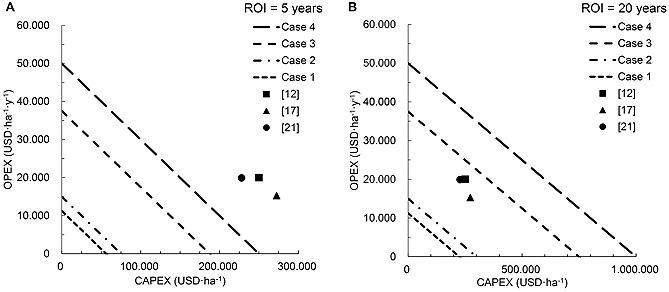
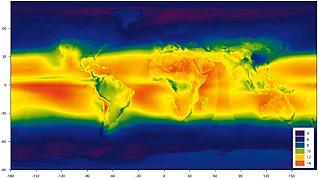
Microalgae have long been considered as one of most promising feedstocks with better characteristics for biofuels production over conventional energy crops. There have been a wide range of estimations on the feasibility of microalgal biofuels based on various productivity assumptions and data from different scales. The theoretical maximum algal biofuel productivity, however, can be calculated by the amount of solar irradiance and photosynthetic efficiency (PE), assuming other conditions are within the optimal range. Using the actual surface solar irradiance data around the world and PE of algal culture systems, maximum algal biomass and biofuel productivities were calculated, and feasibility of algal biofuel were assessed with the estimation. The results revealed that biofuel production would not easily meet the economic break-even point and may not be sustainable at a large-scale with the current algal biotechnology. Substantial reductions in the production cost, improvements in lipid productivity, recycling of resources, and utilization of non-conventional resources will be necessary for feasible mass production of algal biofuel. Among the emerging technologies, cultivation of microalgae in the ocean shows great potentials to meet the resource requirements and economic feasibility in algal biofuel production by utilizing various marine resources.
长期以来,微藻一直被视为最具潜力的原料之一,与传统能源作物相比,其在生物燃料生产方面具有更优良的特性。基于各种生产力假设和不同规模的数据,人们对微藻生物燃料的可行性进行了广泛的评估。然而,假设其他条件处于最佳范围,理论上微藻生物燃料的最大生产力可通过太阳辐照度和光合效率(PE)来计算。利用世界各地实际的地表太阳辐照度数据以及藻类培养系统的光合效率,计算了微藻的最大生物量和生物燃料生产力,并通过该估算评估了藻类生物燃料的可行性。结果表明,生物燃料生产不易达到经济盈亏平衡点,以目前的藻类生物技术大规模生产可能不可持续。要实现藻类生物燃料的可行大规模生产,必须大幅降低生产成本、提高脂质生产力、资源回收利用以及利用非常规资源。在新兴技术中,利用海洋中的各种资源在海洋中培养微藻,在满足藻类生物燃料生产的资源需求和经济可行性方面显示出巨大潜力。


 Zotero 插件