
终末期肾病中自主神经功能障碍与细胞炎症之间的关联
Association between autonomic nervous dysfunction and cellular inflammation in end-stage renal disease.
作者信息
Seibert Eric, Zohles Kristina, Ulrich Christof, Kluttig Alexander, Nuding Sebastian, Kors Jan A, Swenne Cees A, Werdan Karl, Fiedler Roman, Girndt Matthias
机构信息
Department of Internal Medicine II, Martin Luther University Halle-Wittenberg, Halle (Saale), Germany.
Institute of Medical Epidemiology, Biostatistics, and Informatics, Martin Luther University Halle-Wittenberg, Halle (Saale), Germany.
出版信息
BMC Cardiovasc Disord. 2016 Nov 3;16(1):210. doi: 10.1186/s12872-016-0385-1.
BACKGROUND
Alterations in autonomic nervous function are common in hemodialysis (HD) patients. Sympathetic as well as parasympathetic activation may be associated with immune and inflammatory responses. We intended to confirm a role of autonomous dysregulation for inflammation in HD patients.
METHODS
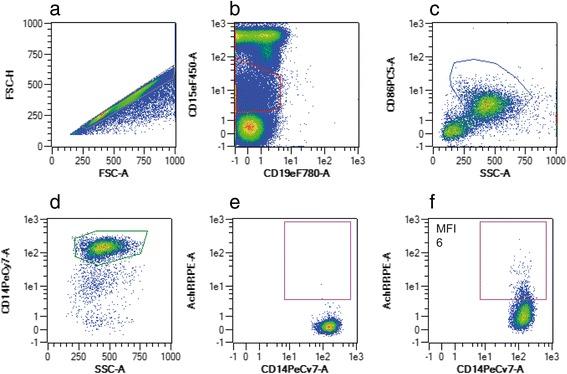
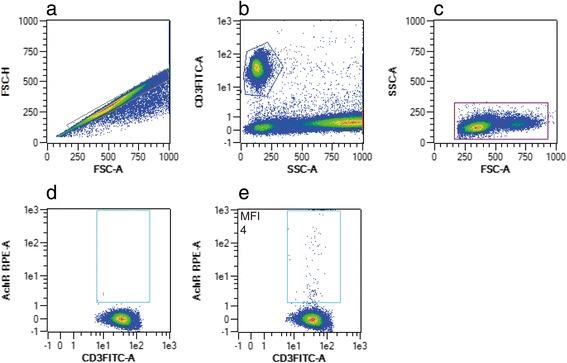
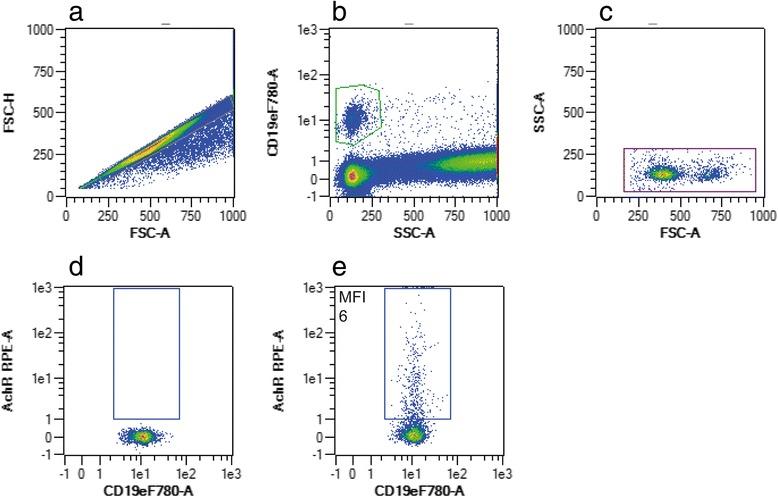
30 HD patients (including 15 diabetics) and 15 healthy controls were studied for heart rate variability (HRV) using 5 min ECG recordings. Heart rate variability was estimated by time-domain parameters (the standard deviation of the RR intervals (SDNN) and the percentage of pairs of adjacent RR intervals differing by >50 ms (pNN50)) and frequency-domain-analysis (high- and low-frequency variation of RR intervals, HF and LF). Inflammation was detected as serum C-reactive Protein (CRP), IL-6 and circulating monocyte subpopulation numbers. Immune cells were characterized by ACh receptor expression.
RESULTS
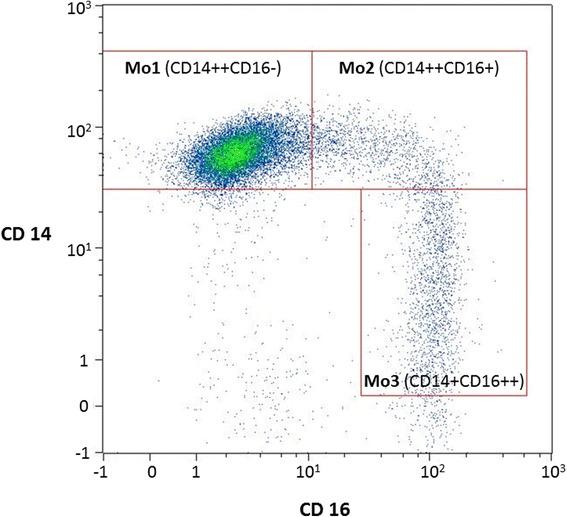
Patients differed from controls in terms of age (68.0 [14.8] yrs vs. 58.0 [13.0] yrs, p < 0.001; Median [IQR]) and sex. However, HRV parameters were different in controls and HD patients (SDNN controls 34.0 [14.0] ms, HD patients 15.5 [14.8] ms, p < 0.01). This finding was not restricted to patients with diabetes mellitus (diab), although diabetes is an important cause of autonomous dysfunction (SDNN, diab 13.0 [14.0] ms, non-diab 18.0 [15.3] ms, p = 0.8). LF and HF were reduced by the same magnitude to 1/3 of those in controls. Patients suffered from chronic inflammation (CRP 9.4 [12.9] mg/l, controls 1.6 [2.4] mg/l, p < 0.001) and expanded proinflammatory monocyte subpopulations (CD14++/CD16+ cells: patients 41 [27]/μl, controls 24 [18]/μl, p < 0.01). ECG parameters did not correlate with inflammation in patients, but monocyte ACh receptor expression was enhanced, indicating potentially elevated responsiveness of this cell type to parasympathetic regulation.
CONCLUSIONS
HD patients have strongly impaired HRV. Chronic inflammation is not related to autonomous dysfunction, although monocytes express the ACh receptor at enhanced density making them potentially more sensitive to parasympathetic effects.
TRIAL REGISTRATION
This study was listed with ClinicalTrials.gov ( NCT00878033 ).
背景
自主神经功能改变在血液透析(HD)患者中很常见。交感神经以及副交感神经激活可能与免疫和炎症反应相关。我们旨在证实自主神经调节异常在HD患者炎症中的作用。
方法
对30例HD患者(包括15例糖尿病患者)和15名健康对照者进行研究,使用5分钟心电图记录评估心率变异性(HRV)。通过时域参数(RR间期标准差(SDNN)以及相邻RR间期差值>50毫秒的配对百分比(pNN50))和频域分析(RR间期的高频和低频变化,HF和LF)来估计心率变异性。检测炎症指标为血清C反应蛋白(CRP)、白细胞介素-6以及循环单核细胞亚群数量。通过乙酰胆碱受体表达对免疫细胞进行特征分析。
结果
患者与对照者在年龄(68.0[14.8]岁对58.0[13.0]岁,p<0.001;中位数[四分位间距])和性别方面存在差异。然而,对照者和HD患者的HRV参数不同(SDNN对照者34.0[14.0]毫秒,HD患者15.5[14.8]毫秒,p<0.01)。这一发现并不局限于糖尿病患者(diab),尽管糖尿病是自主神经功能障碍的一个重要原因(SDNN,糖尿病患者13.0[14.0]毫秒,非糖尿病患者18.0[15.3]毫秒,p = 0.8)。LF和HF均降低至对照者的三分之一。患者存在慢性炎症(CRP 9.4[12.9]毫克/升,对照者1.6[2.4]毫克/升,p<0.001)且促炎单核细胞亚群增多(CD14++/CD16+细胞:患者41[27]/微升,对照者24[18]/微升,p<0.01)。患者的心电图参数与炎症无相关性,但单核细胞乙酰胆碱受体表达增强,表明该细胞类型对副交感神经调节的反应性可能升高。
结论
HD患者的HRV严重受损。慢性炎症与自主神经功能障碍无关,尽管单核细胞乙酰胆碱受体表达密度增加,使其可能对副交感神经作用更敏感。
试验注册
本研究已在ClinicalTrials.gov注册(NCT00878033)。
 Zotero 插件