
精子细胞特异性因子对雄性生育力的调控:从精子头部到尾部寻找避孕靶点。
The control of male fertility by spermatid-specific factors: searching for contraceptive targets from spermatozoon's head to tail.
作者信息
Chen Su-Ren, Batool Aalia, Wang Yu-Qian, Hao Xiao-Xia, Chang Chawn-Shang, Cheng C Yan, Liu Yi-Xun
机构信息
State Key Laboratory of Stem Cell and Reproductive Biology, Institute of Zoology, Chinese Academy of Sciences, Beijing, China.
University of the Chinese Academy of Sciences, Beijing, China.
出版信息
Cell Death Dis. 2016 Nov 10;7(11):e2472. doi: 10.1038/cddis.2016.344.
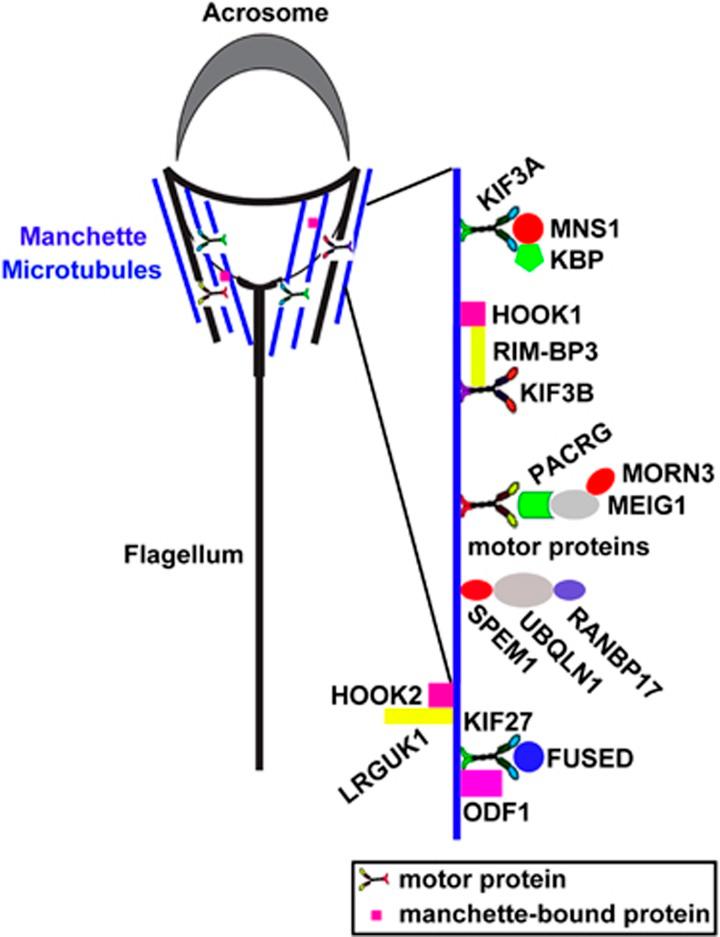
Male infertility due to abnormal spermatozoa has been reported in both animals and humans, but its pathogenic causes, including genetic abnormalities, remain largely unknown. On the other hand, contraceptive options for men are limited, and a specific, reversible and safe method of male contraception has been a long-standing quest in medicine. Some progress has recently been made in exploring the effects of spermatid-specifical genetic factors in controlling male fertility. A comprehensive search of PubMed for articles and reviews published in English before July 2016 was carried out using the search terms 'spermiogenesis failure', 'globozoospermia', 'spermatid-specific', 'acrosome', 'infertile', 'manchette', 'sperm connecting piece', 'sperm annulus', 'sperm ADAMs', 'flagellar abnormalities', 'sperm motility loss', 'sperm ion exchanger' and 'contraceptive targets'. Importantly, we have opted to focus on articles regarding spermatid-specific factors. Genetic studies to define the structure and physiology of sperm have shown that spermatozoa appear to be one of the most promising contraceptive targets. Here we summarize how these spermatid-specific factors regulate spermiogenesis and categorize them according to their localization and function from spermatid head to tail (e.g., acrosome, manchette, head-tail conjunction, annulus, principal piece of tail). In addition, we emphatically introduce small-molecule contraceptives, such as BRDT and PPP3CC/PPP3R2, which are currently being developed to target spermatogenic-specific proteins. We suggest that blocking the differentiation of haploid germ cells, which rarely affects early spermatogenic cell types and the testicular microenvironment, is a better choice than spermatogenic-specific proteins. The studies described here provide valuable information regarding the genetic and molecular defects causing male mouse infertility to improve our understanding of the importance of spermatid-specific factors in controlling fertility. Although a male contraceptive 'pill' is still many years away, research into the production of new small-molecule contraceptives targeting spermatid-specific proteins is the right avenue.
动物和人类中均有因精子异常导致男性不育的报道,但其致病原因,包括基因异常,在很大程度上仍不明确。另一方面,男性避孕方法有限,一种特定、可逆且安全的男性避孕方法一直是医学领域长期探索的目标。最近在探索精子细胞特异性基因因素对男性生育能力控制的影响方面取得了一些进展。使用搜索词“精子发生失败”“圆头精子症”“精子细胞特异性”“顶体”“不育”“袖套”“精子连接段”“精子环”“精子解聚素金属蛋白酶”“鞭毛异常”“精子活力丧失”“精子离子交换器”和“避孕靶点”,对2016年7月之前以英文发表的文章和综述进行了全面的PubMed搜索。重要的是,我们选择专注于关于精子细胞特异性因素的文章。旨在确定精子结构和生理学的基因研究表明,精子似乎是最有前景的避孕靶点之一。在此,我们总结这些精子细胞特异性因素如何调节精子发生,并根据它们从精子细胞头部到尾部的定位和功能(如顶体、袖套、头尾连接处、环、尾部主段)对其进行分类。此外,我们着重介绍了目前正在开发的针对生精特异性蛋白的小分子避孕药,如BRDT和PPP3CC/PPP3R2。我们认为,阻断单倍体生殖细胞的分化是比生精特异性蛋白更好的选择,因为这种方法很少影响早期生精细胞类型和睾丸微环境。此处描述的研究提供了有关导致雄性小鼠不育的基因和分子缺陷的有价值信息,以增进我们对精子细胞特异性因素在控制生育能力方面重要性的理解。尽管男性避孕药“药丸”的问世仍需多年,但研究生产针对精子细胞特异性蛋白的新型小分子避孕药是正确的途径。




 Zotero 插件