
胰岛素诱导的雌激素受体甲基化与动脉粥样硬化之间的相关性。
Correlation between insulin-induced estrogen receptor methylation and atherosclerosis.
作者信息
Min Jia, Weitian Zhong, Peng Cai, Yan Peng, Bo Zhang, Yan Wang, Yun Bai, Xukai Wang
机构信息
Department of Cardiology, Daping Hospital, Third Military Medical University, Chongqing, 400042, China.
Department of Medical Genetics, College of Basic Medicine, Third Military, Medical University, Chongqing, 400038, China.
出版信息
Cardiovasc Diabetol. 2016 Nov 10;15(1):156. doi: 10.1186/s12933-016-0471-9.
BACKGROUND
Hyperinsulinemia and insulin resistance have been recently recognized as an important cause of atherosclerosis. Clinical studies have also found that expression of the estrogen receptor is closely related to the incidence of atherosclerosis. This study investigate the effects of insulin and estrogen receptor α (ER-α) in atherosclerosis.
METHODS
Double knockout ApoE/Lepr mice were given intraperitoneal injections of insulin, and their aortae were harvested for hematoxylin-eosin staining and immunohistochemical analysis. In addition, vascular smooth muscle cells (VSMCs) were treated with insulin or infected with a lentivirus encoding exogenous ER-α, and changes in gene expression were detected by real-time polymerase chain reaction and western blotting. The methylation levels of the ER-α gene were tested using bisulfite sequencing PCR, and flow cytometry and EdU assay were used to measure VSMCs proliferation.
RESULTS
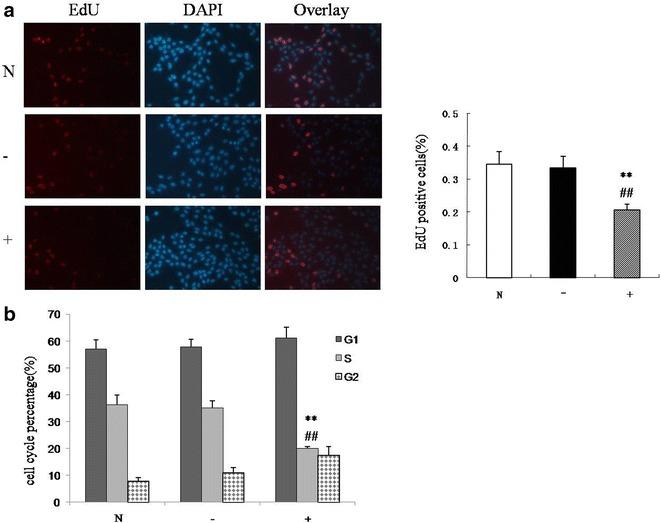
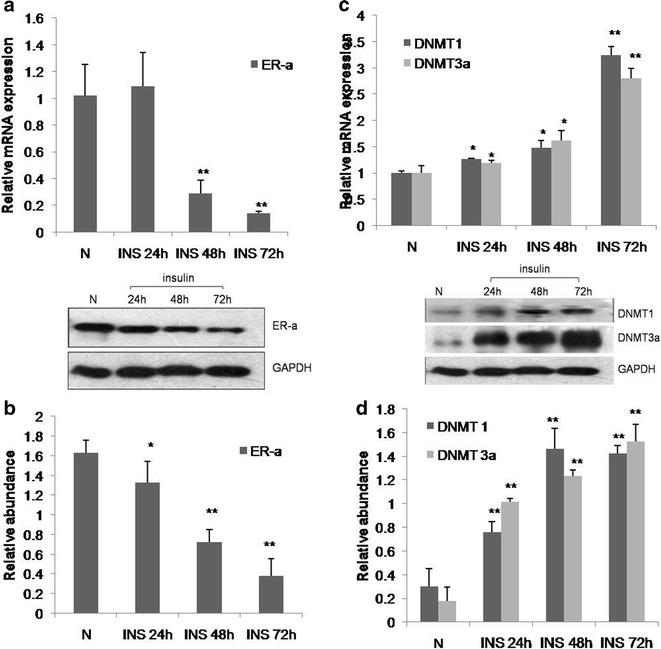
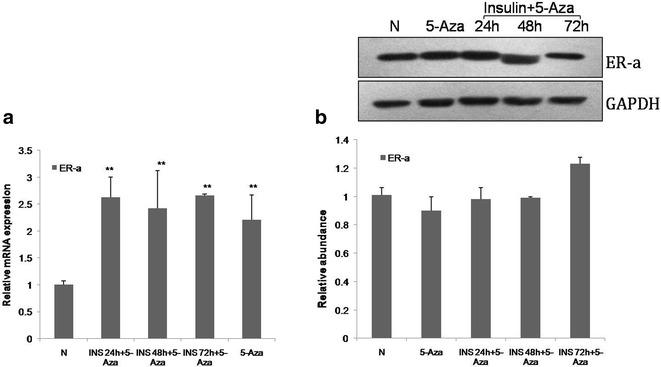
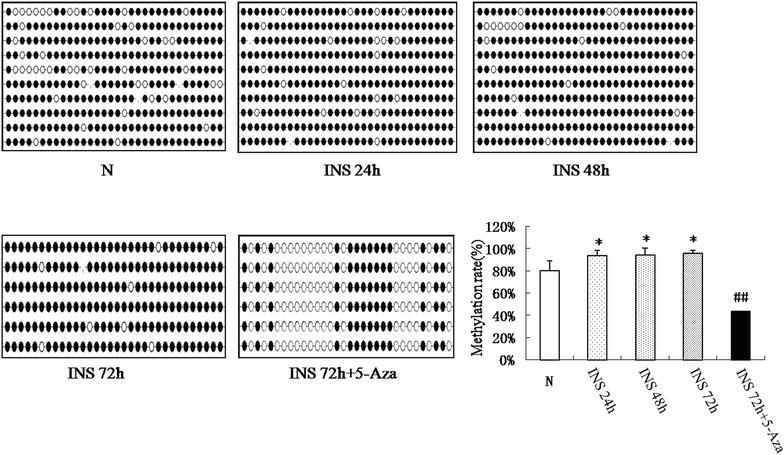
Our results showed that insulin can induce the formation of atherosclerosis. Gene expression analysis revealed that insulin promotes the expression of DNA methyltransferases and inhibits ER-α expression, while 5-aza-2'-deoxycytidine can inhibit this effect of insulin. Bisulfite sequencing PCR analysis showed that methylation of the ER-α second exon region increased in VSMCs treated with insulin. The results also showed that ER-α can inhibit VSMCs proliferation.
CONCLUSIONS
Our data suggest that insulin promotes the expression of DNA methyltransferases, induces methylation of ER-α second exon region and decreases the expression of ER-α, thereby interfering with estrogen regulation of VSMCs proliferation, resulting in atherosclerosis.
背景
高胰岛素血症和胰岛素抵抗最近被认为是动脉粥样硬化的一个重要原因。临床研究还发现雌激素受体的表达与动脉粥样硬化的发生率密切相关。本研究旨在探讨胰岛素和雌激素受体α(ER-α)在动脉粥样硬化中的作用。
方法
对双敲除ApoE/Lepr小鼠进行腹腔注射胰岛素,然后采集其主动脉进行苏木精-伊红染色和免疫组织化学分析。此外,用胰岛素处理血管平滑肌细胞(VSMC)或用编码外源性ER-α的慢病毒感染VSMC,通过实时聚合酶链反应和蛋白质印迹法检测基因表达的变化。使用亚硫酸氢盐测序PCR检测ER-α基因的甲基化水平,并用流式细胞术和EdU检测法测量VSMC的增殖。
结果
我们的结果表明胰岛素可诱导动脉粥样硬化的形成。基因表达分析显示,胰岛素促进DNA甲基转移酶的表达并抑制ER-α的表达,而5-氮杂-2'-脱氧胞苷可抑制胰岛素的这种作用。亚硫酸氢盐测序PCR分析表明,用胰岛素处理的VSMC中ER-α第二外显子区域的甲基化增加。结果还表明,ER-α可抑制VSMC的增殖。
结论
我们的数据表明,胰岛素促进DNA甲基转移酶的表达,诱导ER-α第二外显子区域的甲基化并降低ER-α的表达,从而干扰雌激素对VSMC增殖的调节,导致动脉粥样硬化。


 Zotero 插件