
鼻内注射催产素可增强支持自闭症儿童社会动机和社会认知的神经回路的连通性。
Intranasal Oxytocin Enhances Connectivity in the Neural Circuitry Supporting Social Motivation and Social Perception in Children with Autism.
作者信息
Gordon Ilanit, Jack Allison, Pretzsch Charlotte M, Vander Wyk Brent, Leckman James F, Feldman Ruth, Pelphrey Kevin A
机构信息
Child Study Center, Yale University, New Haven, CT 06520, USA.
Department of Psychology, Bar-Ilan University, Ramat-Gan 5290002, Israel.
出版信息
Sci Rep. 2016 Nov 15;6:35054. doi: 10.1038/srep35054.
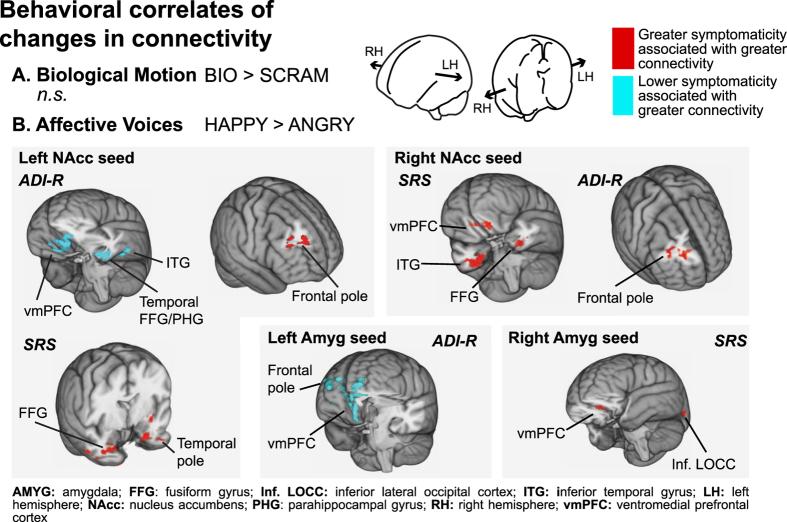
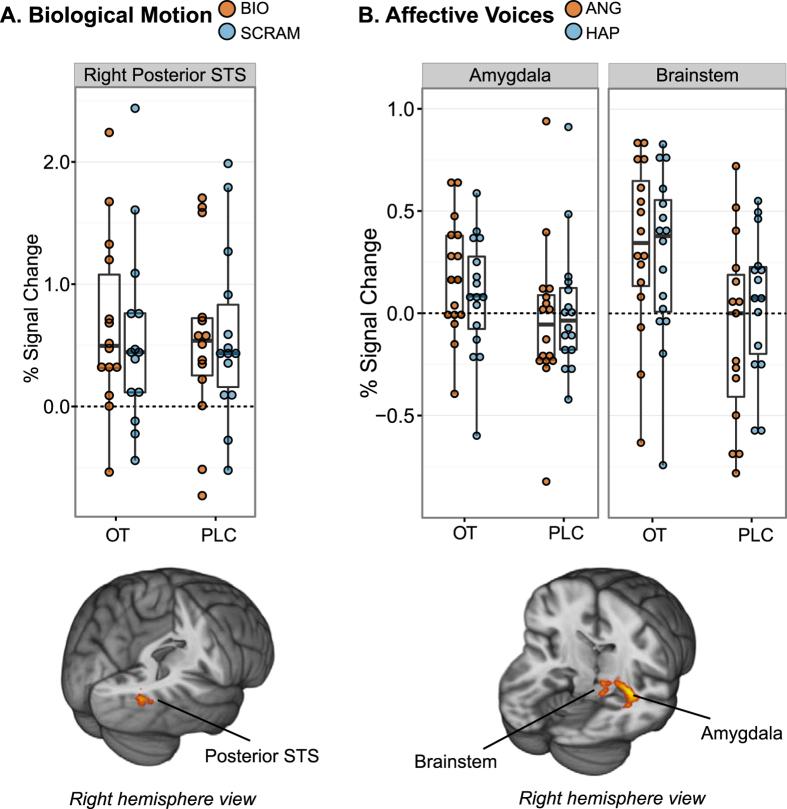
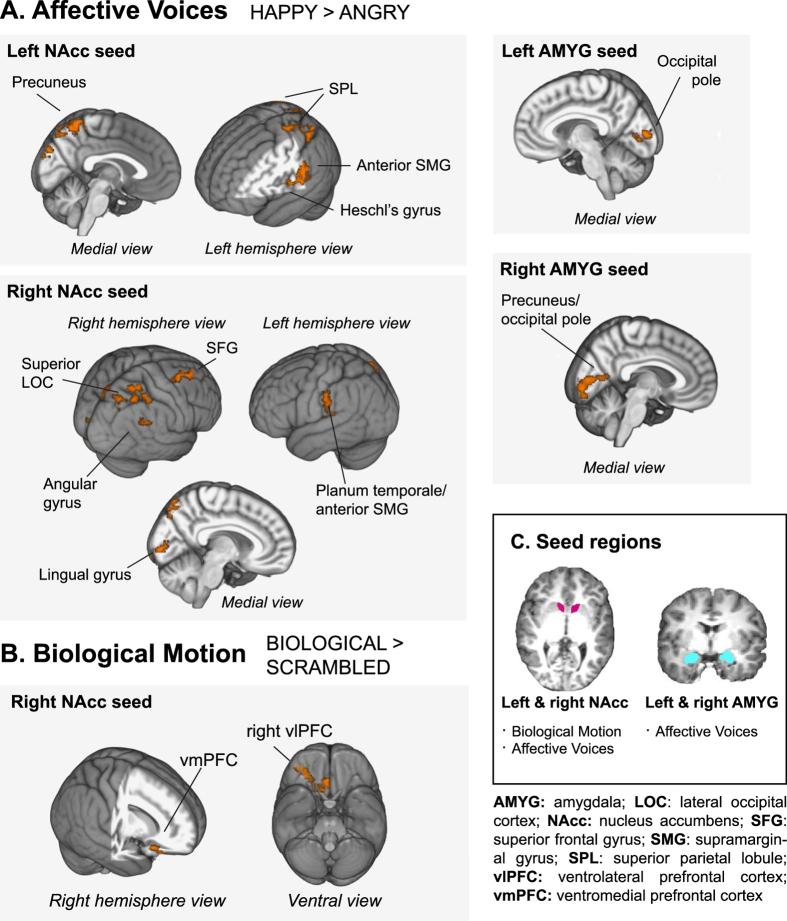
Oxytocin (OT) has become a focus in investigations of autism spectrum disorder (ASD). The social deficits that characterize ASD may relate to reduced connectivity between brain sites on the mesolimbic reward pathway (nucleus accumbens; amygdala) that receive OT projections and contribute to social motivation, and cortical sites involved in social perception. Using functional magnetic resonance imaging and a randomized, double blind, placebo-controlled crossover design, we show that OT administration in ASD increases activity in brain regions important for perceiving social-emotional information. Further, OT enhances connectivity between nodes of the brain's reward and socioemotional processing systems, and does so preferentially for social (versus nonsocial) stimuli. This effect is observed both while viewing coherent versus scrambled biological motion, and while listening to happy versus angry voices. Our findings suggest a mechanism by which intranasal OT may bolster social motivation-one that could, in future, be harnessed to augment behavioral treatments for ASD.
催产素(OT)已成为自闭症谱系障碍(ASD)研究的焦点。ASD的典型社交缺陷可能与中脑边缘奖赏通路(伏隔核;杏仁核)上接收OT投射并有助于社交动机的脑区与参与社会感知的皮质区域之间的连接性降低有关。使用功能磁共振成像以及随机、双盲、安慰剂对照的交叉设计,我们发现给ASD患者使用OT会增加对感知社会情感信息很重要的脑区的活动。此外,OT增强了大脑奖赏和社会情感处理系统节点之间的连接性,并且对社交(而非非社交)刺激有优先增强作用。在观看连贯与混乱的生物运动以及聆听开心与愤怒的声音时均观察到了这种效应。我们的研究结果提示了一种机制,通过该机制鼻内给予OT可能会增强社交动机——未来这一机制可用于加强对ASD的行为治疗。

 Zotero 插件