
miR-142-3p表达升高与系统性红斑狼疮中单核细胞来源树突状细胞的促炎功能相关。
Elevated expression of miR-142-3p is related to the pro-inflammatory function of monocyte-derived dendritic cells in SLE.
作者信息
Wang Yilun, Liang Jun, Qin Haihong, Ge Yan, Du Juan, Lin Jinran, Zhu Xiaohua, Wang Jie, Xu Jinhua
机构信息
Department of Dermatology, Huashan Hospital, Fudan University, 12 Wulumuqi Zhong Road, Shanghai, 200040, People's Republic of China.
Department of Neurology, Huashan Hospital, Fudan University, Shanghai, People's Republic of China.
出版信息
Arthritis Res Ther. 2016 Nov 16;18(1):263. doi: 10.1186/s13075-016-1158-z.
BACKGROUND
Recent studies have shown that alterations in the function of dendritic cells (DCs) are involved in the pathogenesis of systemic lupus erythematosus (SLE). However, the mechanism of the alteration remains unclear.
METHODS
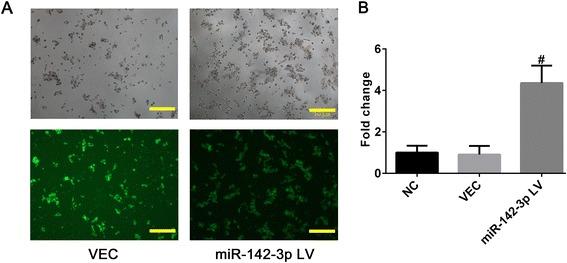
We cultured monocyte-derived DCs (moDCs) in vitro and examined the cytokines and chemokines in the supernatants of moDCs in negative controls (NC) and SLE patients in active phase. We then profiled microRNAs (miRNAs) of LPS-stimulated moDCs in SLE patients and used real-time PCR to verify the differentially expressed miRNAs. A lentiviral construct was used to overexpress the level of miR-142-3p in moDCs of NC. We examined the cytokines and chemokines in the supernatants of moDCs overexpressing miR-142-3p and used Transwell test, flow cytometric analysis and cell proliferation to observe the impact on CD4 T cells in moDC-CD4T cell co-culture.
RESULTS
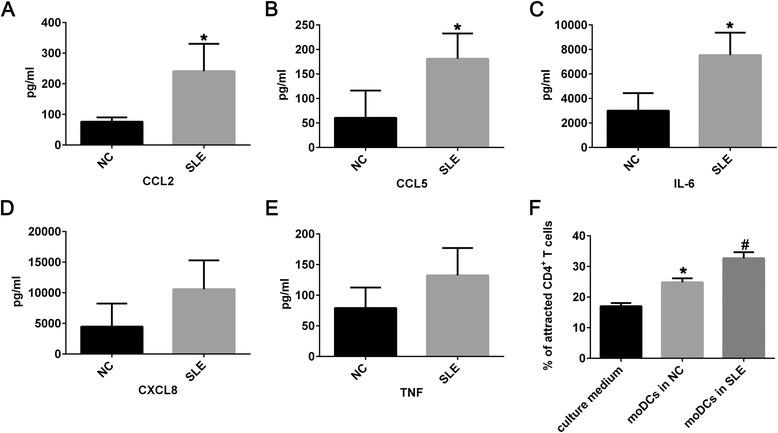
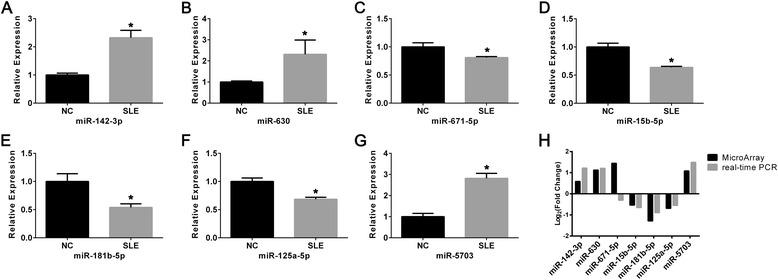
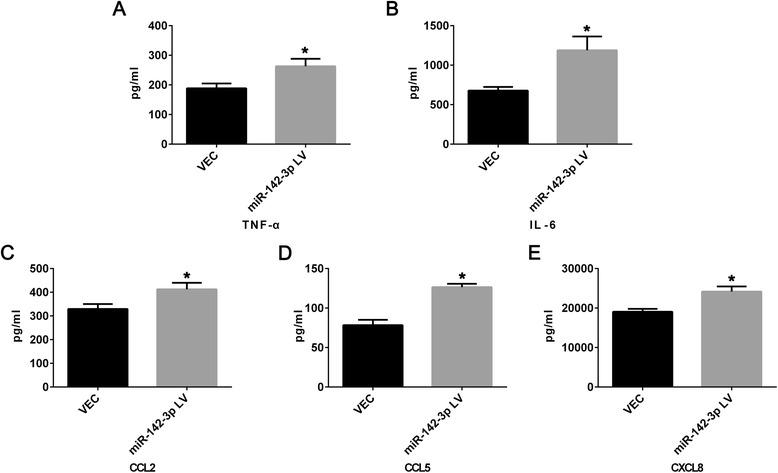
moDCs in patients with SLE secreted increased level of IL-6, CCL2 and CCL5, with attraction of more CD4 T cells compared with NC. We found 18 differentially expressed microRNAs in moDCs of SLE patients by microarray, and target gene prediction showed some target genes of differentially expressed miRNAs were involved in cytokine regulation. miR-142-3p was verified among the highly expressed miRNAs in the SLE group and overexpressing miR-142-3p in moDCs of the NC group caused an increase of SLE-related cytokines, such as CCL2, CCL5, CXCL8, IL-6 and TNF-α. Moreover, moDCs overexpressed with miR-142-3p resulted in attraction of an increased number of CD4 T cells and in suppression of the proportion of Tregs in DC-CD4T cell co-culture whereas the proliferation of CD4T cells was not altered.
CONCLUSIONS
The results demonstrated a role for miR-142-3p in regulating the pro-inflammatory function of moDCs in the pathogenesis of SLE. These findings suggested that miR-142-3p could serve as a novel therapeutic target for the treatment of SLE.
背景
近期研究表明,树突状细胞(DCs)功能改变参与系统性红斑狼疮(SLE)的发病机制。然而,这种改变的机制仍不清楚。
方法
我们在体外培养单核细胞来源的DCs(moDCs),检测阴性对照组(NC)和活动期SLE患者moDCs上清液中的细胞因子和趋化因子。然后对SLE患者中经脂多糖(LPS)刺激的moDCs进行微小RNA(miRNA)分析,并使用实时定量聚合酶链反应(PCR)验证差异表达的miRNA。使用慢病毒构建体来提高NC组moDCs中miR-142-3p的水平。我们检测了过表达miR-142-3p的moDCs上清液中的细胞因子和趋化因子,并使用Transwell试验、流式细胞术分析和细胞增殖实验来观察在moDC-CD4T细胞共培养中对CD4 T细胞的影响。
结果
与NC组相比,SLE患者的moDCs分泌的IL-6、CCL2和CCL5水平升高,吸引了更多的CD4 T细胞。通过基因芯片我们在SLE患者的moDCs中发现了18种差异表达的miRNA,靶基因预测显示差异表达miRNA的一些靶基因参与细胞因子调节。miR-142-3p在SLE组高表达的miRNA中得到验证,在NC组moDCs中过表达miR-142-3p导致SLE相关细胞因子增加,如CCL2、CCL5、CXCL8、IL-6和TNF-α。此外,过表达miR-142-3p的moDCs导致在DC-CD4T细胞共培养中吸引更多数量的CD4 T细胞,并抑制调节性T细胞(Tregs)的比例,而CD4T细胞的增殖未改变。
结论
结果表明miR-142-3p在SLE发病机制中调节moDCs的促炎功能中发挥作用。这些发现提示miR-142-3p可作为治疗SLE的新型治疗靶点。


 Zotero 插件