
优化系统评价中的文献检索——MEDLINE、EMBASE和CENTRAL足以识别肌肉骨骼疾病领域的效应研究吗?
Optimizing literature search in systematic reviews - are MEDLINE, EMBASE and CENTRAL enough for identifying effect studies within the area of musculoskeletal disorders?
作者信息
Aagaard Thomas, Lund Hans, Juhl Carsten
机构信息
Department of Physiotherapy, Holbaek University Hospital, Holbaek, Denmark.
Research Unit for Musculoskeletal Function and Physiotherapy, Institute for Sports Science and Clinical Biomechanics, University of Southern Denmark, Odense, Denmark.
出版信息
BMC Med Res Methodol. 2016 Nov 22;16(1):161. doi: 10.1186/s12874-016-0264-6.
BACKGROUND
When conducting systematic reviews, it is essential to perform a comprehensive literature search to identify all published studies relevant to the specific research question. The Cochrane Collaborations Methodological Expectations of Cochrane Intervention Reviews (MECIR) guidelines state that searching MEDLINE, EMBASE and CENTRAL should be considered mandatory. The aim of this study was to evaluate the MECIR recommendations to use MEDLINE, EMBASE and CENTRAL combined, and examine the yield of using these to find randomized controlled trials (RCTs) within the area of musculoskeletal disorders.
METHODS
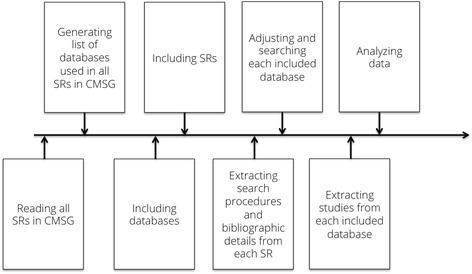
Data sources were systematic reviews published by the Cochrane Musculoskeletal Review Group, including at least five RCTs, reporting a search history, searching MEDLINE, EMBASE, CENTRAL, and adding reference- and hand-searching. Additional databases were deemed eligible if they indexed RCTs, were in English and used in more than three of the systematic reviews. Relative recall was calculated as the number of studies identified by the literature search divided by the number of eligible studies i.e. included studies in the individual systematic reviews. Finally, cumulative median recall was calculated for MEDLINE, EMBASE and CENTRAL combined followed by the databases yielding additional studies.
RESULTS
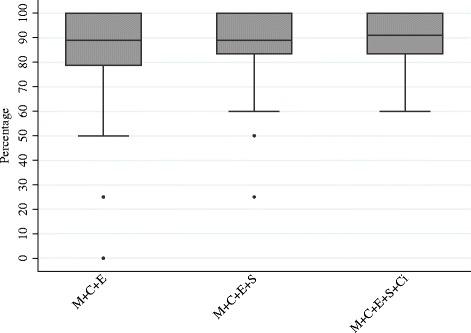
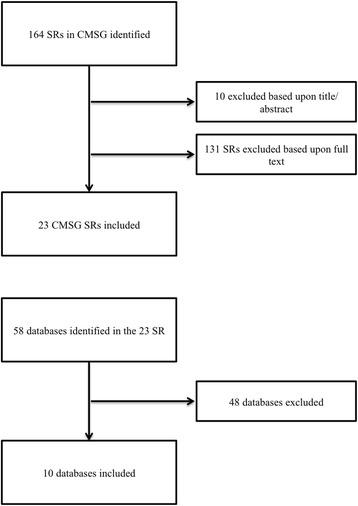
Deemed eligible was twenty-three systematic reviews and the databases included other than MEDLINE, EMBASE and CENTRAL was AMED, CINAHL, HealthSTAR, MANTIS, OT-Seeker, PEDro, PsychINFO, SCOPUS, SportDISCUS and Web of Science. Cumulative median recall for combined searching in MEDLINE, EMBASE and CENTRAL was 88.9% and increased to 90.9% when adding 10 additional databases.
CONCLUSION
Searching MEDLINE, EMBASE and CENTRAL was not sufficient for identifying all effect studies on musculoskeletal disorders, but additional ten databases did only increase the median recall by 2%. It is possible that searching databases is not sufficient to identify all relevant references, and that reviewers must rely upon additional sources in their literature search. However further research is needed.
背景
在进行系统评价时,进行全面的文献检索以识别与特定研究问题相关的所有已发表研究至关重要。Cochrane协作网的Cochrane干预评价方法学期望(MECIR)指南指出,检索MEDLINE、EMBASE和CENTRAL应被视为强制性的。本研究的目的是评估MECIR关于联合使用MEDLINE、EMBASE和CENTRAL的建议,并检验使用这些数据库在肌肉骨骼疾病领域查找随机对照试验(RCT)的产出率。
方法
数据来源是Cochrane肌肉骨骼评价小组发表的系统评价,包括至少五项RCT,报告了检索历史,检索了MEDLINE、EMBASE、CENTRAL,并进行了参考文献检索和手工检索。如果其他数据库索引了RCT,为英文且在三项以上的系统评价中使用,则被视为合格。相对召回率计算为文献检索识别的研究数量除以合格研究数量,即各个系统评价中纳入的研究数量。最后,计算MEDLINE、EMBASE和CENTRAL联合检索以及产生额外研究的数据库的累积中位数召回率。
结果
有23项系统评价被视为合格,除MEDLINE、EMBASE和CENTRAL之外纳入的数据库有AMED、CINAHL、HealthSTAR、MANTIS、OT-Seeker、PEDro、PsychINFO、SCOPUS、SportDISCUS和Web of Science。MEDLINE、EMBASE和CENTRAL联合检索的累积中位数召回率为88.9%,增加10个额外数据库后增至90.9%。
结论
检索MEDLINE、EMBASE和CENTRAL不足以识别肌肉骨骼疾病的所有效应研究,但额外的10个数据库仅使中位数召回率提高了2%。检索数据库可能不足以识别所有相关参考文献,评审人员在文献检索中必须依赖其他来源。然而,还需要进一步研究。
 Zotero 插件