
通过抑制超氧化物歧化酶1(SOD1)可增强聚(ADP-核糖)聚合酶1(PARP1)抑制对RAD54B缺陷型结肠癌细胞的合成致死杀伤作用。
The synthetic lethal killing of RAD54B-deficient colorectal cancer cells by PARP1 inhibition is enhanced with SOD1 inhibition.
作者信息
McAndrew Erin N, Lepage Chloe C, McManus Kirk J
机构信息
University of Manitoba, Department of Biochemistry & Medical Genetics, Winnipeg, Manitoba, Canada.
Research Institute in Oncology and Hematology, CancerCare Manitoba, Winnipeg, Manitoba, Canada.
出版信息
Oncotarget. 2016 Dec 27;7(52):87417-87430. doi: 10.18632/oncotarget.13654.
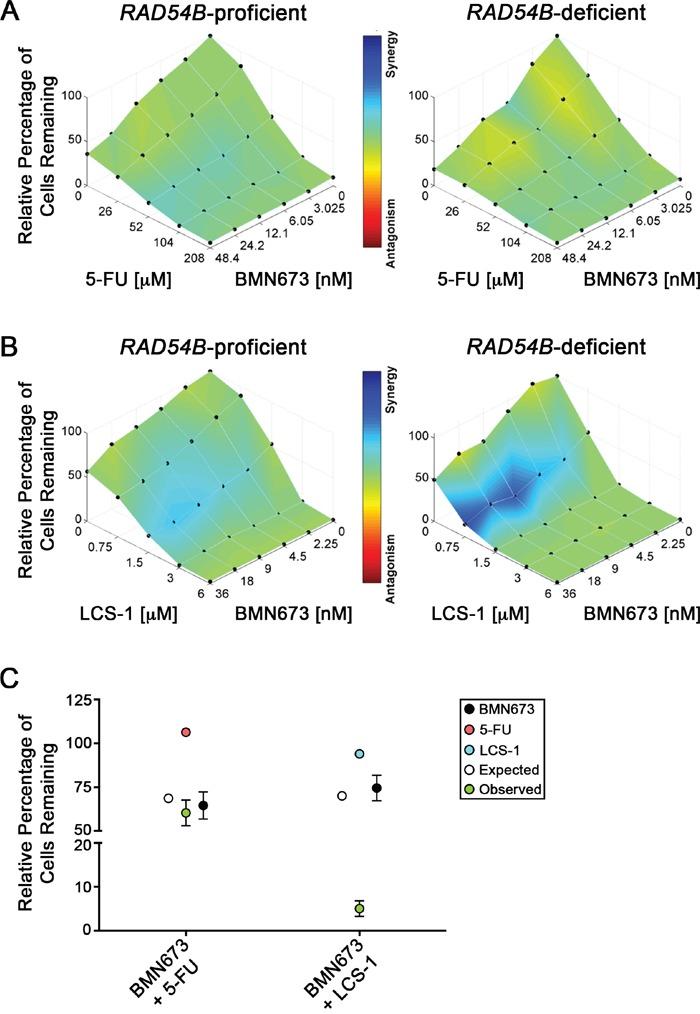
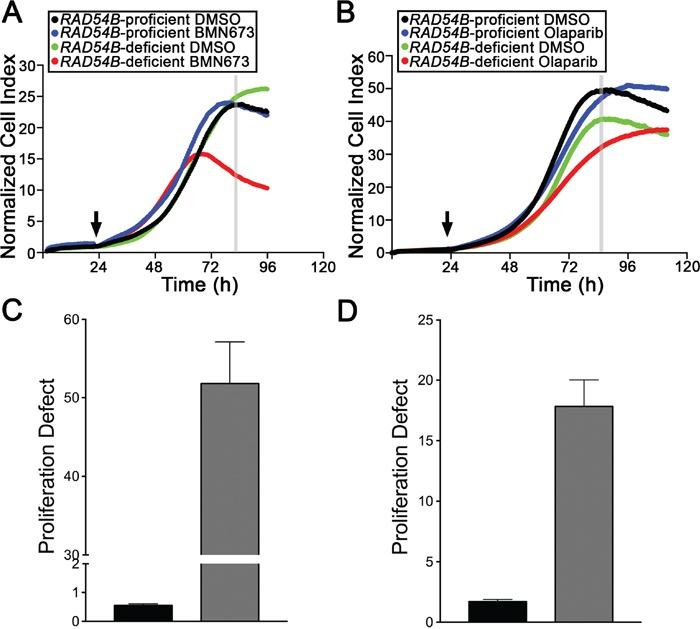
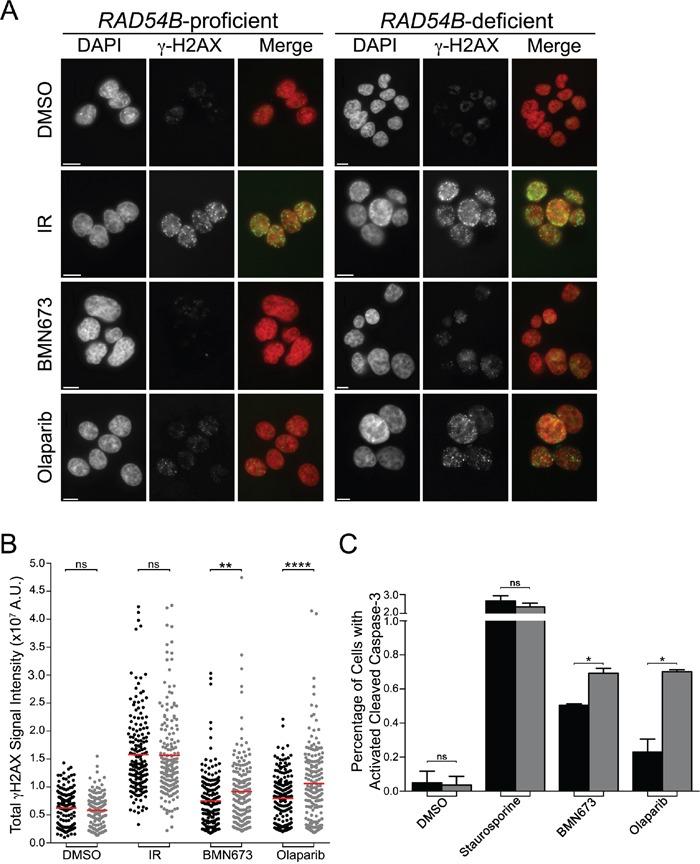
Colorectal cancer (CRC) is a leading cause of cancer-related death throughout the world. Despite improved screening efforts, most CRCs are diagnosed at late stages when surgery alone is not curative. Moreover, the low 5-year survival rate (~8-13%) for those living with stage IV CRC highlights the need for better treatment options. Many current chemotherapeutic approaches are non-specific and associated with side effects due to their tendency to target both normal and cancer cells. To address this issue, synthetic lethal (SL) approaches are now being explored in cancer and are defined as the lethal combination of two independently viable mutations/deletions. From a therapeutic perspective, SL interactors of genes mutated in cancer serve as candidate drug targets. The present study focuses on RAD54B, a gene that is aberrantly expressed in many cancer types, including CRC. We show that PARP1 silencing or inhibition (BMN673 or Olaparib) leads to selective killing within RAD54B-deficient cells relative to controls, and is accompanied by increases in γ-H2AX (a surrogate marker of DNA double strand breaks) and cleaved Caspase-3 (an apoptotic indicator). We further show that BMN673 synergizes with LCS-1 (an inhibitor of an established RAD54B SL interactor) to induce enhanced killing in RAD54B-deficient cells. Collectively, these data identify RAD54B and PARP1 as SL interactors, and thus reveal PARP1 as a novel candidate drug target in RAD54B-deficient CRCs. These findings further show that combinatorial chemotherapies involving multiple SL targets may promote synergistic killing within cancer cells, a strategy that may hold potential in many cancer contexts.
结直肠癌(CRC)是全球癌症相关死亡的主要原因之一。尽管筛查力度有所提高,但大多数CRC在晚期才被诊断出来,此时仅靠手术无法治愈。此外,IV期CRC患者的5年生存率较低(约8-13%),这凸显了需要更好的治疗选择。目前许多化疗方法具有非特异性,且由于它们倾向于同时靶向正常细胞和癌细胞,会产生副作用。为了解决这个问题,目前正在癌症研究中探索合成致死(SL)方法,其定义为两个独立可行的突变/缺失的致死组合。从治疗角度来看,癌症中发生突变的基因的SL相互作用蛋白可作为候选药物靶点。本研究聚焦于RAD54B,该基因在包括CRC在内的多种癌症类型中异常表达。我们发现,相对于对照组,PARP1沉默或抑制(BMN673或奥拉帕利)会导致RAD54B缺陷细胞内的选择性杀伤,并伴随着γ-H2AX(DNA双链断裂的替代标志物)和裂解的半胱天冬酶-3(凋亡指标)的增加。我们进一步表明,BMN


 Zotero 插件