
塞内加尔两个乡村综合征监测系统的实施
Implementation of Syndromic Surveillance Systems in Two Rural Villages in Senegal.
作者信息
Abat Cédric, Colson Philippe, Chaudet Hervé, Rolain Jean-Marc, Bassene Hubert, Diallo Aldiouma, Mediannikov Oleg, Fenollar Florence, Raoult Didier, Sokhna Cheikh
机构信息
Aix-Marseille Univ., URMITE UM 63 CNRS 7278 IRD 198 INSERM U1095, IHU Méditerranée Infection, Facultés de Médecine et de Pharmacie, 27 boulevard Jean Moulin, Marseille CEDEX 05, France.
Campus IRD d' Hann Maristes, Dakar, Sénégal.
出版信息
PLoS Negl Trop Dis. 2016 Dec 7;10(12):e0005212. doi: 10.1371/journal.pntd.0005212. eCollection 2016 Dec.
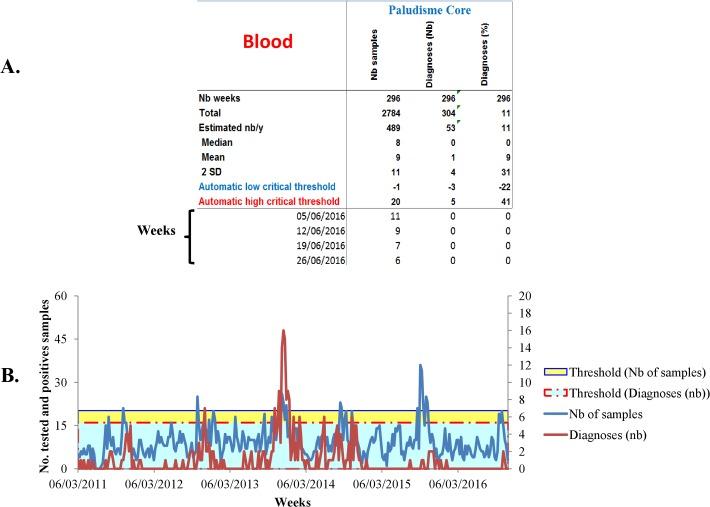
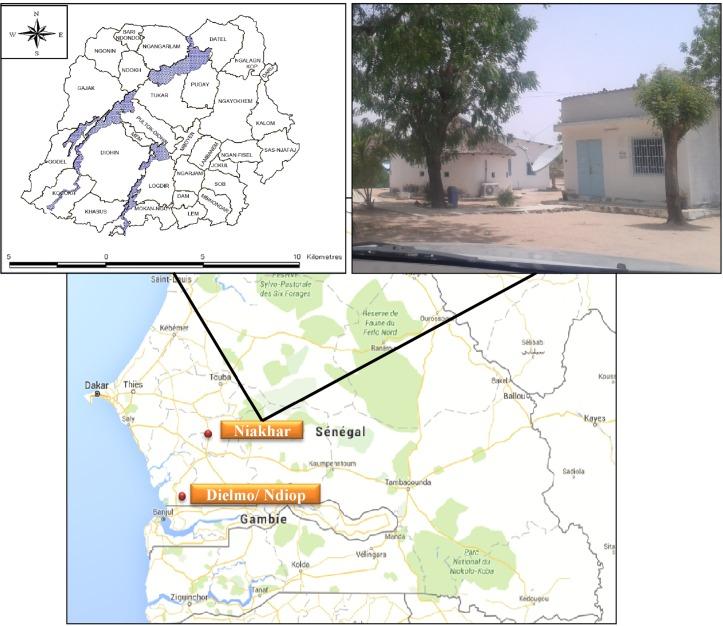
Infectious diseases still represent a major challenge for humanity. In this context, their surveillance is critical. From 2010 to 2016, two Point-Of-Care (POC) laboratories have been successfully implemented in the rural Saloum region of Senegal. In parallel, a homemade syndromic surveillance system called EPIMIC was implemented to monitor infectious diseases using data produced by the POC laboratory of the Timone hospital in Marseille, France. The aim of this study is to describe the steps necessary for implementing EPIMIC using data routinely produced by two POC laboratories (POC-L) established in rural Senegal villages. After improving EPIMIC, we started to monitor the 15 pathogens routinely diagnosed in the two POC-L using the same methodology we used in France. In 5 years, 2,577 deduplicated patients-samples couples from 775 different patients have been tested in the Dielmo and Ndiop POC-L. 739 deduplicated patients-samples couples were found to be positive to at least one of the tested pathogens. The retrospective analysis of the Dielmo and Ndiop POC data with EPIMIC allowed to generate 443 alarms. Since January 2016, 316 deduplicated patients-samples couples collected from 298 different patients were processed in the Niakhar POC laboratory. 56 deduplicated patients-samples couples were found to be positive to at least one of the tested pathogens. The retrospective analysis of the data of the Niakhar POC laboratory with EPIMIC allowed to generate 14 alarms. Although some improvements are still needed, EPIMIC has been successfully spread using data routinely produced by two rural POC-L in Senegal, West Africa.
传染病仍然是人类面临的重大挑战。在此背景下,对其进行监测至关重要。2010年至2016年期间,在塞内加尔的萨卢姆农村地区成功建立了两个即时检测(POC)实验室。与此同时,实施了一个名为EPIMIC的自制症状监测系统,利用法国马赛蒂蒙医院POC实验室产生的数据来监测传染病。本研究的目的是描述利用塞内加尔农村村庄建立的两个POC实验室(POC-L)常规产生的数据实施EPIMIC所需的步骤。在对EPIMIC进行改进后,我们开始使用在法国采用的相同方法监测两个POC-L常规诊断的15种病原体。在5年时间里,迪耶尔莫和恩迪奥普的POC-L对来自775名不同患者的2577对去重后的患者-样本进行了检测。发现739对去重后的患者-样本至少对一种检测病原体呈阳性。使用EPIMIC对迪耶尔莫和恩迪奥普POC数据进行回顾性分析产生了443次警报。自2016年1月以来,尼亚喀尔POC实验室对从298名不同患者收集的316对去重后的患者-样本进行了检测。发现56对去重后的患者-样本至少对一种检测病原体呈阳性。使用EPIMIC对尼亚喀尔POC实验室的数据进行回顾性分析产生了14次警报。尽管仍需一些改进,但EPIMIC已利用西非塞内加尔两个农村POC-L常规产生的数据成功推广。
 Zotero 插件