
谷氨酰胺酶1和胸苷酸合成酶的双重靶向在非小细胞肺癌中协同引发细胞死亡。
Dual targeting of glutaminase 1 and thymidylate synthase elicits death synergistically in NSCLC.
作者信息
Lee Jae-Seon, Kang Joon H, Lee Seon-Hyeong, Hong Dongwan, Son Jaekyoung, Hong Kyeong M, Song Jaewhan, Kim Soo-Youl
机构信息
Cancer Cell and Molecular Biology Branch, Division of Cancer Biology, National Cancer Center, Goyang, Gyeonggi-do 410-769, Republic of Korea.
Department of Biochemistry, College of Life Science and Biotechnology, Yonsei University, Seoul 120-749, Republic of Korea.
出版信息
Cell Death Dis. 2016 Dec 8;7(12):e2511. doi: 10.1038/cddis.2016.404.
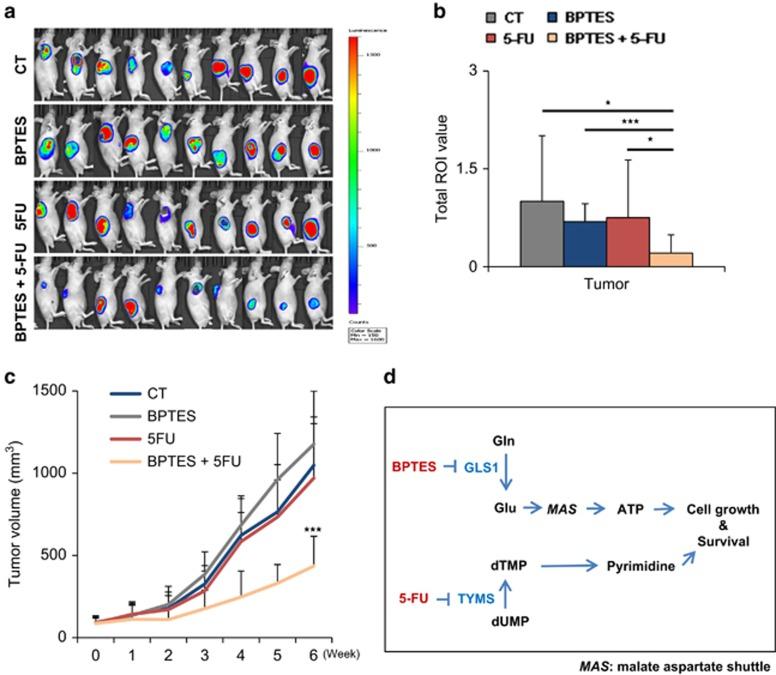
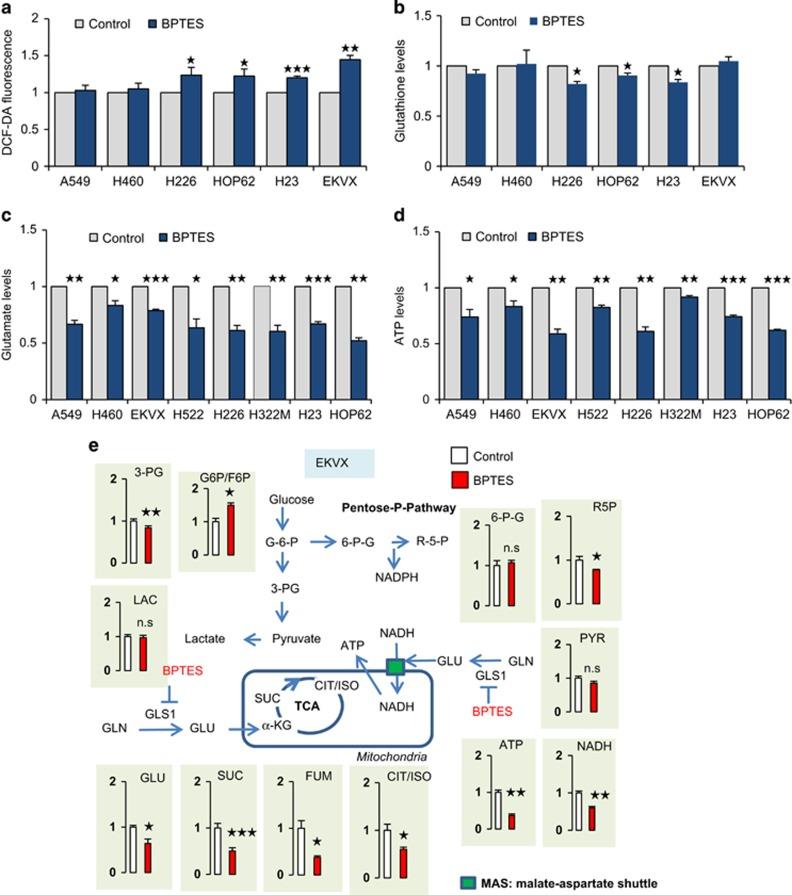
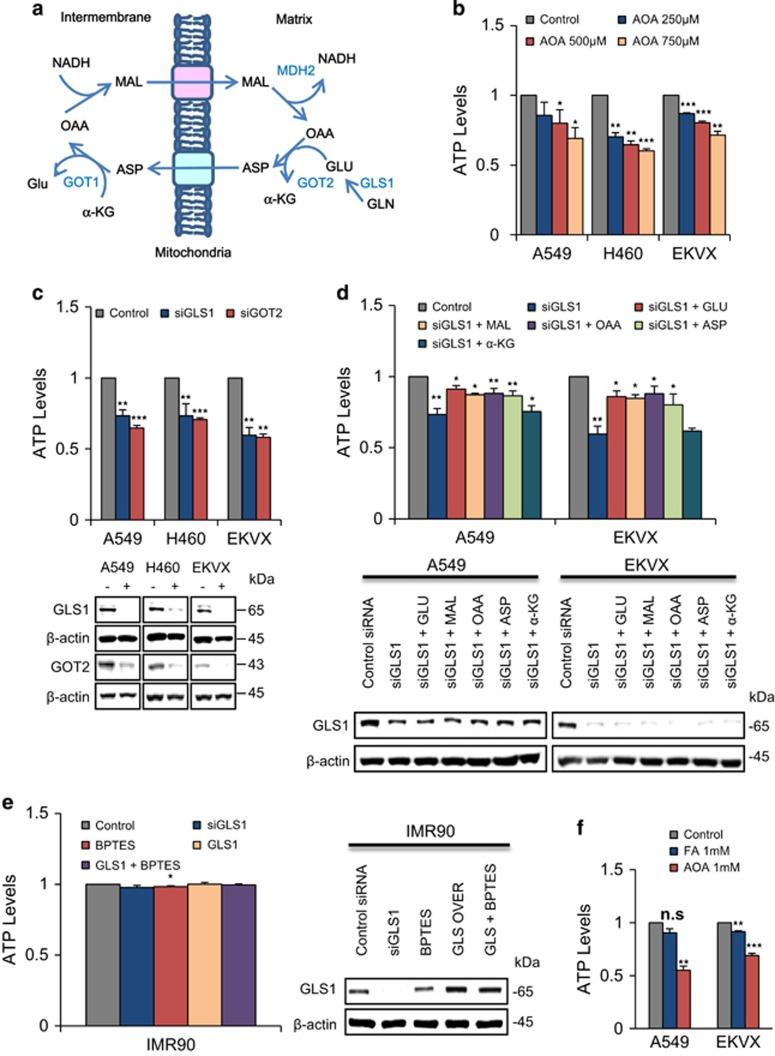
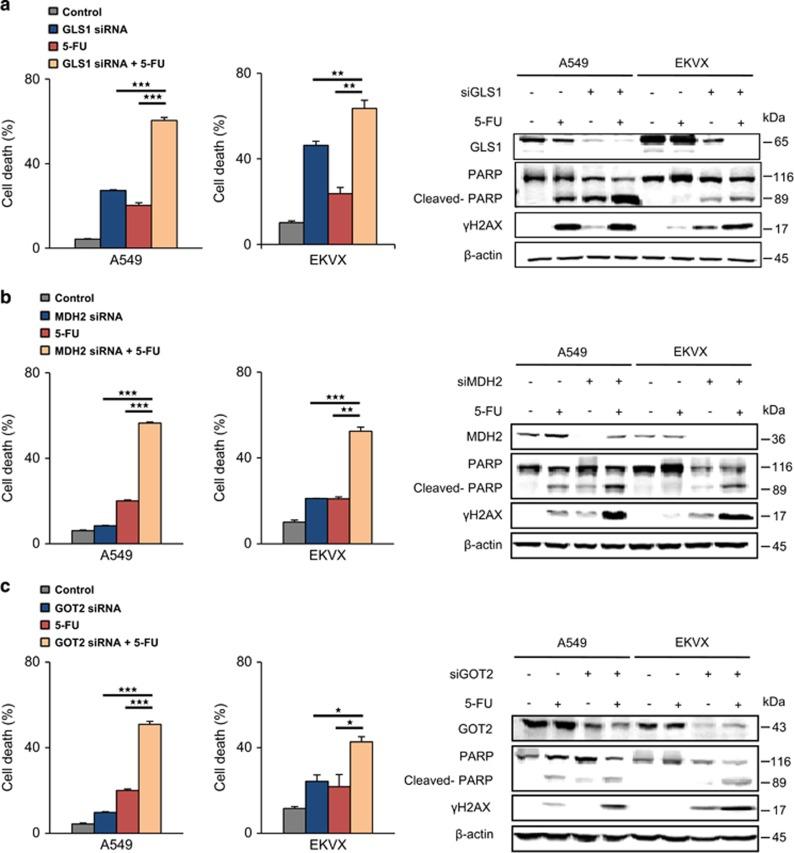
Glutaminase 1 (GLS1) expression is increased in non-small cell lung cancer (NSCLC). GLS1 knockdown using siRNA or inhibition using bis-2-(5-phenylacetamido-1,3,4-thiadiazol-2-yl)ethyl sulfide (BPTES) induced cell cycle arrest with significant reduction of ATP level while levels of reactive oxygen species or glutathione were not affected in NSCLC cell lines. Recently we found that NSCLC significantly depends on cytosol NADH for ATP production. GLS1 remarkably contributes to ATP production through transferring cytosolic NADH into mitochondria via malate-aspartate shuttle by supply of glutamate in NSCLC. Regulation of malate-aspartate shuttle by knockdown or inhibition of glutamic-oxaloacetic transaminase 2 or malate dehydrogenase 2 mimicked GLS1 knockdown, which induced cell death with ATP reduction in NSCLC. Therefore, GLS1 inhibition induced cell cycle arrest with ATP depletion by glutamate reduction. Dual inhibition with BPTES and thymidylate synthase inhibitor, 5-fluorouracil (5-FU), elicits cell death synergistically through cell cycle arrest in NSCLC. A preclinical xenograft model of NSCLC showed remarkable anti-tumour effect synergistically in the BPTES and 5-FU dual therapy group.
谷氨酰胺酶1(GLS1)在非小细胞肺癌(NSCLC)中表达增加。使用小干扰RNA(siRNA)敲低GLS1或使用双-2-(5-苯乙酰氨基-1,3,4-噻二唑-2-基)乙基硫醚(BPTES)抑制GLS1,可诱导细胞周期停滞,同时显著降低ATP水平,而在NSCLC细胞系中,活性氧或谷胱甘肽水平不受影响。最近我们发现,NSCLC显著依赖胞质NADH来产生ATP。在NSCLC中,GLS1通过苹果酸-天冬氨酸穿梭将胞质NADH转运至线粒体,通过提供谷氨酸,对ATP生成有显著贡献。敲低或抑制谷草转氨酶2或苹果酸脱氢酶2来调节苹果酸-天冬氨酸穿梭,其效果与敲低GLS1类似,可诱导NSCLC细胞死亡并伴有ATP减少。因此,抑制GLS1可通过减少谷氨酸导致细胞周期停滞和ATP耗竭。BPTES与胸苷酸合酶抑制剂5-氟尿嘧啶(5-FU)联合抑制,可通过使NSCLC细胞周期停滞而协同引发细胞死亡。NSCLC的临床前异种移植模型显示,在BPTES和5-FU联合治疗组中具有显著的协同抗肿瘤作用。



 Zotero 插件