
采用随机肽微阵列对肌痛性脑脊髓炎患者进行体液免疫分析,可高特异性和高灵敏度地区分病例与对照。
Humoral Immunity Profiling of Subjects with Myalgic Encephalomyelitis Using a Random Peptide Microarray Differentiates Cases from Controls with High Specificity and Sensitivity.
机构信息
Nevada Center for Biomedical Research, 1664 N Virginia St. MS 0552, Reno, NV, 89557-0552, USA.
The Biodesign Institute Center for Innovations in Medicine at Arizona State University, Tempe, AZ, USA.
出版信息
Mol Neurobiol. 2018 Jan;55(1):633-641. doi: 10.1007/s12035-016-0334-0. Epub 2016 Dec 15.
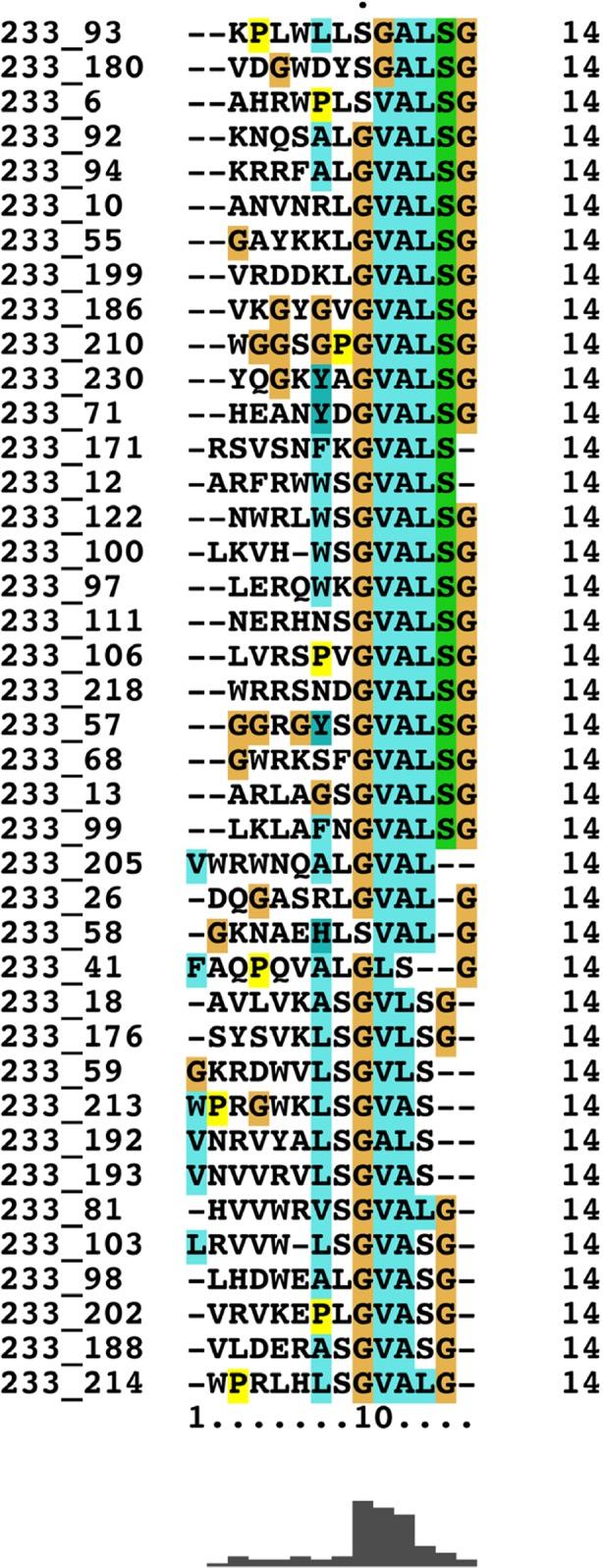
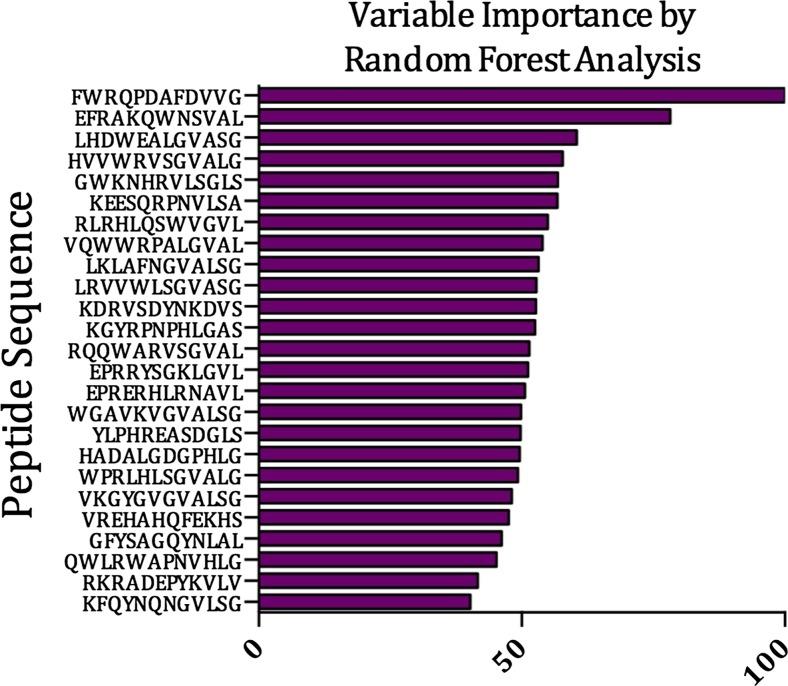
Myalgic encephalomyelitis (ME) is a complex, heterogeneous illness of unknown etiology. The search for biomarkers that can delineate cases from controls is one of the most active areas of ME research; however, little progress has been made in achieving this goal. In contrast to identifying biomarkers that are directly involved in the pathological process, an immunosignature identifies antibodies raised to proteins expressed during, and potentially involved in, the pathological process. Although these proteins might be unknown, it is possible to detect antibodies that react to these proteins using random peptide arrays. In the present study, we probe a custom 125,000 random 12-mer peptide microarray with sera from 21 ME cases and 21 controls from the USA and Europe and used these data to develop a diagnostic signature. We further used these peptide sequences to potentially uncover the naturally occurring candidate antigens to which these antibodies may specifically react with in vivo. Our analysis revealed a subset of 25 peptides that distinguished cases and controls with high specificity and sensitivity. Additionally, Basic Local Alignment Search Tool (BLAST) searches suggest that these peptides primarily represent human self-antigens and endogenous retroviral sequences and, to a minor extent, viral and bacterial pathogens.
肌痛性脑脊髓炎(ME)是一种病因不明的复杂、异质性疾病。寻找能够将病例与对照区分开来的生物标志物是 ME 研究中最活跃的领域之一;然而,在实现这一目标方面几乎没有取得进展。与识别直接参与病理过程的生物标志物不同,免疫特征可识别针对在病理过程中表达并可能参与其中的蛋白质产生的抗体。虽然这些蛋白质可能未知,但使用随机肽阵列检测针对这些蛋白质的抗体是可能的。在本研究中,我们用来自美国和欧洲的 21 例 ME 病例和 21 例对照的血清探测了定制的 125000 个随机 12 聚体肽微阵列,并使用这些数据开发了一个诊断特征。我们进一步使用这些肽序列来潜在地揭示这些抗体可能在体内特异性反应的天然存在的候选抗原。我们的分析揭示了一组 25 个肽,它们具有高特异性和敏感性,可以区分病例和对照。此外,基本局部比对搜索工具(BLAST)搜索表明,这些肽主要代表人类自身抗原和内源性逆转录病毒序列,并且在较小程度上代表病毒和细菌病原体。

 Zotero 插件