
评估[具体临床分离株]中1类整合子与耐药基因之间的关系。 (原文中“of”后面缺少具体内容)
Evaluate the Relationship Between Class 1 Integrons and Drug Resistance Genes in Clinical Isolates of .
作者信息
Hosseini Seyed Mohammad Javad, Naeini Niloofar Shoaee, Khaledi Azad, Daymad Seyede Fatemeh, Esmaeili Davoud
机构信息
Molecular Biology Research Center, Baqiyatallah University of Medical Sciences, Tehran, Iran.
Pharmaceutical Sciences Brnach, Islamic Azad University, Tehran, Iran.
出版信息
Open Microbiol J. 2016 Nov 30;10:188-196. doi: 10.2174/1874285801610010188. eCollection 2016.
BACKGROUND
The prevalence of resistant isolates is increasing and it is considered as one of the major public health concerns in the world. The association between integrons and drug resistance has been proven and evidences suggest that integrons are coding and responsible for dissemination of antibiotic resistance among isolates.
OBJECTIVE
This study is aimed to evaluate the relationship between class 1 integrons and drug resistance genes in clinical isolates of from burn patients.
METHODS
100 isolates of were collected from burn patients hospitalized in the skin ward of Shahid Motahari hospital and susceptibility testing was performed by disk diffusion method (Kirby-Bauer). Then DNA was extracted and PCR technique was performed for the detection of class 1 integrons and drug resistance genes. Then data was analyzed using SPSS software.
RESULTS
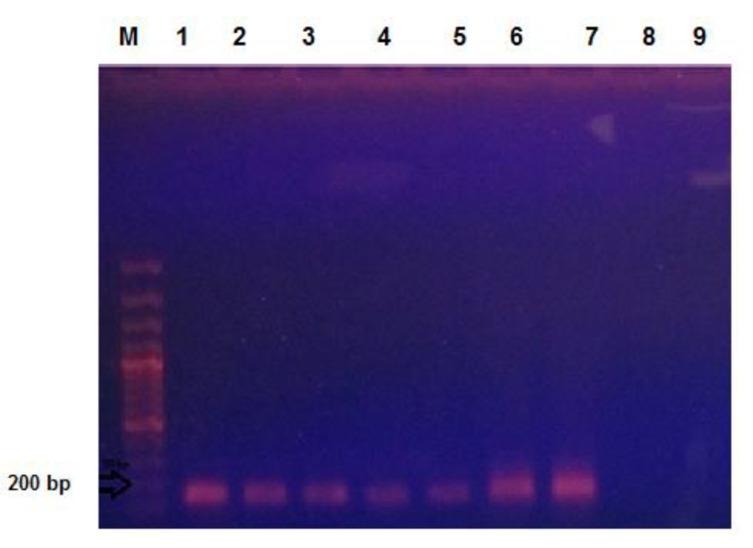
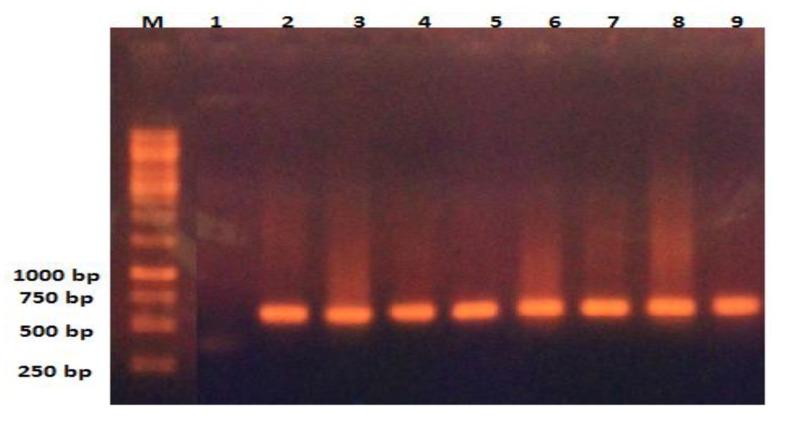
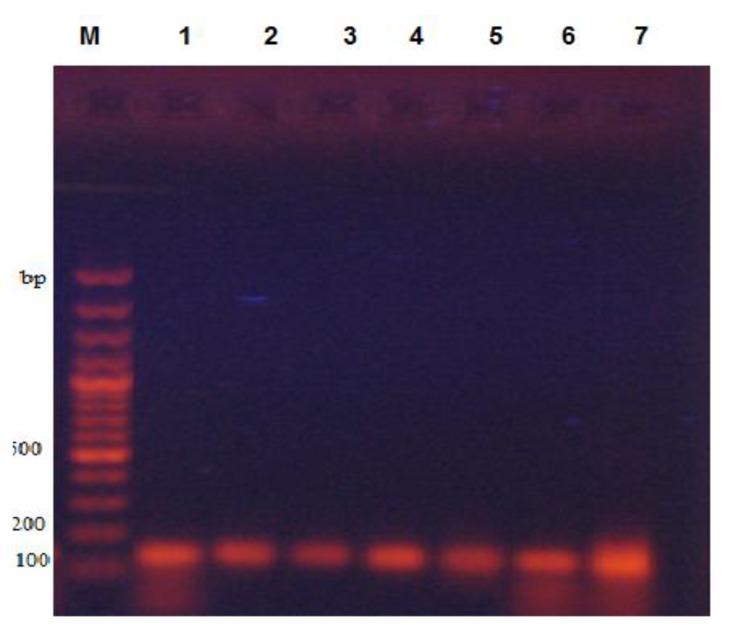
The most effective antibiotic was polymyxin B with sensitivity 100%, and the most resistance was observed to the ciprofloxacin (93%) and amikacin (67%), respectively. The maximum and lowest frequencies of drug resistance genes belonged to the aac (6 ') - 1, VEB-1 with prevalence rate 93% and 10%, respectively. The statistical Chi-square test did not find any significant correlation between class 1 integrons and drug resistance genes (p˃ 0.05).
CONCLUSION
Although no significant correlation between class 1 integrons and drug resistance was observed, but the resistance rate to antibiotics tested among isolates was high. So, surveillance, optimization and strict consideration of antimicrobial use and control of infection are necessary.
背景
耐药菌株的流行率正在上升,它被认为是全球主要的公共卫生问题之一。整合子与耐药性之间的关联已得到证实,有证据表明整合子编码并导致抗生素耐药性在菌株间传播。
目的
本研究旨在评估烧伤患者临床分离株中1类整合子与耐药基因之间的关系。
方法
从沙希德·莫塔哈里医院皮肤科病房住院的烧伤患者中收集100株分离株,采用纸片扩散法(Kirby-Bauer)进行药敏试验。然后提取DNA,并采用PCR技术检测1类整合子和耐药基因。然后使用SPSS软件分析数据。
结果
最有效的抗生素是多粘菌素B,敏感性为100%,对环丙沙星(93%)和阿米卡星(67%)的耐药性最高。耐药基因的最高和最低频率分别属于aac(6')-1、VEB-1,流行率分别为93%和10%。统计学卡方检验未发现1类整合子与耐药基因之间存在任何显著相关性(p>0.05)。
结论
虽然未观察到1类整合子与耐药性之间存在显著相关性,但分离株中对所检测抗生素的耐药率较高。因此,有必要进行监测、优化并严格考虑抗菌药物的使用以及控制感染。

 Zotero 插件