
高毒力肺炎链球菌1型中蛋白质疫苗候选抗原的全球分布及多样性
The global distribution and diversity of protein vaccine candidate antigens in the highly virulent Streptococcus pnuemoniae serotype 1.
作者信息
Cornick Jennifer E, Tastan Bishop Özlem, Yalcin Feyruz, Kiran Anmol M, Kumwenda Benjamin, Chaguza Chrispin, Govindpershad Shanil, Ousmane Sani, Senghore Madikay, du Plessis Mignon, Pluschke Gerd, Ebruke Chinelo, McGee Lesley, Sigaùque Beutel, Collard Jean-Marc, Bentley Stephen D, Kadioglu Aras, Antonio Martin, von Gottberg Anne, French Neil, Klugman Keith P, Heyderman Robert S, Alderson Mark, Everett Dean B
机构信息
Malawi-Liverpool Wellcome Trust Clinical Research Programme, Queen Elizabeth Central Hospital, Blantyre, Malawi; Clinical Infection, Microbiology and Immunology, Institute of Infection and Global Health, University of Liverpool, Liverpool L69 7BE, UK.
Research Unit in Bioinformatics (RUBi), Department of Biochemistry and Microbiology, Rhodes University, Grahamstown, South Africa.
出版信息
Vaccine. 2017 Feb 7;35(6):972-980. doi: 10.1016/j.vaccine.2016.12.037. Epub 2017 Jan 9.
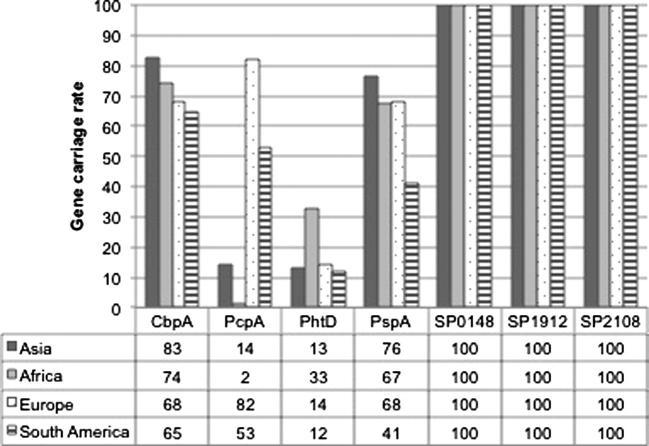
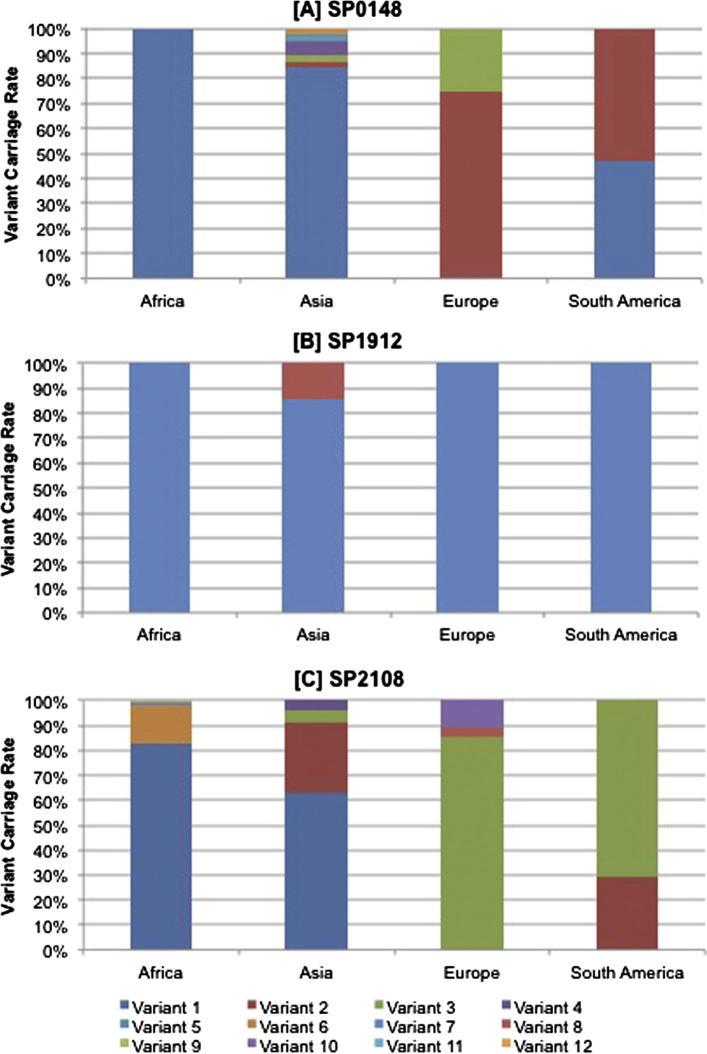
Serotype 1 is one of the most common causes of pneumococcal disease worldwide. Pneumococcal protein vaccines are currently being developed as an alternate intervention strategy to pneumococcal conjugate vaccines. Pre-requisites for an efficacious pneumococcal protein vaccine are universal presence and minimal variation of the target antigen in the pneumococcal population, and the capability to induce a robust human immune response. We used in silico analysis to assess the prevalence of seven protein vaccine candidates (CbpA, PcpA, PhtD, PspA, SP0148, SP1912, SP2108) among 445 serotype 1 pneumococci from 26 different countries, across four continents. CbpA (76%), PspA (68%), PhtD (28%), PcpA (11%) were not universally encoded in the study population, and would not provide full coverage against serotype 1. PcpA was widely present in the European (82%), but not in the African (2%) population. A multi-valent vaccine incorporating CbpA, PcpA, PhtD and PspA was predicted to provide coverage against 86% of the global population. SP0148, SP1912 and SP2108 were universally encoded and we further assessed their predicted amino acid, antigenic and structural variation. Multiple allelic variants of these proteins were identified, different allelic variants dominated in different continents; the observed variation was predicted to impact the antigenicity and structure of two SP0148 variants, one SP1912 variant and four SP2108 variants, however these variants were each only present in a small fraction of the global population (<2%). The vast majority of the observed variation was predicted to have no impact on the efficaciousness of a protein vaccine incorporating a single variant of SP0148, SP1912 and/or SP2108 from S. pneumoniae TIGR4. Our findings emphasise the importance of taking geographic differences into account when designing global vaccine interventions and support the continued development of SP0148, SP1912 and SP2108 as protein vaccine candidates against this important pneumococcal serotype.
1型血清型是全球肺炎球菌疾病最常见的病因之一。肺炎球菌蛋白疫苗目前正作为肺炎球菌结合疫苗的替代干预策略进行研发。一种有效的肺炎球菌蛋白疫苗的先决条件是肺炎球菌群体中靶抗原普遍存在且变异最小,以及能够诱导强烈的人体免疫反应。我们利用计算机分析评估了来自四大洲26个不同国家的445株1型肺炎球菌中七种蛋白疫苗候选物(CbpA、PcpA、PhtD、PspA、SP0148、SP1912、SP2108)的流行情况。CbpA(76%)、PspA(68%)、PhtD(28%)、PcpA(11%)在研究群体中并非普遍编码,无法提供针对1型血清型的全面覆盖。PcpA在欧洲人群中广泛存在(82%),但在非洲人群中不存在(2%)。预计包含CbpA、PcpA、PhtD和PspA的多价疫苗可为全球86%的人口提供覆盖。SP0148、SP1912和SP2108是普遍编码的,我们进一步评估了它们预测的氨基酸、抗原性和结构变异。鉴定出了这些蛋白的多个等位基因变体,不同的等位基因变体在不同大陆占主导地位;观察到的变异预计会影响两个SP0148变体、一个SP1912变体和四个SP2108变体的抗原性和结构,然而这些变体在全球人群中各自仅占一小部分(<2%)。预计观察到的绝大多数变异不会对包含来自肺炎链球菌TIGR4的单个SP0148、SP1912和/或SP2108变体的蛋白疫苗的有效性产生影响。我们的研究结果强调了在设计全球疫苗干预措施时考虑地理差异的重要性,并支持将SP0148、SP


 Zotero 插件