
小麦铁蛋白基因TaFER-5B的过表达增强了对热胁迫及与活性氧清除相关的其他非生物胁迫的耐受性。
Overexpression of wheat ferritin gene TaFER-5B enhances tolerance to heat stress and other abiotic stresses associated with the ROS scavenging.
作者信息
Zang Xinshan, Geng Xiaoli, Wang Fei, Liu Zhenshan, Zhang Liyuan, Zhao Yue, Tian Xuejun, Ni Zhongfu, Yao Yingyin, Xin Mingming, Hu Zhaorong, Sun Qixin, Peng Huiru
机构信息
State Key Laboratory for Agrobiotechnology, Key Laboratory of Crop Heterosis and Utilization (MOE), Beijing Key Laboratory of Crop Genetic Improvement, China Agricultural University, NO.2 Yuanmingyuan Xi Road, Haidian District, Beijing, 100193, China.
出版信息
BMC Plant Biol. 2017 Jan 14;17(1):14. doi: 10.1186/s12870-016-0958-2.
BACKGROUND
The yield of wheat (Triticum aestivum L.), an important crop, is adversely affected by heat stress in many regions of the world. However, the molecular mechanisms underlying thermotolerance are largely unknown.
RESULTS
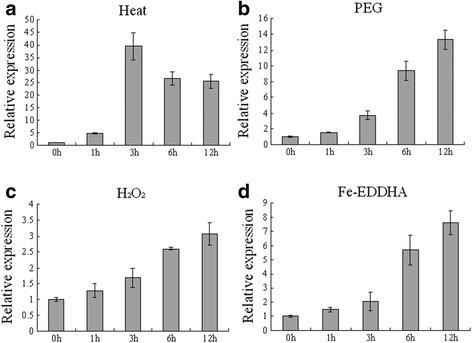
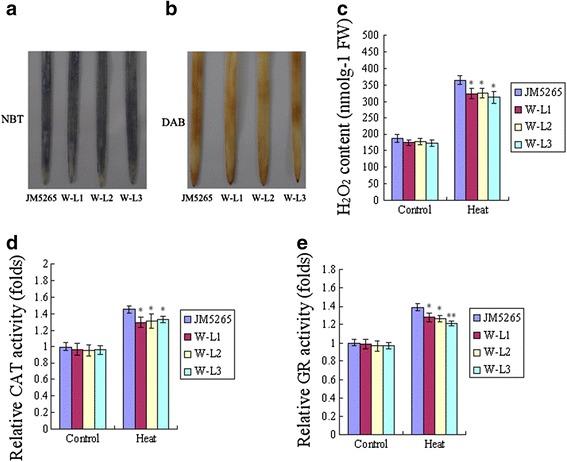
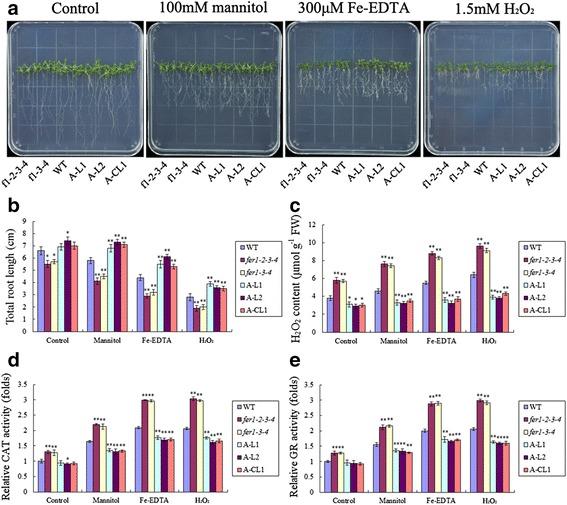
A novel ferritin gene, TaFER, was identified from our previous heat stress-responsive transcriptome analysis of a heat-tolerant wheat cultivar (TAM107). TaFER was mapped to chromosome 5B and named TaFER-5B. Expression pattern analysis revealed that TaFER-5B was induced by heat, polyethylene glycol (PEG), HO and Fe-ethylenediaminedi(o-hydroxyphenylacetic) acid (Fe-EDDHA). To confirm the function of TaFER-5B in wheat, TaFER-5B was transformed into the wheat cultivar Jimai5265 (JM5265), and the transgenic plants exhibited enhanced thermotolerance. To examine whether the function of ferritin from mono- and dico-species is conserved, TaFER-5B was transformed into Arabidopsis, and overexpression of TaFER-5B functionally complemented the heat stress-sensitive phenotype of a ferritin-lacking mutant of Arabidopsis. Moreover, TaFER-5B is essential for protecting cells against heat stress associated with protecting cells against ROS. In addition, TaFER-5B overexpression also enhanced drought, oxidative and excess iron stress tolerance associated with the ROS scavenging. Finally, TaFER-5B transgenic Arabidopsis and wheat plants exhibited improved leaf iron content.
CONCLUSIONS
Our results suggest that TaFER-5B plays an important role in enhancing tolerance to heat stress and other abiotic stresses associated with the ROS scavenging.
背景
小麦(Triticum aestivum L.)作为一种重要作物,其产量在世界许多地区受到热胁迫的不利影响。然而,耐热性的分子机制在很大程度上尚不清楚。
结果
通过对耐热小麦品种(TAM107)进行热胁迫响应转录组分析,鉴定出一个新的铁蛋白基因TaFER。TaFER被定位到5B染色体上,并命名为TaFER-5B。表达模式分析表明,TaFER-5B受热、聚乙二醇(PEG)、H₂O₂和乙二胺二(邻羟基苯乙酸)铁(Fe-EDDHA)诱导。为了证实TaFER-5B在小麦中的功能,将TaFER-5B转入小麦品种济麦5265(JM5265),转基因植株表现出耐热性增强。为了研究单物种和双物种铁蛋白的功能是否保守,将TaFER-5B转入拟南芥,TaFER-5B的过表达在功能上互补了拟南芥铁蛋白缺失突变体的热胁迫敏感表型。此外,TaFER-5B对于保护细胞免受与活性氧相关的热胁迫至关重要。另外,TaFER-5B的过表达还增强了与活性氧清除相关的干旱、氧化和过量铁胁迫耐受性。最后,TaFER-5B转基因拟南芥和小麦植株的叶片铁含量有所提高。
结论
我们的结果表明,TaFER-5B在增强对热胁迫和其他与活性氧清除相关的非生物胁迫的耐受性方面发挥着重要作用。






 Zotero 插件