
酿酒酵母中的基因组维持:SUMO及SUMO靶向泛素连接酶的作用
Genome maintenance in Saccharomyces cerevisiae: the role of SUMO and SUMO-targeted ubiquitin ligases.
作者信息
Jalal Deena, Chalissery Jisha, Hassan Ahmed H
机构信息
Department of Biochemistry, College of Medicine and Health Sciences, United Arab Emirates University, P.O. Box 17666, Al-Ain, UAE.
出版信息
Nucleic Acids Res. 2017 Mar 17;45(5):2242-2261. doi: 10.1093/nar/gkw1369.
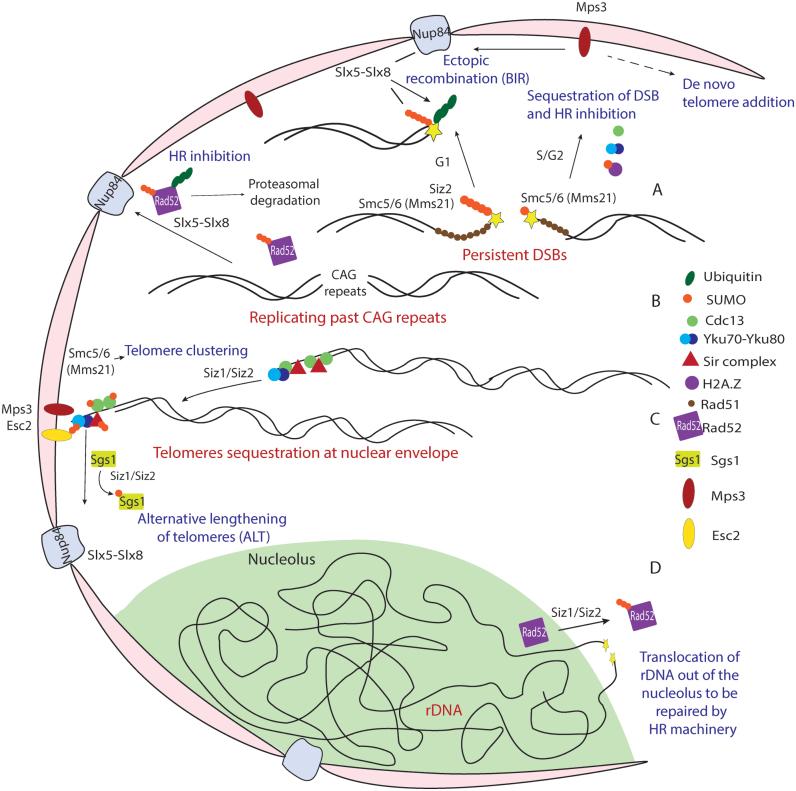
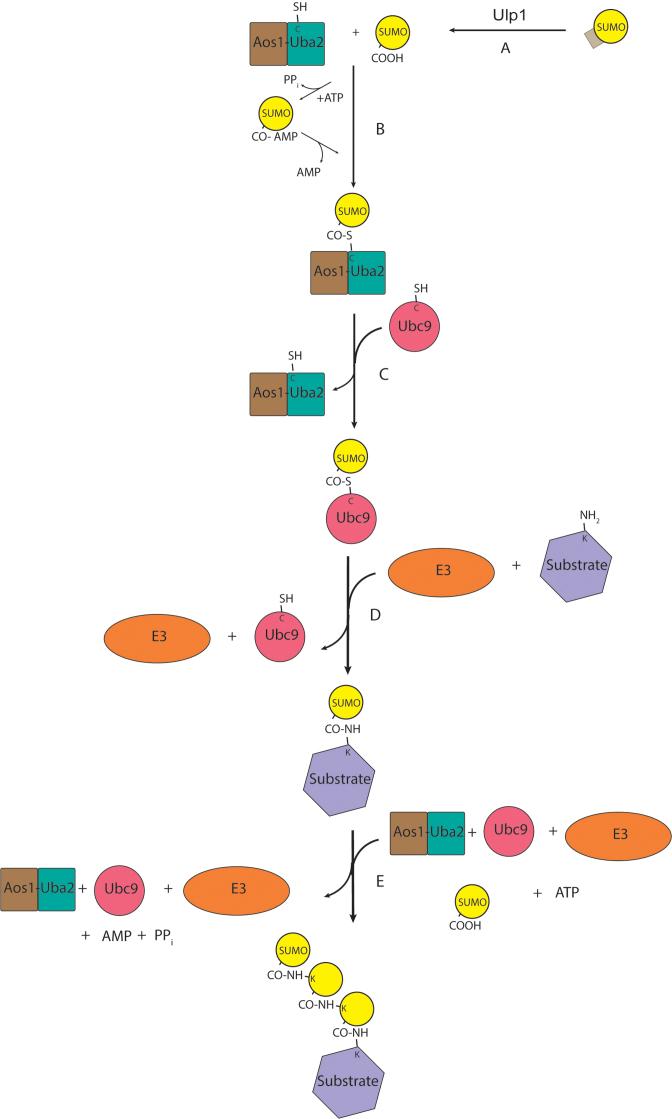
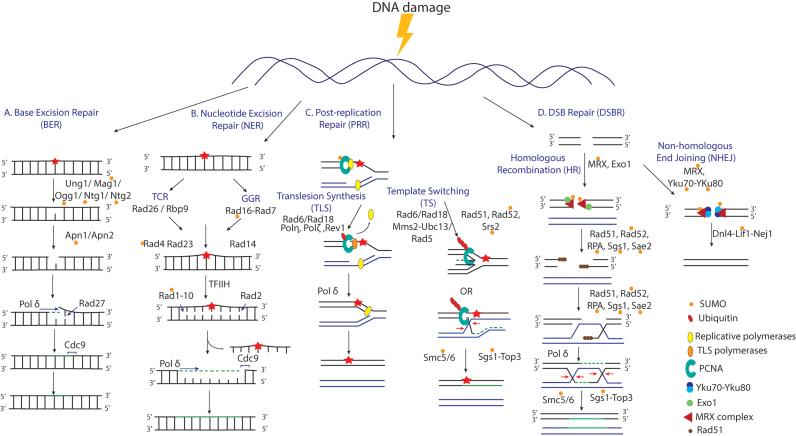
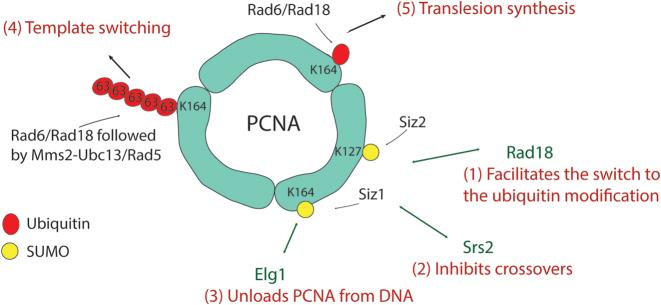
The genome of the cell is often exposed to DNA damaging agents and therefore requires an intricate well-regulated DNA damage response (DDR) to overcome its deleterious effects. The DDR needs proper regulation for its timely activation, repression, as well as appropriate choice of repair pathway. Studies in Saccharomyces cerevisiae have advanced our understanding of the DNA damage response, as well as the mechanisms the cell employs to maintain genome stability and how these mechanisms are regulated. Eukaryotic cells utilize post-translational modifications as a means for fine-tuning protein functions. Ubiquitylation and SUMOylation involve the attachment of small protein molecules onto proteins to modulate function or protein-protein interactions. SUMO in particular, was shown to act as a molecular glue when DNA damage occurs, facilitating the assembly of large protein complexes in repair foci. In other instances, SUMOylation alters a protein's biochemical activities, and interactions. SUMO-targeted ubiquitin ligases (STUbLs) are enzymes that target SUMOylated proteins for ubiquitylation and subsequent degradation, providing a function for the SUMO modification in the regulation and disassembly of repair complexes. Here, we discuss the major contributions of SUMO and STUbLs in the regulation of DNA damage repair pathways as well as in the maintenance of critical regions of the genome, namely rDNA regions, telomeres and the 2 μm circle in budding yeast.
细胞的基因组经常暴露于DNA损伤剂中,因此需要一个复杂且调控良好的DNA损伤反应(DDR)来克服其有害影响。DDR需要适当的调控以实现其及时激活、抑制以及对修复途径的恰当选择。酿酒酵母中的研究增进了我们对DNA损伤反应的理解,以及细胞用于维持基因组稳定性的机制和这些机制是如何被调控的。真核细胞利用翻译后修饰作为微调蛋白质功能的一种手段。泛素化和类泛素化涉及将小蛋白质分子附着到蛋白质上以调节功能或蛋白质 - 蛋白质相互作用。特别是类泛素化,在DNA损伤发生时被证明可充当分子胶水,促进修复位点中大型蛋白质复合物的组装。在其他情况下,类泛素化会改变蛋白质的生化活性和相互作用。类泛素化靶向泛素连接酶(STUbLs)是将类泛素化蛋白质作为泛素化和随后降解的靶点的酶,为类泛素化修饰在修复复合物的调控和拆解中提供了一种功能。在这里,我们讨论类泛素化和STUbLs在调控DNA损伤修复途径以及维持基因组关键区域(即出芽酵母中的核糖体DNA区域、端粒和2μm环状质粒)方面的主要作用。
 Zotero 插件