
阿根廷成年人群中自我报告的麸质敏感性患病率及对无麸质饮食的依从性
Prevalence of Self-Reported Gluten Sensitivity and Adherence to a Gluten-Free Diet in Argentinian Adult Population.
作者信息
Cabrera-Chávez Francisco, Dezar Gimena V A, Islas-Zamorano Anna P, Espinoza-Alderete Jesús G, Vergara-Jiménez Marcela J, Magaña-Ordorica Dalia, Ontiveros Noé
机构信息
Nutrition Sciences Academic Unit, Universidad Autónoma de Sinaloa, Culiacán, Sinaloa 80019, Mexico.
Facultad de Bioquímica y Ciencias Biológicas, Universidad Nacional del Litoral, Santa Fe 3000, Argentina.
出版信息
Nutrients. 2017 Jan 21;9(1):81. doi: 10.3390/nu9010081.
BACKGROUND
Previous studies suggest that the prevalence of wheat/gluten sensitivity and adherence to a gluten-free diet (GFD) are high in Latin population despite a poor diagnosis of celiac disease. However, these prevalence rates still remain unknown in most Latin American countries.
METHODS
A cross-sectional survey study was conducted in Santa Fe, Argentina.
RESULTS
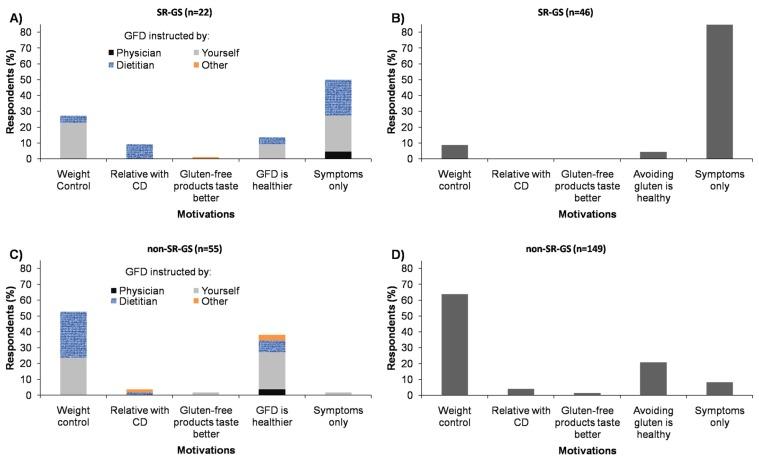
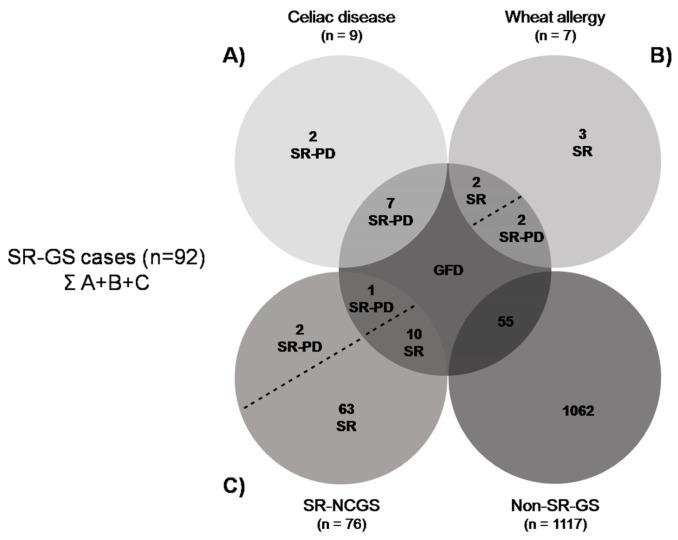
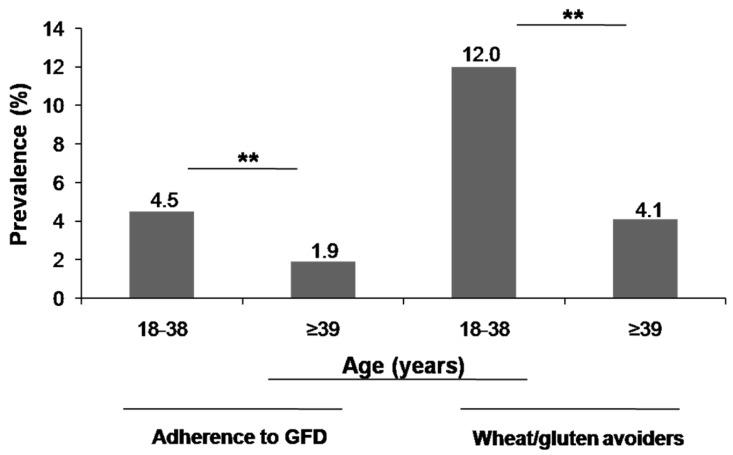
The estimated self-reported prevalence rates were (95% Confidence Interval [CI]): self-reported gluten sensitivity (SR-GS) 7.61% (6.2-9.2), SR-GS currently following a GFD 1.82% (1.2-2.7), celiac disease 0.58% (0.3-1.2), wheat allergy 0.33% (0.12-0.84), self-reported non-celiac gluten sensitivity (SR-NCGS) 6.28% (5.1-7.8), SR-NCGS currently following a GFD 0.91% (0.5-1.6), and adherence to a GFD 6.37% (5.1-7.9). SR-GS was more common in women (6.0%; < 0.001) and associated with irritable bowel syndrome ( < 0.001). Among the GFD followers, 71.4% were doing it for reasons other than health-related benefits and 50.6% without medical/dietitian advice. In the non-SR-GS group, the main motivations for following a GFD were weight control and the perception that a GFD is healthier.
CONCLUSION
In Argentina, gluten sensitivity is commonly reported and it seems that physicians/gastroenterologists are aware of celiac disease diagnosis. Trustable information about the benefits and potential consequences of following a GFD should be given to the general population.
背景
先前的研究表明,尽管乳糜泻的诊断率较低,但拉丁裔人群中对小麦/麸质敏感的患病率以及坚持无麸质饮食(GFD)的比例较高。然而,在大多数拉丁美洲国家,这些患病率仍然未知。
方法
在阿根廷圣菲进行了一项横断面调查研究。
结果
自我报告的估计患病率为(95%置信区间[CI]):自我报告的麸质敏感(SR-GS)7.61%(6.2 - 9.2),目前遵循GFD的SR-GS为1.82%(1.2 - 2.7),乳糜泻为0.58%(0.3 - 1.2),小麦过敏为0.33%(0.12 - 0.84),自我报告的非乳糜泻麸质敏感(SR-NCGS)6.28%(5.1 - 7.8),目前遵循GFD的SR-NCGS为0.91%(0.5 - 1.6),以及坚持GFD的比例为6.37%(5.1 - 7.9)。SR-GS在女性中更常见(6.0%;<0.001),并与肠易激综合征相关(<0.001)。在遵循GFD的人群中,71.4%这样做的原因并非与健康益处相关,50.6%的人没有医学/营养师的建议。在非SR-GS组中,遵循GFD的主要动机是控制体重以及认为GFD更健康。
结论
在阿根廷,麸质敏感的报告较为普遍,而且医生/胃肠病学家似乎了解乳糜泻的诊断。应向普通人群提供关于遵循GFD的益处和潜在后果的可靠信息。

 Zotero 插件