
DNA聚合酶ImuC和DinB参与铜绿假单胞菌和恶臭假单胞菌的DNA烷基化损伤耐受过程。
DNA Polymerases ImuC and DinB Are Involved in DNA Alkylation Damage Tolerance in Pseudomonas aeruginosa and Pseudomonas putida.
作者信息
Jatsenko Tatjana, Sidorenko Julia, Saumaa Signe, Kivisaar Maia
机构信息
Department of Genetics, Institute of Molecular and Cell Biology, University of Tartu, Tartu, Estonia.
出版信息
PLoS One. 2017 Jan 24;12(1):e0170719. doi: 10.1371/journal.pone.0170719. eCollection 2017.
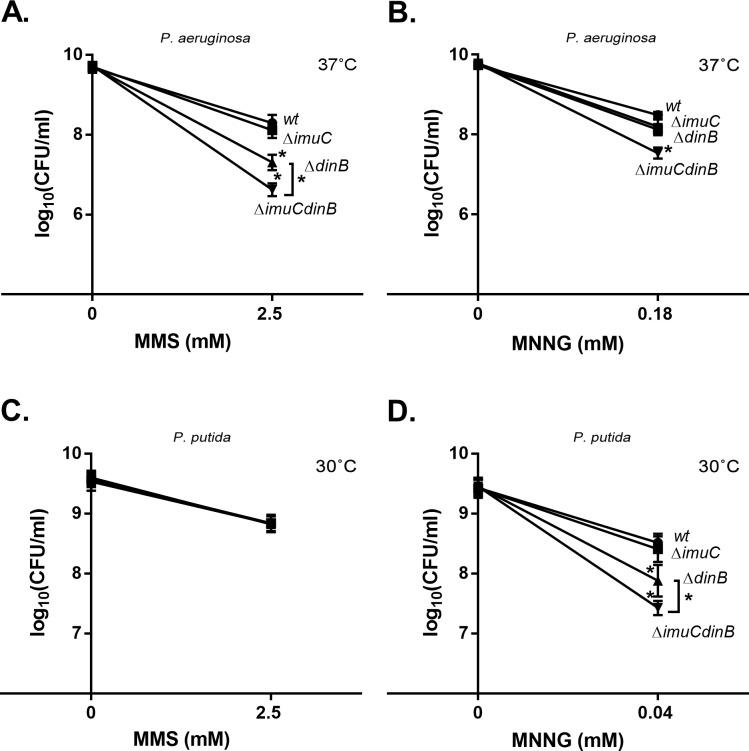
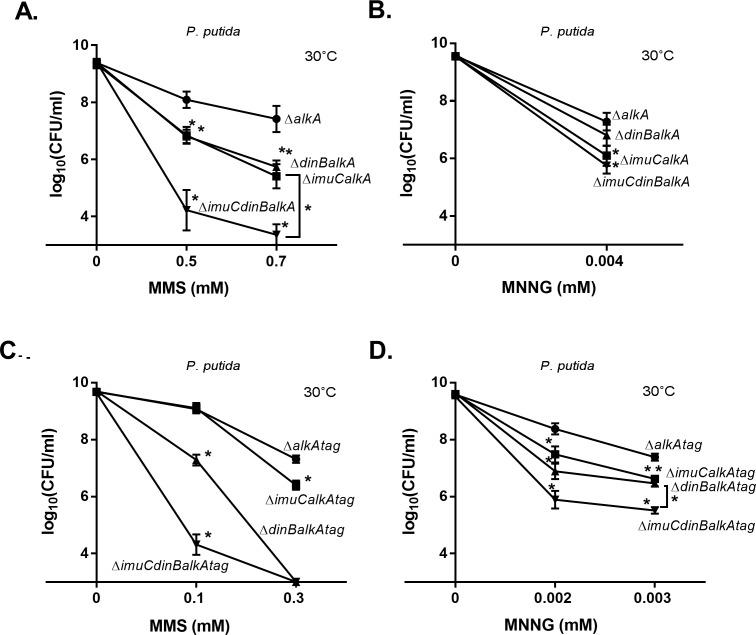
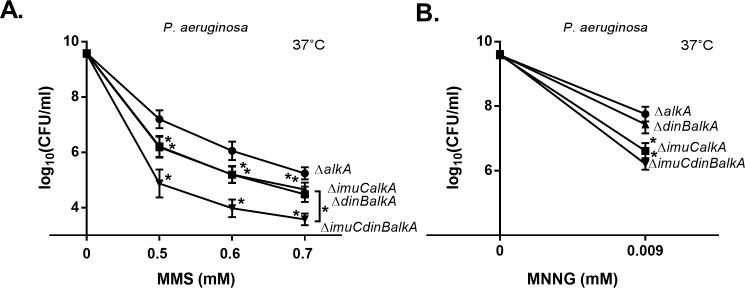
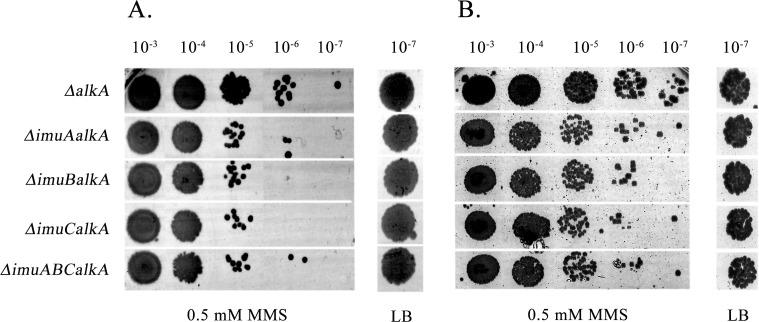
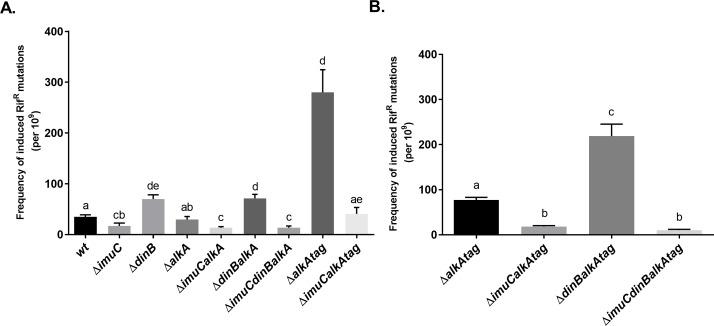
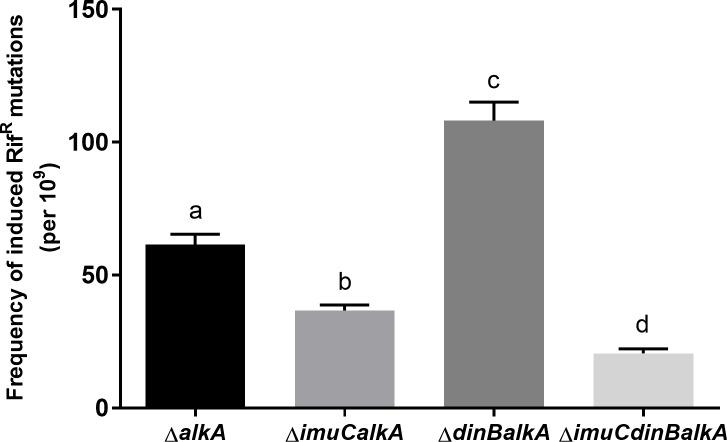
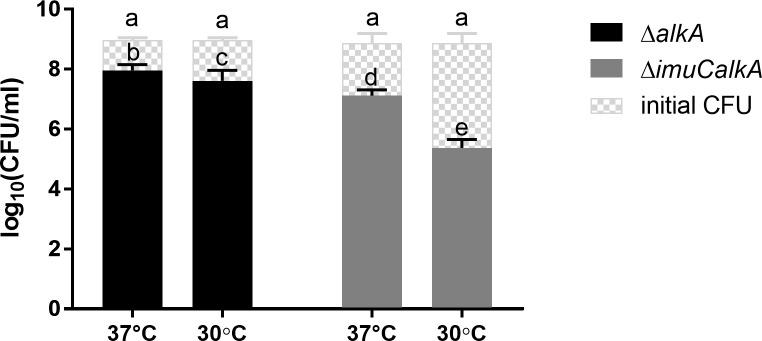
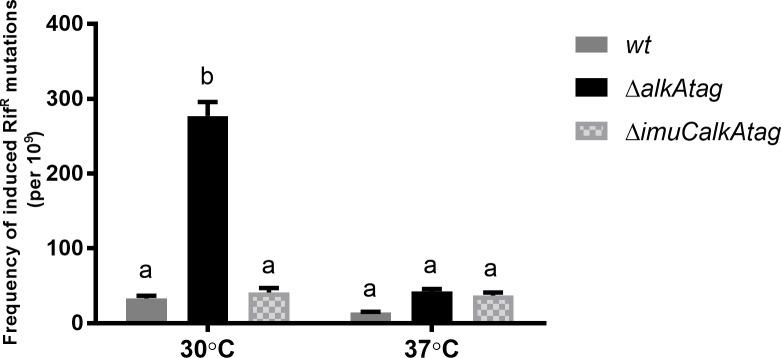
Translesion DNA synthesis (TLS), facilitated by low-fidelity polymerases, is an important DNA damage tolerance mechanism. Here, we investigated the role and biological function of TLS polymerase ImuC (former DnaE2), generally present in bacteria lacking DNA polymerase V, and TLS polymerase DinB in response to DNA alkylation damage in Pseudomonas aeruginosa and P. putida. We found that TLS DNA polymerases ImuC and DinB ensured a protective role against N- and O-methylation induced by N-methyl-N'-nitro-N-nitrosoguanidine (MNNG) in both P. aeruginosa and P. putida. DinB also appeared to be important for the survival of P. aeruginosa and rapidly growing P. putida cells in the presence of methyl methanesulfonate (MMS). The role of ImuC in protection against MMS-induced damage was uncovered under DinB-deficient conditions. Apart from this, both ImuC and DinB were critical for the survival of bacteria with impaired base excision repair (BER) functions upon alkylation damage, lacking DNA glycosylases AlkA and/or Tag. Here, the increased sensitivity of imuCdinB double deficient strains in comparison to single mutants suggested that the specificity of alkylated DNA lesion bypass of DinB and ImuC might also be different. Moreover, our results demonstrated that mutagenesis induced by MMS in pseudomonads was largely ImuC-dependent. Unexpectedly, we discovered that the growth temperature of bacteria affected the efficiency of DinB and ImuC in ensuring cell survival upon alkylation damage. Taken together, the results of our study disclosed the involvement of ImuC in DNA alkylation damage tolerance, especially at low temperatures, and its possible contribution to the adaptation of pseudomonads upon DNA alkylation damage via increased mutagenesis.
由低保真度聚合酶促进的跨损伤DNA合成(TLS)是一种重要的DNA损伤耐受机制。在此,我们研究了通常存在于缺乏DNA聚合酶V的细菌中的TLS聚合酶ImuC(原DnaE2)和TLS聚合酶DinB在铜绿假单胞菌和恶臭假单胞菌中对DNA烷基化损伤的作用及生物学功能。我们发现TLS DNA聚合酶ImuC和DinB在铜绿假单胞菌和恶臭假单胞菌中均对N-甲基-N'-硝基-N-亚硝基胍(MNNG)诱导的N-甲基化和O-甲基化起到保护作用。在存在甲磺酸甲酯(MMS)的情况下,DinB对于铜绿假单胞菌和快速生长的恶臭假单胞菌细胞的存活似乎也很重要。在DinB缺陷的条件下,发现了ImuC在抵抗MMS诱导的损伤中的作用。除此之外,对于碱基切除修复(BER)功能受损且缺乏DNA糖基化酶AlkA和/或Tag的细菌在烷基化损伤后的存活,ImuC和DinB均至关重要。在此,与单突变体相比,imuCdinB双缺陷菌株的敏感性增加表明DinB和ImuC对烷基化DNA损伤旁路的特异性可能也不同。此外,我们的结果表明,假单胞菌中由MMS诱导的诱变在很大程度上依赖于ImuC。出乎意料的是,我们发现细菌的生长温度会影响DinB和ImuC在确保烷基化损伤后细胞存活方面的效率。综上所述,我们的研究结果揭示了ImuC参与DNA烷基化损伤耐受,尤其是在低温下,并且它可能通过增加诱变作用对假单胞菌在DNA烷基化损伤后的适应性做出贡献。





 Zotero 插件