
波罗的海南部海洋及海滩沉积物中微塑料的来源与归宿——一项初步研究
Sources and fate of microplastics in marine and beach sediments of the Southern Baltic Sea-a preliminary study.
作者信息
Graca Bożena, Szewc Karolina, Zakrzewska Danuta, Dołęga Anna, Szczerbowska-Boruchowska Magdalena
机构信息
Department of Marine Chemistry and Environmental Protection, Institute of Oceanography, University of Gdansk, Al. Marszalka Pilsudskiego 46, 81-378, Gdynia, Poland.
Department of Inorganic Chemistry, Faculty of Chemistry, Gdansk University of Technology, Gabriela Narutowicza 11/12, 80-233, Gdansk, Poland.
出版信息
Environ Sci Pollut Res Int. 2017 Mar;24(8):7650-7661. doi: 10.1007/s11356-017-8419-5. Epub 2017 Jan 25.
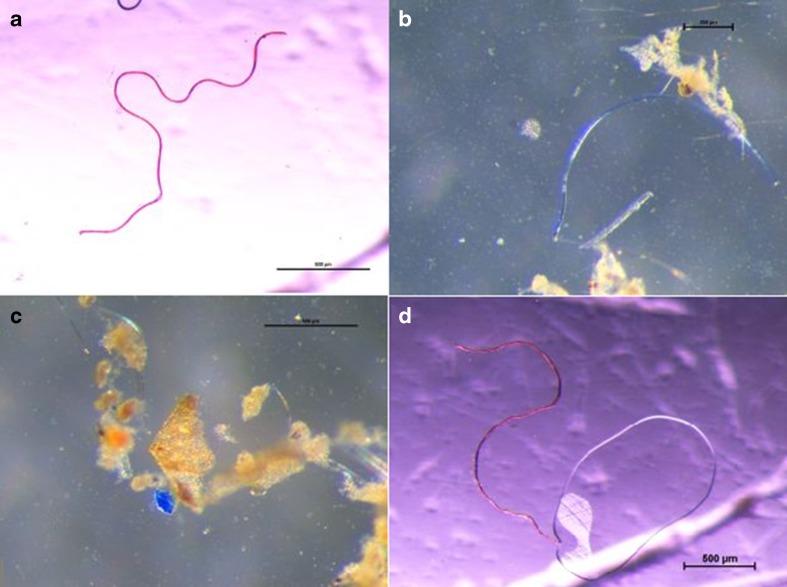
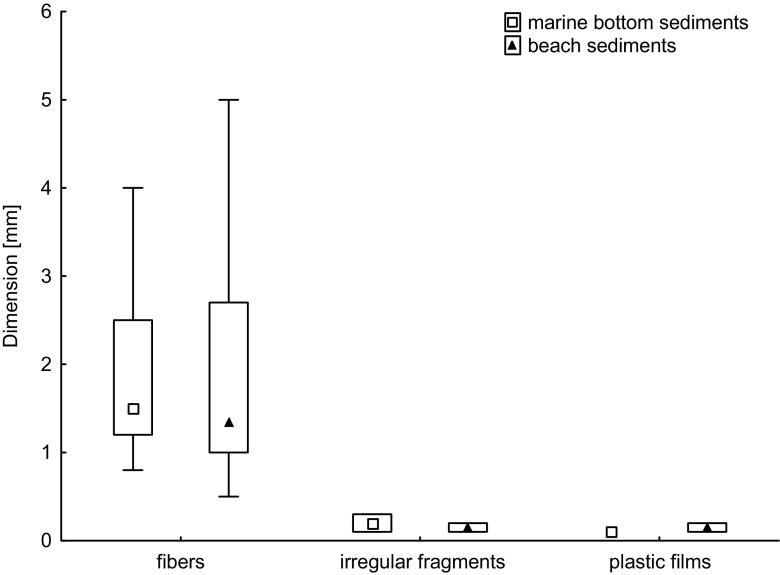
Microplastics' (particles size ≤5 mm) sources and fate in marine bottom and beach sediments of the brackish are strongly polluted Baltic Sea have been investigated. Microplastics were extracted using sodium chloride (1.2 g cm). Their qualitative identification was conducted using micro-Fourier-transform infrared spectroscopy (μFT-IR). Concentration of microplastics varied from 25 particles kg d.w. at the open sea beach to 53 particles kg d.w. at beaches of strongly urbanized bay. In bottom sediments, microplastics concentration was visibly lower compared to beach sediments (0-27 particles kg d.w.) and decreased from the shore to the open, deep-sea regions. The most frequent microplastics dimensions ranged from 0.1 to 2.0 mm, and transparent fibers were predominant. Polyester, which is a popular fabrics component, was the most common type of microplastic in both marine bottom (50%) and beach sediments (27%). Additionally, poly(vinyl acetate) used in shipbuilding as well as poly(ethylene-propylene) used for packaging were numerous in marine bottom (25% of all polymers) and beach sediments (18% of all polymers). Polymer density seems to be an important factor influencing microplastics circulation. Low density plastic debris probably recirculates between beach sediments and seawater in a greater extent than higher density debris. Therefore, their deposition is potentially limited and physical degradation is favored. Consequently, low density microplastics concentration may be underestimated using current methods due to too small size of the debris. This influences also the findings of qualitative research of microplastics which provide the basis for conclusions about the sources of microplastics in the marine environment.
对波罗的海受严重污染的咸淡水区域海床和海滩沉积物中微塑料(粒径≤5毫米)的来源及归宿进行了调查。使用氯化钠(1.2克/立方厘米)提取微塑料。采用显微傅里叶变换红外光谱(μFT-IR)进行定性鉴定。微塑料浓度在开阔海滩为25个颗粒/千克干重,在城市化程度高的海湾海滩为53个颗粒/千克干重。在海底沉积物中,微塑料浓度明显低于海滩沉积物(0 - 27个颗粒/千克干重),并从海岸向开阔深海区域降低。微塑料最常见的尺寸范围为0.1至2.0毫米,透明纤维占主导。聚酯作为一种常见的织物成分,是海底(占所有聚合物的50%)和海滩沉积物(占所有聚合物的27%)中最常见的微塑料类型。此外,造船中使用的聚醋酸乙烯酯以及用于包装的乙丙橡胶在海底(占所有聚合物的25%)和海滩沉积物(占所有聚合物的18%)中也大量存在。聚合物密度似乎是影响微塑料循环的一个重要因素。低密度塑料碎片在海滩沉积物和海水之间的再循环程度可能比高密度碎片更大。因此,它们的沉积可能受到限制,且有利于物理降解。所以,由于碎片尺寸过小,使用当前方法可能会低估低密度微塑料的浓度。这也影响了微塑料定性研究的结果,而这些结果为海洋环境中微塑料来源的结论提供了依据。


 Zotero 插件