
K2.1/K6.4 异四聚体电压感受器的独立运动。
Independent movement of the voltage sensors in K2.1/K6.4 heterotetramers.
机构信息
Laboratory for Molecular Biophysics, Physiology and Pharmacology, Department for Biomedical Sciences, University of Antwerp, Antwerp, Belgium.
Molecular Neurophysiology Section, Porter Neuroscience Research Center, National Institute of Neurological Disorders and Stroke, National Institutes of Health, Bethesda, Maryland, USA.
出版信息
Sci Rep. 2017 Jan 31;7:41646. doi: 10.1038/srep41646.
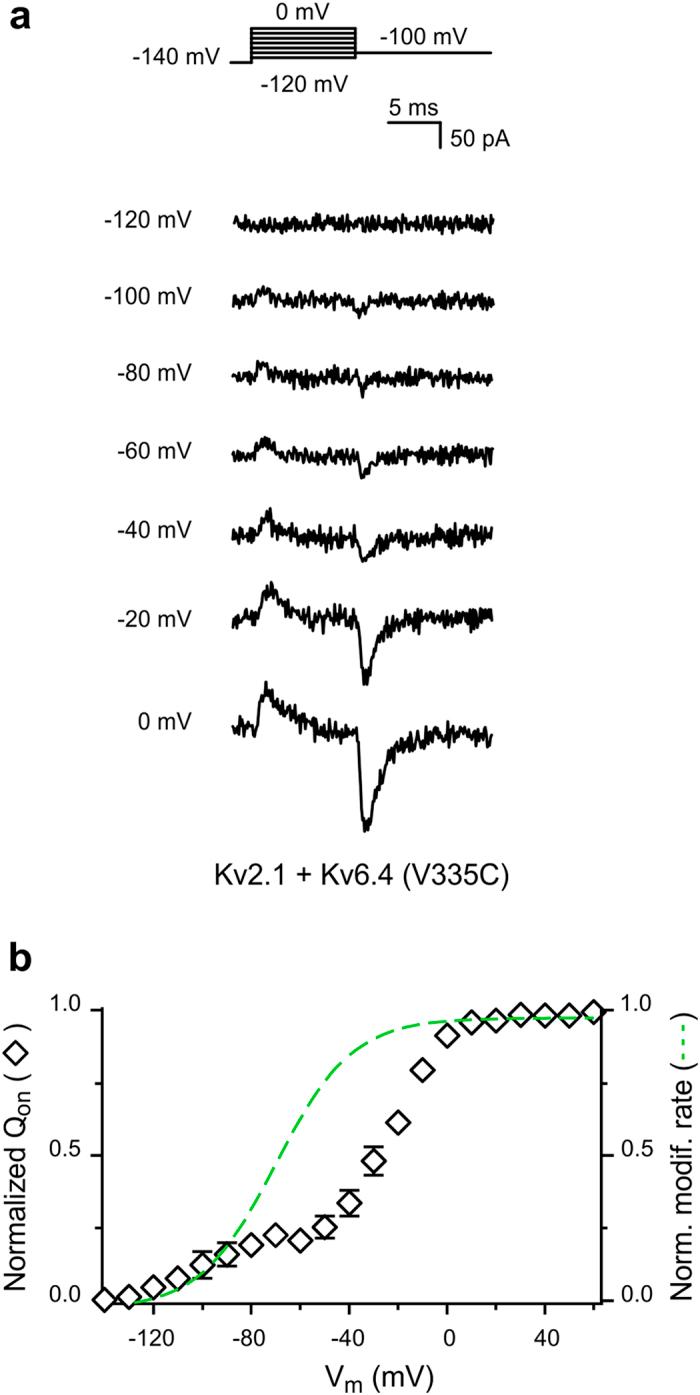
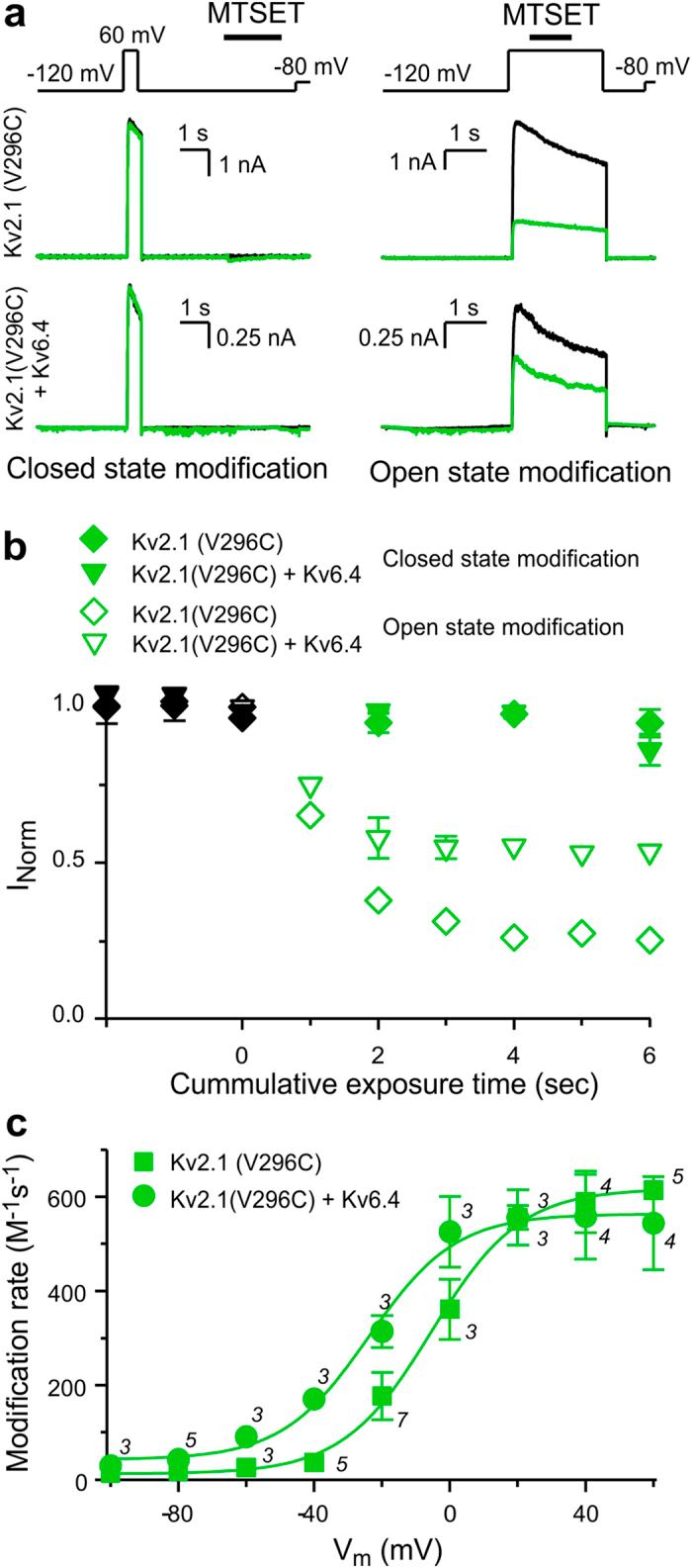
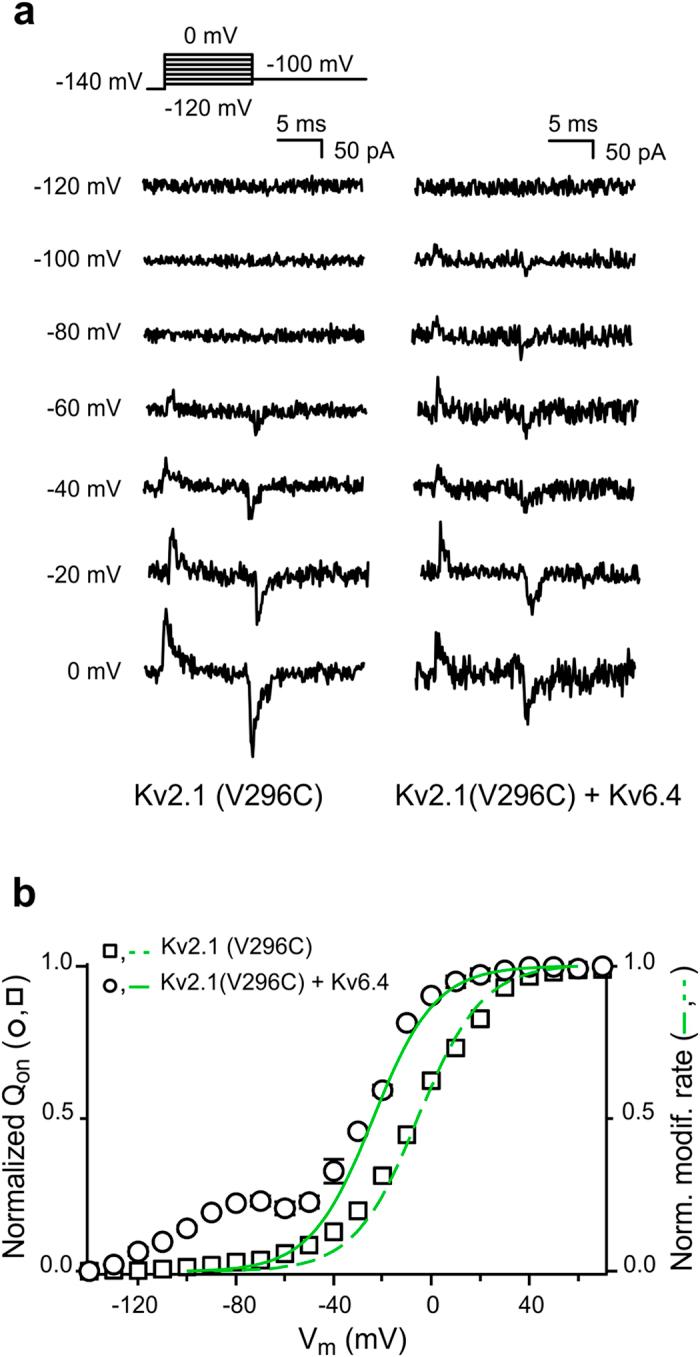
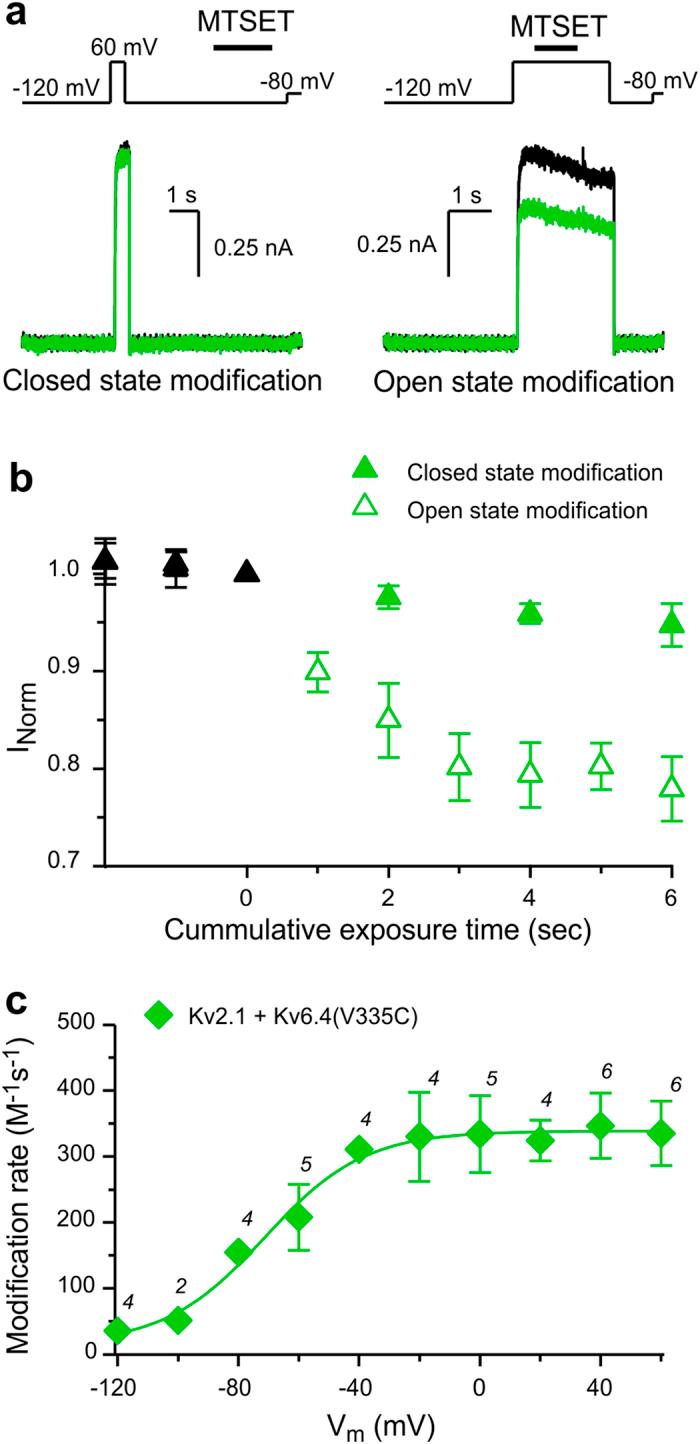
Heterotetramer voltage-gated K (K) channels K2.1/K6.4 display a gating charge-voltage (Q) distribution composed by two separate components. We use state dependent chemical accessibility to cysteines substituted in either K2.1 or K6.4 to assess the voltage sensor movements of each subunit. By comparing the voltage dependences of chemical modification and gating charge displacement, here we show that each gating charge component corresponds to a specific subunit forming the heterotetramer. The voltage sensors from K6.4 subunits move at more negative potentials than the voltage sensors belonging to K2.1 subunits. These results indicate that the voltage sensors from the tetrameric channels move independently. In addition, our data shows that 75% of the total charge is attributed to K2.1, while 25% to K6.4. Thus, the most parsimonious model for K2.1/K6.4 channels' stoichiometry is 3:1.
异四聚体电压门控钾 (K) 通道 K2.1/K6.4 显示出由两个独立组成部分组成的门控电荷-电压 (Q) 分布。我们使用状态依赖的半胱氨酸化学可及性来评估 K2.1 或 K6.4 中取代的亚基的电压传感器运动。通过比较化学修饰和门控电荷位移的电压依赖性,我们在这里表明,每个门控电荷组成部分对应于形成异四聚体的特定亚基。来自 K6.4 亚基的电压传感器比属于 K2.1 亚基的电压传感器移动到更负的电位。这些结果表明,四聚体通道的电压传感器独立移动。此外,我们的数据表明,总电荷的 75%归因于 K2.1,而 25%归因于 K6.4。因此,K2.1/K6.4 通道的最简约配位数模型是 3:1。

 Zotero 插件