
IVa型菌毛机制被募集到未来细胞分裂的位点。
The Type IVa Pilus Machinery Is Recruited to Sites of Future Cell Division.
作者信息
Carter Tyson, Buensuceso Ryan N C, Tammam Stephanie, Lamers Ryan P, Harvey Hanjeong, Howell P Lynne, Burrows Lori L
机构信息
Department of Biochemistry and Biomedical Sciences and Michael G. DeGroote Institute for Infectious Disease Research, McMaster University, Hamilton, Ontario, Canada.
Program in Molecular Structure & Function, The Hospital for Sick Children, Toronto, Ontario, Canada.
出版信息
mBio. 2017 Jan 31;8(1):e02103-16. doi: 10.1128/mBio.02103-16.
UNLABELLED
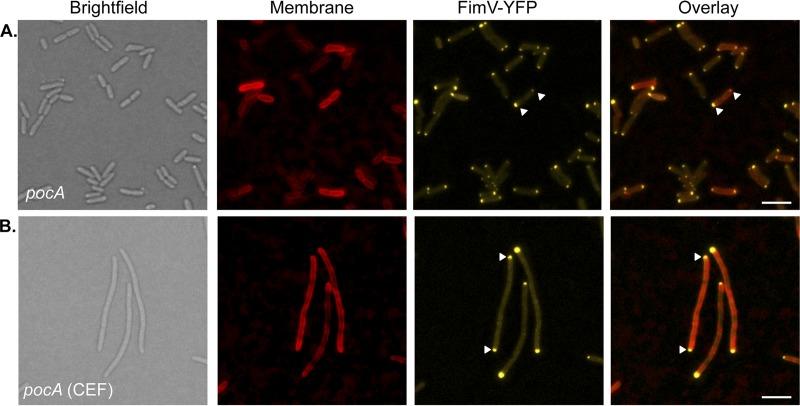
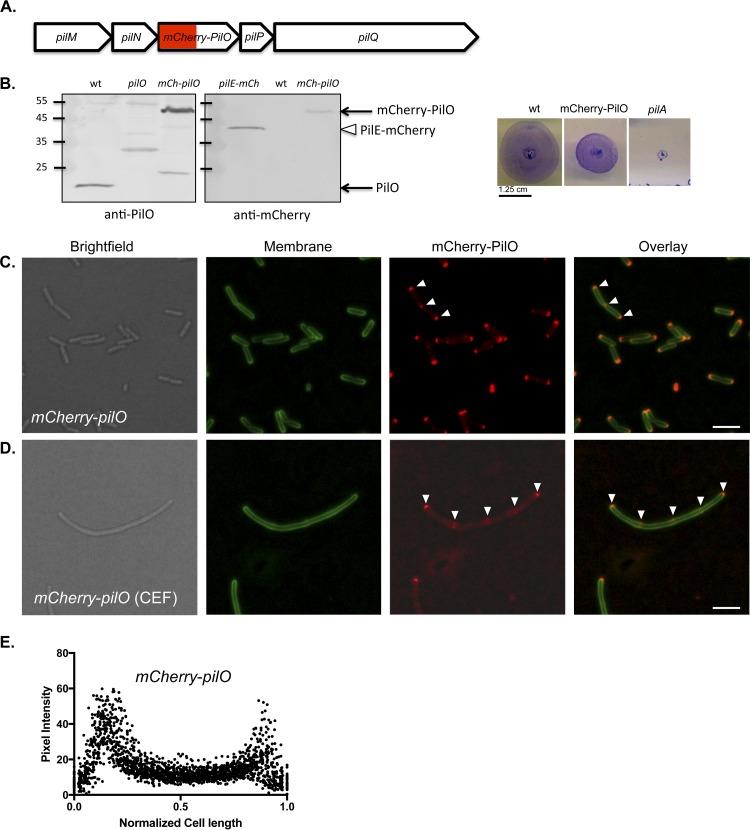
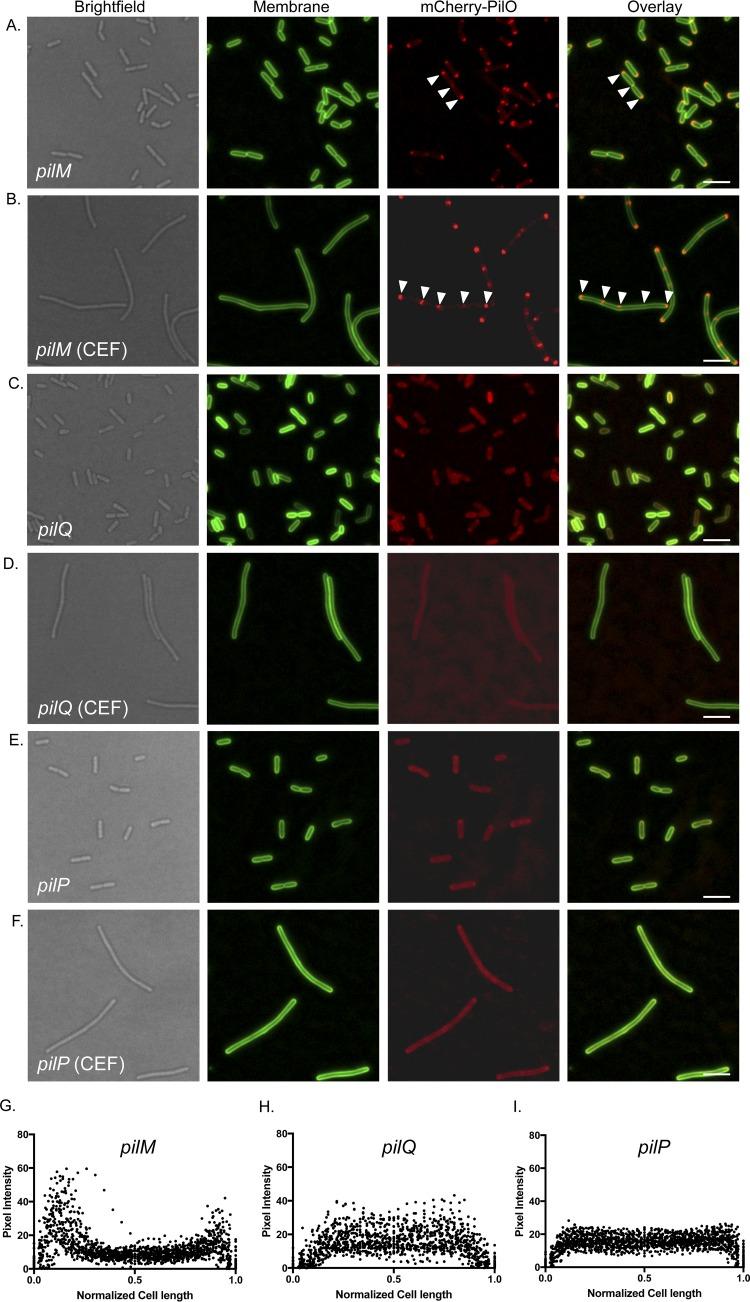
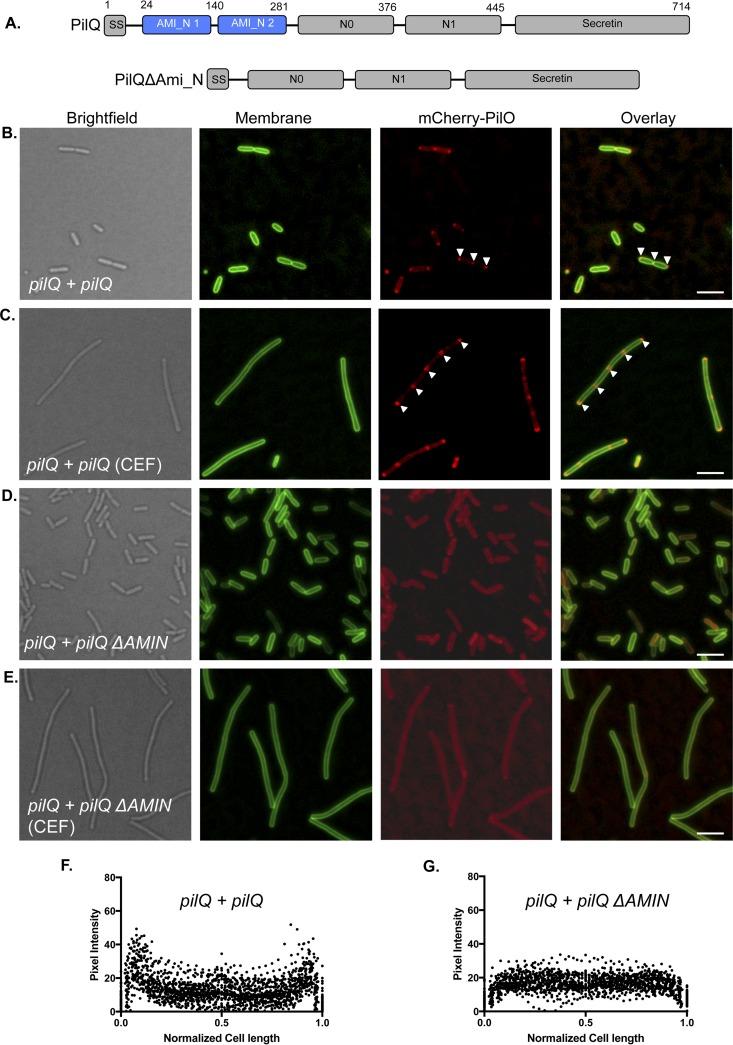
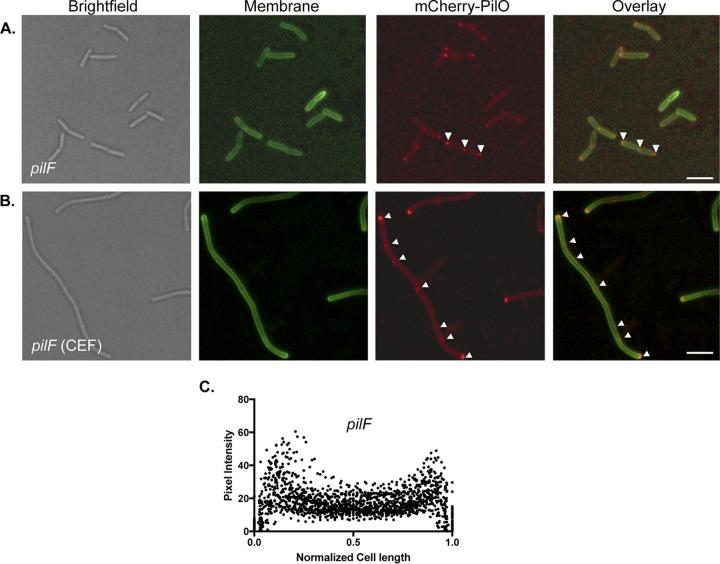
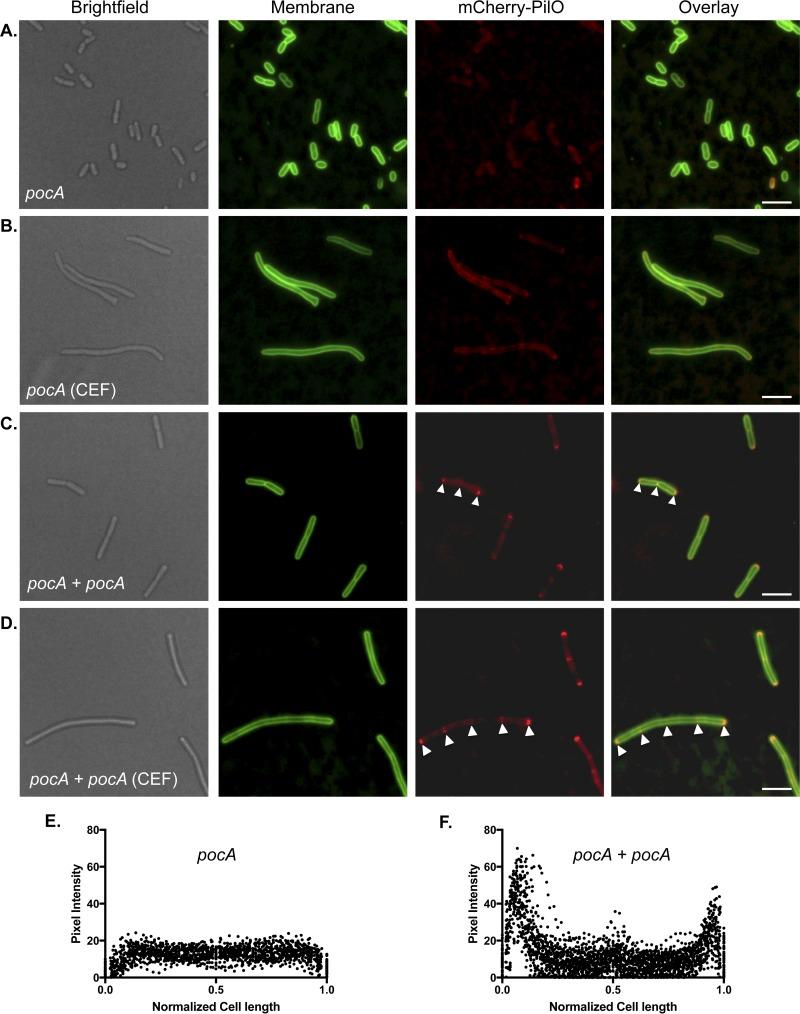
Type IVa pili (T4aP) are ubiquitous microbial appendages used for adherence, twitching motility, DNA uptake, and electron transfer. Many of these functions depend on dynamic assembly and disassembly of the pilus by a megadalton-sized, cell envelope-spanning protein complex located at the poles of rod-shaped bacteria. How the T4aP assembly complex becomes integrated into the cell envelope in the absence of dedicated peptidoglycan (PG) hydrolases is unknown. After ruling out the potential involvement of housekeeping PG hydrolases in the installation of the T4aP machinery in Pseudomonas aeruginosa, we discovered that key components of inner (PilMNOP) and outer (PilQ) membrane subcomplexes are recruited to future sites of cell division. Midcell recruitment of a fluorescently tagged alignment subcomplex component, mCherry-PilO, depended on PilQ secretin monomers-specifically, their N-terminal PG-binding AMIN domains. PilP, which connects PilO to PilQ, was required for recruitment, while PilM, which is structurally similar to divisome component FtsA, was not. Recruitment preceded secretin oligomerization in the outer membrane, as loss of the PilQ pilotin PilF had no effect on localization. These results were confirmed in cells chemically blocked for cell division prior to outer membrane invagination. The hub protein FimV and a component of the polar organelle coordinator complex-PocA-were independently required for midcell recruitment of PilO and PilQ. Together, these data suggest an integrated, energy-efficient strategy for the targeting and preinstallation-rather than retrofitting-of the T4aP system into nascent poles, without the need for dedicated PG-remodeling enzymes.
IMPORTANCE
The peptidoglycan (PG) layer of bacterial cell envelopes has limited porosity, representing a physical barrier to the insertion of large protein complexes involved in secretion and motility. Many systems include dedicated PG hydrolase components that create space for their insertion, but the ubiquitous type IVa pilus (T4aP) system lacks such an enzyme. Instead, we found that components of the T4aP system are recruited to future sites of cell division, where they could be incorporated into the cell envelope during the formation of new poles, eliminating the need for PG hydrolases. Targeting depends on the presence of septal PG-binding motifs in specific components, as removal of those motifs causes delocalization. This preinstallation strategy for the T4aP assembly system would ensure that both daughter cells are poised to extrude pili from new poles as soon as they separate from one another.
未标记
IVa型菌毛(T4aP)是普遍存在的微生物附属结构,用于黏附、颤动运动、DNA摄取和电子转移。这些功能中的许多都依赖于位于杆状细菌两极的一个百万道尔顿大小的、跨越细胞膜的蛋白质复合物对菌毛进行动态组装和拆卸。在缺乏专门的肽聚糖(PG)水解酶的情况下,T4aP组装复合物如何整合到细胞膜中尚不清楚。在排除了管家PG水解酶在铜绿假单胞菌中安装T4aP机制方面的潜在作用后,我们发现内膜(PilMNOP)和外膜(PilQ)亚复合物的关键组分被招募到未来的细胞分裂位点。荧光标记的排列亚复合物组分mCherry-PilO在细胞中部的招募依赖于PilQ分泌素单体——具体来说,是它们的N端PG结合AMIN结构域。连接PilO和PilQ的PilP是招募所必需的,而在结构上与分裂体组分FtsA相似的PilM则不是。招募在外膜中分泌素寡聚化之前发生,因为PilQ前导肽PilF的缺失对定位没有影响。这些结果在细胞膜内陷之前化学阻断细胞分裂的细胞中得到了证实。中枢蛋白FimV和极性细胞器协调复合物的一个组分——PocA——分别是PilO和PilQ在细胞中部招募所必需的。总之,这些数据表明了一种将T4aP系统靶向并预安装(而非改造)到新生极的综合、节能策略,而无需专门的PG重塑酶。
重要性
细菌细胞膜的肽聚糖(PG)层孔隙率有限,这对参与分泌和运动的大型蛋白质复合物的插入构成了物理屏障。许多系统包括专门的PG水解酶组分,它们为自身的插入创造空间,但普遍存在的IVa型菌毛(T4aP)系统缺乏这样一种酶。相反,我们发现T4aP系统的组分被招募到未来的细胞分裂位点,在那里它们可以在新极形成过程中整合到细胞膜中,从而无需PG水解酶。靶向依赖于特定组分中隔膜PG结合基序的存在,因为去除这些基序会导致定位异常。T4aP组装系统的这种预安装策略将确保两个子细胞一旦彼此分离,就准备好从新极伸出菌毛。


 Zotero 插件