
真空辅助去细胞化:一种用于生成组织工程化人气管支架的加速方案。
Vacuum-assisted decellularization: an accelerated protocol to generate tissue-engineered human tracheal scaffolds.
作者信息
Butler Colin R, Hynds Robert E, Crowley Claire, Gowers Kate H C, Partington Leanne, Hamilton Nicholas J, Carvalho Carla, Platé Manuela, Samuel Edward R, Burns Alan J, Urbani Luca, Birchall Martin A, Lowdell Mark W, De Coppi Paolo, Janes Sam M
机构信息
Lungs for Living Research Centre, UCL Respiratory, University College London, London, UK; Stem Cell and Regenerative Medicine Section, UCL Institute of Child Health and Great Ormond Street Hospital, London, UK.
Lungs for Living Research Centre, UCL Respiratory, University College London, London, UK.
出版信息
Biomaterials. 2017 Apr;124:95-105. doi: 10.1016/j.biomaterials.2017.02.001. Epub 2017 Feb 5.
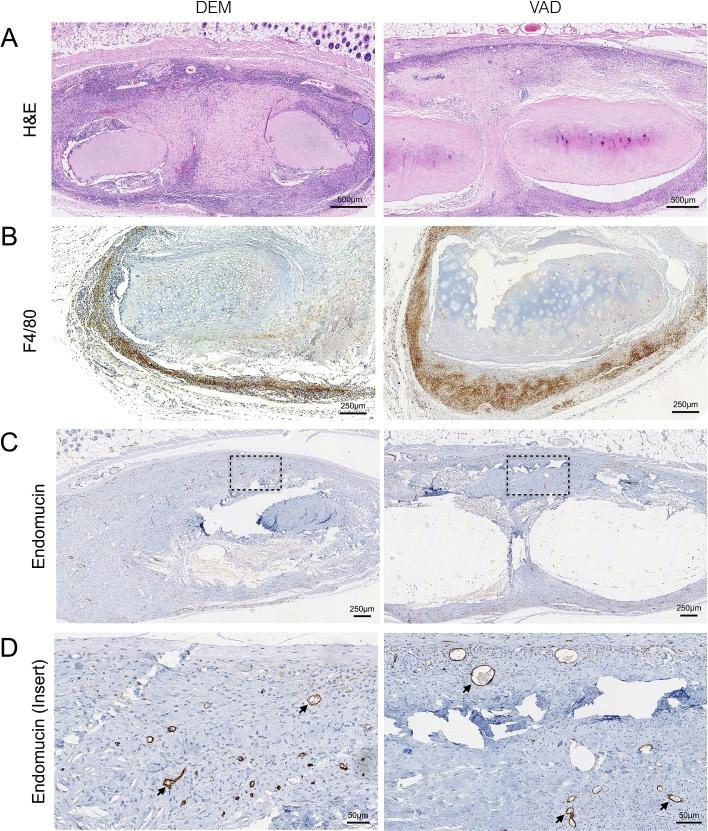
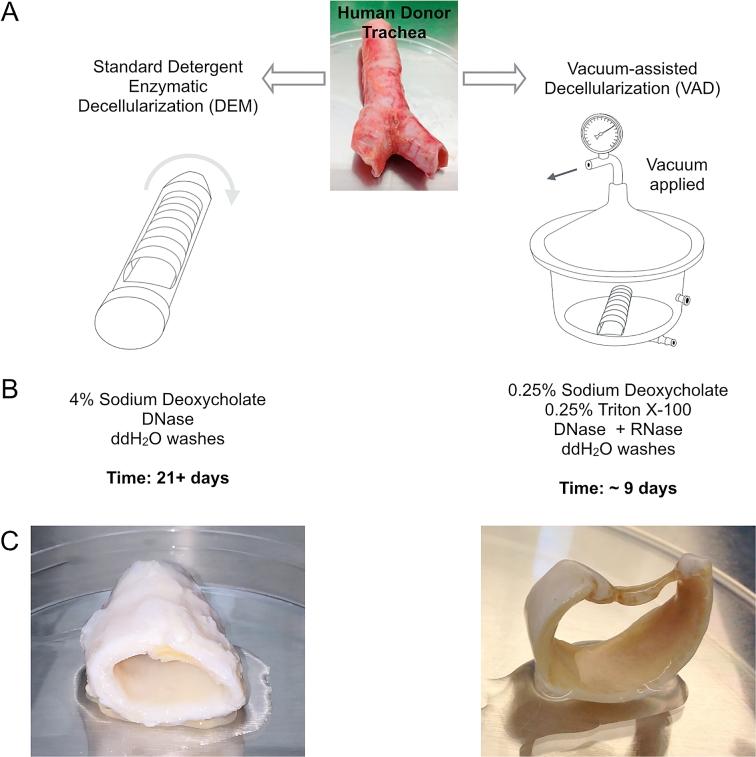
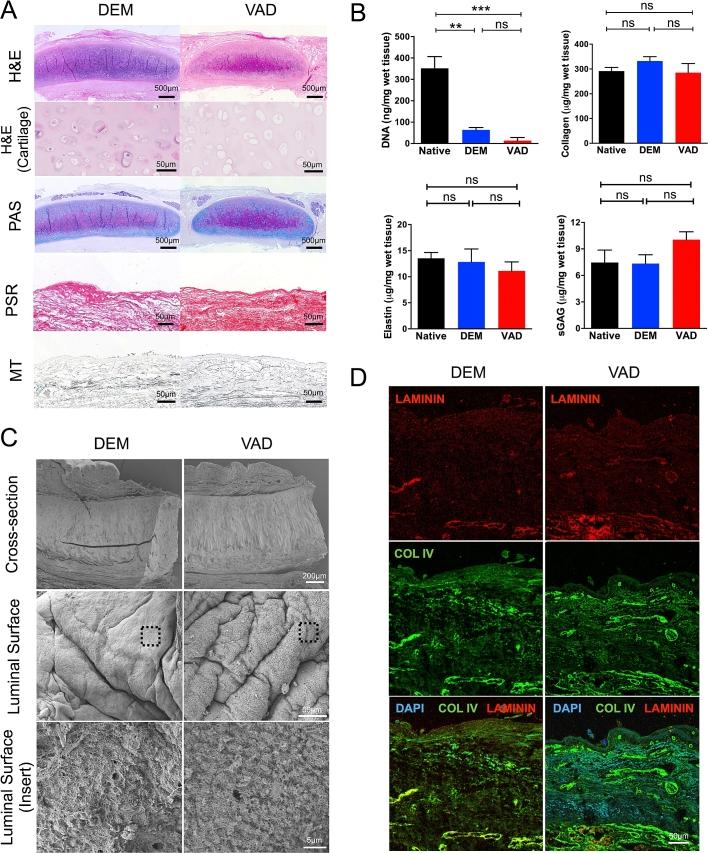
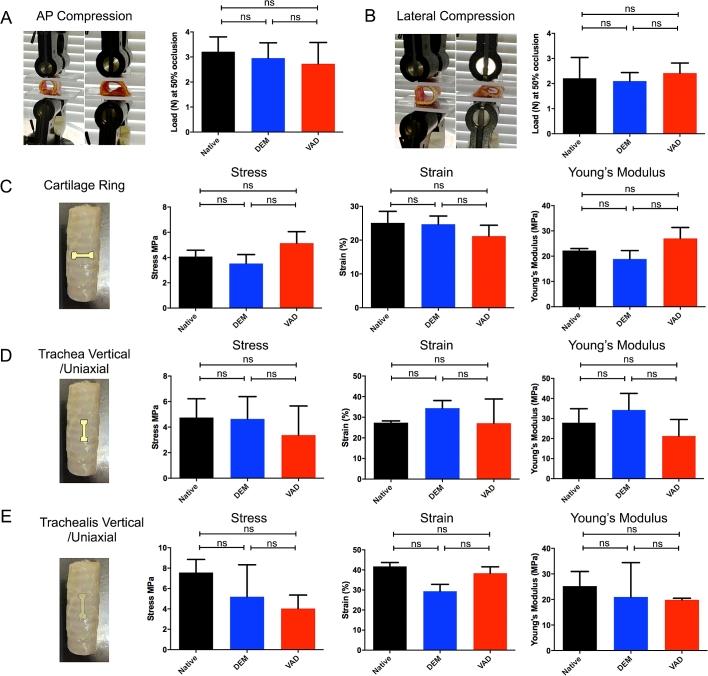
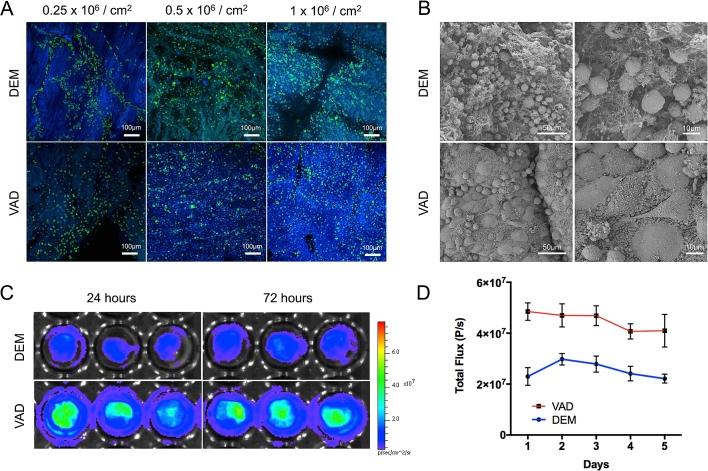
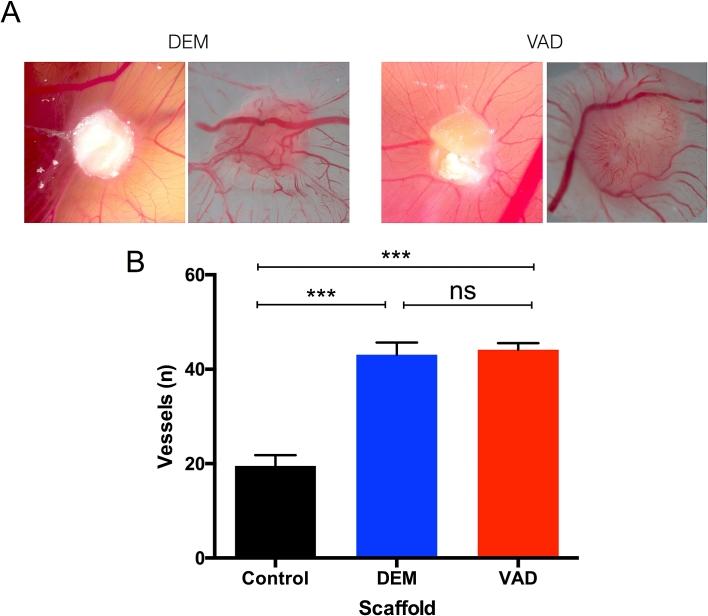
Patients with large tracheal lesions unsuitable for conventional endoscopic or open operations may require a tracheal replacement but there is no present consensus of how this may be achieved. Tissue engineering using decellularized or synthetic tracheal scaffolds offers a new avenue for airway reconstruction. Decellularized human donor tracheal scaffolds have been applied in compassionate-use clinical cases but naturally derived extracellular matrix (ECM) scaffolds demand lengthy preparation times. Here, we compare a clinically applied detergent-enzymatic method (DEM) with an accelerated vacuum-assisted decellularization (VAD) protocol. We examined the histological appearance, DNA content and extracellular matrix composition of human donor tracheae decellularized using these techniques. Further, we performed scanning electron microscopy (SEM) and biomechanical testing to analyze decellularization performance. To assess the biocompatibility of scaffolds generated using VAD, we seeded scaffolds with primary human airway epithelial cells in vitro and performed in vivo chick chorioallantoic membrane (CAM) and subcutaneous implantation assays. Both DEM and VAD protocols produced well-decellularized tracheal scaffolds with no adverse mechanical effects and scaffolds retained the capacity for in vitro and in vivo cellular integration. We conclude that the substantial reduction in time required to produce scaffolds using VAD compared to DEM (approximately 9 days vs. 3-8 weeks) does not compromise the quality of human tracheal scaffold generated. These findings might inform clinical decellularization techniques as VAD offers accelerated scaffold production and reduces the associated costs.
患有不适用于传统内镜或开放手术的大气管病变的患者可能需要进行气管置换,但目前对于如何实现这一点尚无共识。使用去细胞化或合成气管支架的组织工程为气道重建提供了一条新途径。去细胞化的人类供体气管支架已应用于同情用药的临床病例,但天然来源的细胞外基质(ECM)支架需要较长的制备时间。在此,我们将一种临床应用的去污剂 - 酶法(DEM)与一种加速真空辅助去细胞化(VAD)方案进行比较。我们检查了使用这些技术去细胞化的人类供体气管的组织学外观、DNA含量和细胞外基质组成。此外,我们进行了扫描电子显微镜(SEM)和生物力学测试以分析去细胞化性能。为了评估使用VAD生成的支架的生物相容性,我们在体外将原代人气道上皮细胞接种到支架上,并进行了体内鸡胚绒毛尿囊膜(CAM)和皮下植入试验。DEM和VAD方案均产生了去细胞化良好的气管支架,且没有不良机械影响,支架保留了体外和体内细胞整合的能力。我们得出结论,与DEM相比,使用VAD生产支架所需的时间大幅减少(约9天对3 - 8周),但不会损害所生成的人类气管支架的质量。这些发现可能为临床去细胞化技术提供参考,因为VAD可加速支架生产并降低相关成本。
 Zotero 插件