
了解乳腺癌——漫长而曲折的道路。
Understanding breast cancer - The long and winding road.
作者信息
Lukong Kiven Erique
机构信息
Department of Biochemistry, College of Medicine, University of Saskatchewan, 107 Wiggins Road, Saskatoon, SK S7N 5E5, Canada.
出版信息
BBA Clin. 2017 Jan 27;7:64-77. doi: 10.1016/j.bbacli.2017.01.001. eCollection 2017 Jun.
BACKGROUND
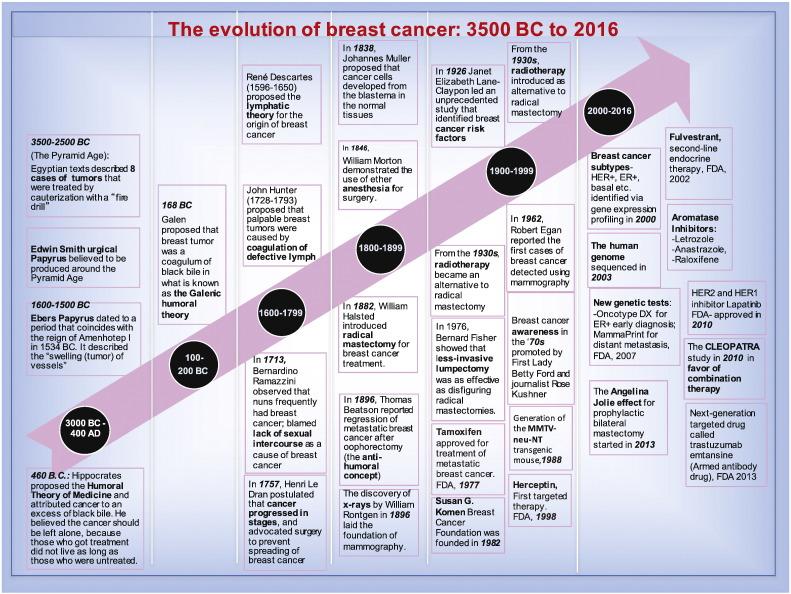
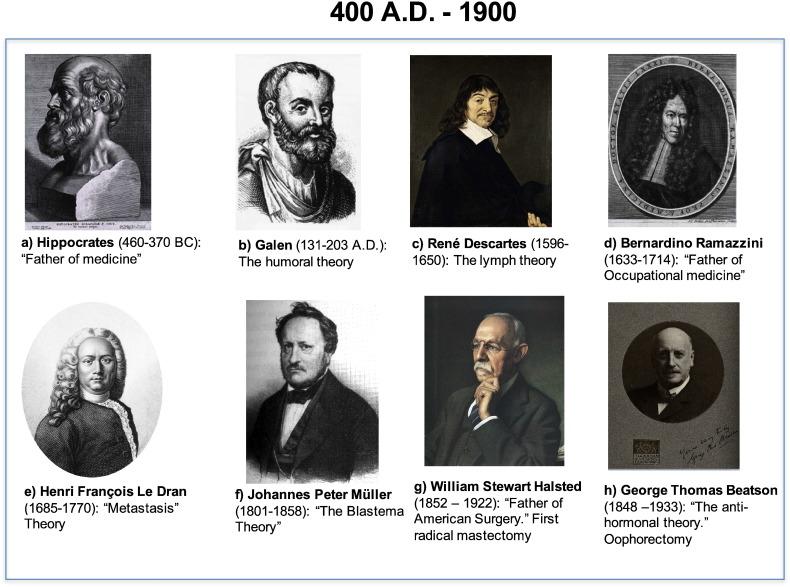
Despite a remarkable increase in the depth of our understanding and management of breast cancer in the past 50 years, the disease is still a major public health problem worldwide and poses significant challenges. The palpability of breast tumors has facilitated diagnosis and documentation since ancient times. The earliest descriptions of breast cancer date back to around 3500 BCE. For centuries to follow, theories by Hippocrates (460 BCE) and Galen (200 CE), attributing the cause of breast cancer to an "excess of black bile" and treatment options including the use of opium and castor oil, prevailed. Surgical resection was introduced in the 18th century. The advent of modern medicine led to the development of novel treatment options that include hormonal, targeted and chemo-therapies. There are still several therapeutic challenges including the treatment of triple negative breast cancer (TNBC), and overcoming drug resistance.
SCOPE OF REVIEW
The increased incidence and awareness of breast cancer has led to significant changes in diagnosis and treatment in recent decades. But, mankind has come a long way. Herein, I have traced how our understanding of breast cancer has evolved from the early description of the disease around 460 BCE as "black bile-containing crab-like tumors" to the conventional as a heterogeneous disease with high degree of diversity between and within tumors, as well as among breast cancer patients. How is breast cancer treated today and how do risk factors, breast cancer subtype and drug resistance contribute to the therapeutic challenges at the turn of the 21st century?
MAJOR CONCLUSIONS
Breast cancer remains a serious public health issue worldwide. However, appreciable growth in our understanding of breast cancer in the past century has led to remarkable progress in the early detection, treatment and prevention of the disease. The clinical focus is shifting more towards tailored therapy as more targets are characterized and novel highly innovative approaches are developed.
GENERAL SIGNIFICANCE
Tracing the history of breast cancer, highlights how increased awareness of the disease, and progress in research and development have enhance our understanding of the disease.
背景
尽管在过去50年里,我们对乳腺癌的理解深度和管理水平有了显著提高,但该疾病仍是全球主要的公共卫生问题,并带来了重大挑战。乳腺肿瘤的可触知性自古以来就有助于诊断和记录。最早关于乳腺癌的描述可追溯到公元前3500年左右。在接下来的几个世纪里,希波克拉底(公元前460年)和盖伦(公元200年)的理论盛行,他们将乳腺癌的病因归因于“黑胆汁过多”,治疗选择包括使用鸦片和蓖麻油。18世纪引入了手术切除。现代医学的出现带来了新的治疗选择,包括激素治疗、靶向治疗和化疗。目前仍存在一些治疗挑战,包括三阴性乳腺癌(TNBC)的治疗以及克服耐药性。
综述范围
近几十年来,乳腺癌发病率的上升和人们对其认识的提高导致了诊断和治疗的重大变化。但是,人类已经走过了漫长的道路。在此,我追溯了我们对乳腺癌的理解是如何从公元前460年左右对该疾病的早期描述“含黑胆汁的蟹状肿瘤”,发展到如今将其视为一种异质性疾病,肿瘤之间、肿瘤内部以及乳腺癌患者之间存在高度多样性。如今乳腺癌是如何治疗的,以及风险因素、乳腺癌亚型和耐药性如何导致21世纪之交的治疗挑战?
主要结论
乳腺癌在全球范围内仍然是一个严重的公共卫生问题。然而,在过去一个世纪里,我们对乳腺癌理解的显著增长已在该疾病的早期检测、治疗和预防方面取得了显著进展。随着更多靶点被确定以及新型高度创新方法的开发,临床重点正更多地转向个性化治疗。
普遍意义
追溯乳腺癌的历史,凸显了对该疾病认识的提高以及研发进展如何增进了我们对该疾病的理解。



 Zotero 插件