
多药耐药肺炎克雷伯菌的次级耐药组。
The secondary resistome of multidrug-resistant Klebsiella pneumoniae.
机构信息
Department of Veterinary Disease Biology, Faculty of Health and Medical Sciences, University of Copenhagen, Frederiksberg, Denmark.
Department of Biomedical Sciences, Ross University School of Veterinary Medicine, Basseterre, St Kitts, West Indies.
出版信息
Sci Rep. 2017 Feb 15;7:42483. doi: 10.1038/srep42483.
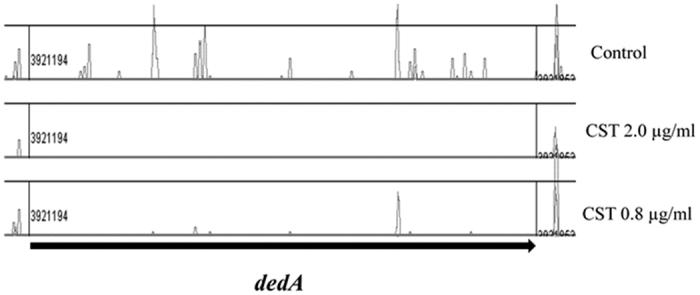
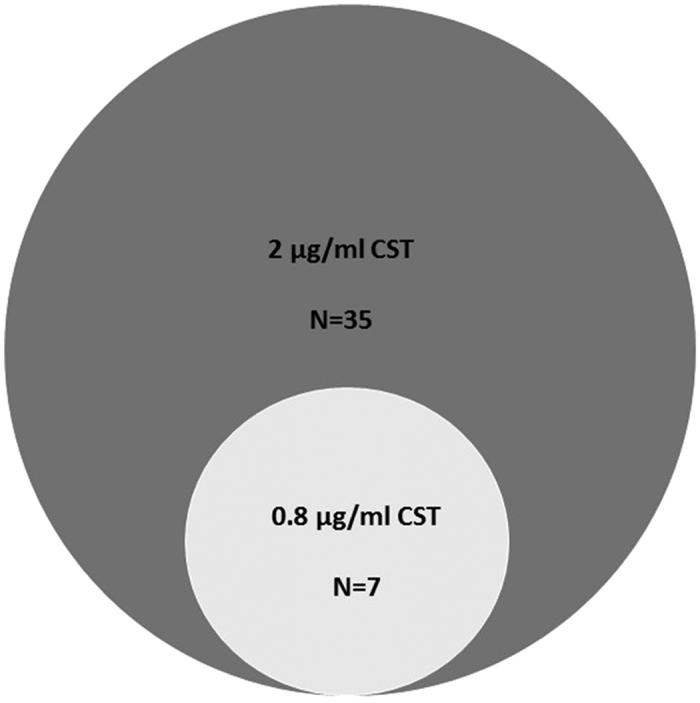
Klebsiella pneumoniae causes severe lung and bloodstream infections that are difficult to treat due to multidrug resistance. We hypothesized that antimicrobial resistance can be reversed by targeting chromosomal non-essential genes that are not responsible for acquired resistance but essential for resistant bacteria under therapeutic concentrations of antimicrobials. Conditional essentiality of individual genes to antimicrobial resistance was evaluated in an epidemic multidrug-resistant clone of K. pneumoniae (ST258). We constructed a high-density transposon mutant library of >430,000 unique Tn5 insertions and measured mutant depletion upon exposure to three clinically relevant antimicrobials (colistin, imipenem or ciprofloxacin) by Transposon Directed Insertion-site Sequencing (TraDIS). Using this high-throughput approach, we defined three sets of chromosomal non-essential genes essential for growth during exposure to colistin (n = 35), imipenem (n = 1) or ciprofloxacin (n = 1) in addition to known resistance determinants, collectively termed the "secondary resistome". As proof of principle, we demonstrated that inactivation of a non-essential gene not previously found linked to colistin resistance (dedA) restored colistin susceptibility by reducing the minimum inhibitory concentration from 8 to 0.5 μg/ml, 4-fold below the susceptibility breakpoint (S ≤ 2 μg/ml). This finding suggests that the secondary resistome is a potential target for developing antimicrobial "helper" drugs that restore the efficacy of existing antimicrobials.
肺炎克雷伯菌可引起严重的肺部和血液感染,由于其具有多重耐药性,因此治疗起来较为困难。我们假设,通过针对非必需的染色体基因进行靶向治疗,就可以逆转抗生素耐药性,这些非必需的染色体基因对于获得性耐药性没有影响,但对于治疗浓度下的抗生素耐药细菌是必需的。我们在流行的耐多药肺炎克雷伯菌(ST258)克隆中评估了个别基因对抗生素耐药性的条件必需性。我们构建了一个超过 43 万个独特 Tn5 插入的高密度转座子突变体文库,并通过转座子定向插入位点测序(TraDIS)测量了在暴露于三种临床相关抗生素(多粘菌素、亚胺培南或环丙沙星)时的突变体耗竭情况。通过这种高通量方法,我们确定了三组非必需染色体基因,它们在暴露于多粘菌素(n = 35)、亚胺培南(n = 1)或环丙沙星(n = 1)时对于生长是必需的,除了已知的耐药决定因素,这些基因统称为“次要耐药组”。作为原理验证,我们证明了先前未发现与多粘菌素耐药相关的非必需基因(dedA)失活可通过将最小抑菌浓度从 8μg/ml 降低至 0.5μg/ml(低于药敏折点 S≤2μg/ml 的 4 倍)来恢复多粘菌素敏感性。这一发现表明,次要耐药组是开发抗生素“辅助”药物的潜在靶点,这些药物可以恢复现有抗生素的疗效。

 Zotero 插件