
本土药用植物香合欢的植物化学筛选及其体外抗氧化和抗菌活性评估
Phytochemical screening and evaluation of in vitro antioxidant and antimicrobial activities of the indigenous medicinal plant Albizia odoratissima.
作者信息
Banothu Venkanna, Neelagiri Chandrasekharnath, Adepally Uma, Lingam Jayalakshmi, Bommareddy Kesavaharshini
机构信息
a Department of Bio-Technology , Center for Bio-Technology, Institute of Science & Technology, Jawaharlal Nehru Technological University Hyderabad , Hyderabad , Telangana , India.
b Department of Microbiology , Osmania Medical College , Hyderabad , Telangana , India.
出版信息
Pharm Biol. 2017 Dec;55(1):1155-1161. doi: 10.1080/13880209.2017.1291694.
CONTEXT
Albizia odoratissima (L. f.) Benth has been used in Indian folk medicine to treat numerous inflammatory pathologies, such as leprosy, ulcers, burns and asthma.
OBJECTIVE
To evaluate the antioxidant and antimicrobial properties of A. odoratissima.
MATERIALS AND METHODS
Dried leaves of A. odoratissima were extracted in organic solvents (hexane, chloroform, ethyl acetate, and methanol). The total phenolic content (TPC) and total flavonoid content (TFC) were determined using the Folin-Ciocalteu and aluminum chloride colorimetric methods, respectively. The antioxidant activity was examined using 2,2-diphenyl-1-picrylhydrazyl (DPPH), hydrogen peroxide (HO), 2,2'-azino-bis-(3-ethylbenzothiazoline-6-sulphonic acid) diammonium salt (ABTS), and ferric reducing antioxidant power (FRAP) assays. The antibacterial activity was examined using minimum inhibitory concentration (MIC) and the minimum bacterial concentration (MBC), determined by broth microdilution method against Gram-negative bacteria (Klebsiella pneumoniae, Escherichia coli, Pseudomonas aeruginosa, and Proteus vulgaris) and Gram-positive bacterium (Staphylococcus aureus).
RESULTS
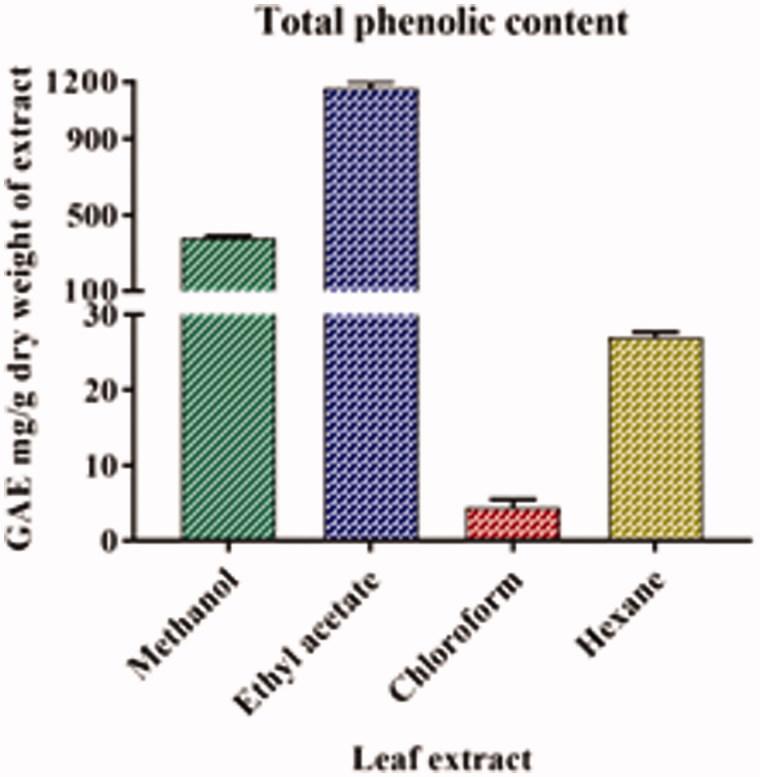
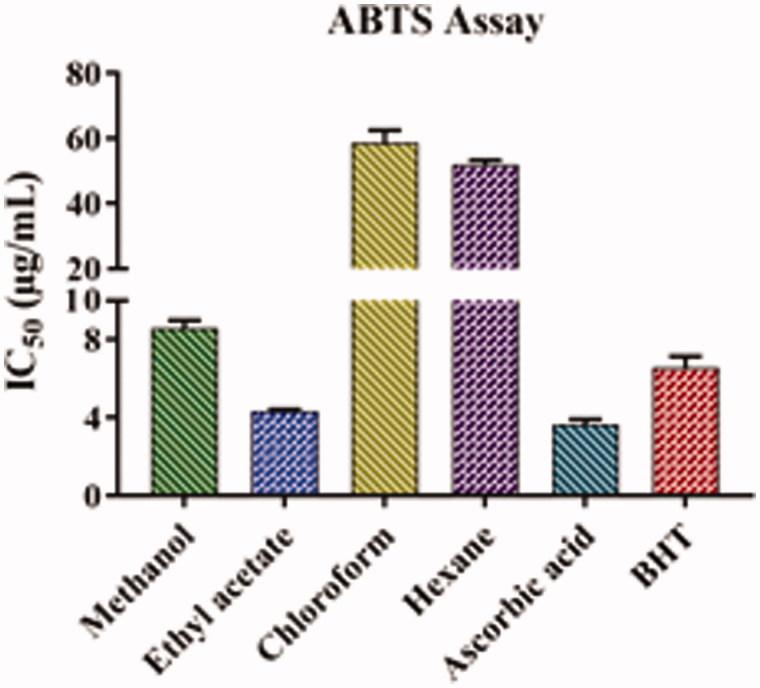
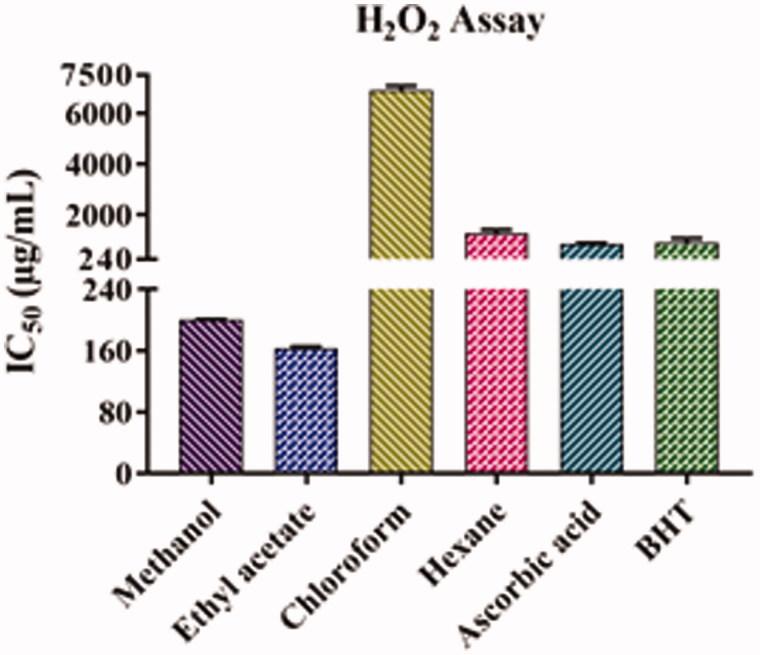
The TPC ranged from 4.40 ± 1.06 to 1166.66 ± 31.85 mg GAE/g of dry weight (DW), and the TFC ranged from 48.35 ± 3.62 to 109.74 ± 1.84 mg QE/g of DW. The IC values of the ethyl acetate extract for DPPH, ABTS, and HO were 10.96 ± 0.40, 4.35 ± 0.07, and 163.82 ± 1.52 μg/mL, respectively. Both methanol and ethyl acetate extracts demonstrated effective antibacterial activity with MICs and MBCs values ranging 136-546 μg/mL and 273-1093 μg/mL, respectively, against the tested pathogenic species.
CONCLUSIONS
The leaves of A. odoratissima showed potent free radical scavenging property and antimicrobial activity.
背景
天香藤(Albizia odoratissima (L. f.) Benth)在印度民间医学中被用于治疗多种炎症性疾病,如麻风病、溃疡、烧伤和哮喘。
目的
评估天香藤的抗氧化和抗菌特性。
材料与方法
用有机溶剂(己烷、氯仿、乙酸乙酯和甲醇)提取天香藤的干燥叶片。分别采用福林-西奥尔特法和氯化铝比色法测定总酚含量(TPC)和总黄酮含量(TFC)。采用2,2-二苯基-1-苦基肼(DPPH)、过氧化氢(HO)、2,2'-联氮-双-(3-乙基苯并噻唑啉-6-磺酸)二铵盐(ABTS)和铁还原抗氧化能力(FRAP)测定法检测抗氧化活性。采用肉汤微量稀释法,针对革兰氏阴性菌(肺炎克雷伯菌、大肠杆菌、铜绿假单胞菌和普通变形杆菌)和革兰氏阳性菌(金黄色葡萄球菌),通过测定最低抑菌浓度(MIC)和最低杀菌浓度(MBC)检测抗菌活性。
结果
TPC范围为4.40±1.06至1166.66±31.85毫克没食子酸当量/克干重(DW),TFC范围为48.35±3.62至109.74±1.84毫克芦丁当量/克DW。乙酸乙酯提取物对DPPH、ABTS和HO的IC值分别为10.96±0.40、4.35±0.07和163.82±1.52微克/毫升。甲醇提取物和乙酸乙酯提取物对受试病原菌均表现出有效的抗菌活性,MIC值和MBC值分别为136 - 546微克/毫升和273 - 1093微克/毫升。
结论
天香藤叶片具有较强的自由基清除能力和抗菌活性。



 Zotero 插件