
特定抗原致敏的DC-CIK和DC-CTL细胞对B16黑色素瘤肿瘤细胞作用的比较研究
Comparative investigation of the effects of specific antigen‑sensitized DC‑CIK and DC‑CTL cells against B16 melanoma tumor cells.
作者信息
Ren Peng-Tao, Zhang Yuan
机构信息
Department of Anus and Intestine Surgery, The Second Hospital of Hebei Medical University, Shijiazhuang, Hebei 050000, P.R. China.
Electrocardiogram Room, The Second Hospital of Hebei Medical University, Shijiazhuang, Hebei 050000, P.R. China.
出版信息
Mol Med Rep. 2017 Apr;15(4):1533-1538. doi: 10.3892/mmr.2017.6175. Epub 2017 Feb 7.
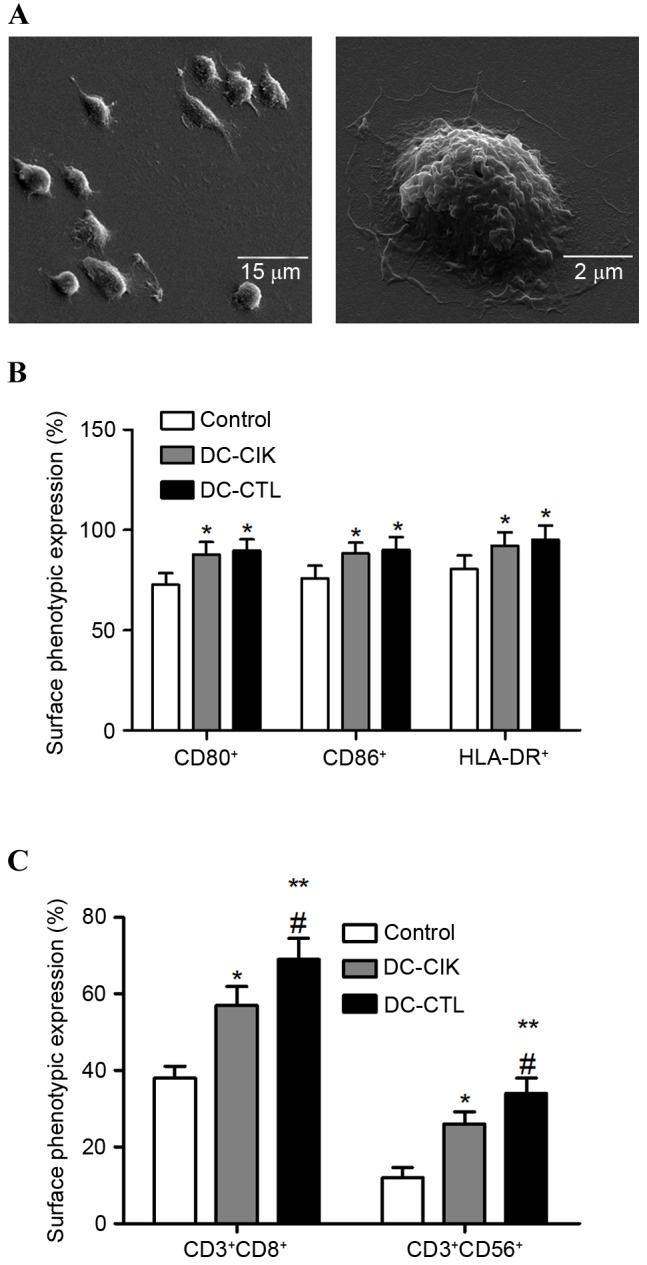
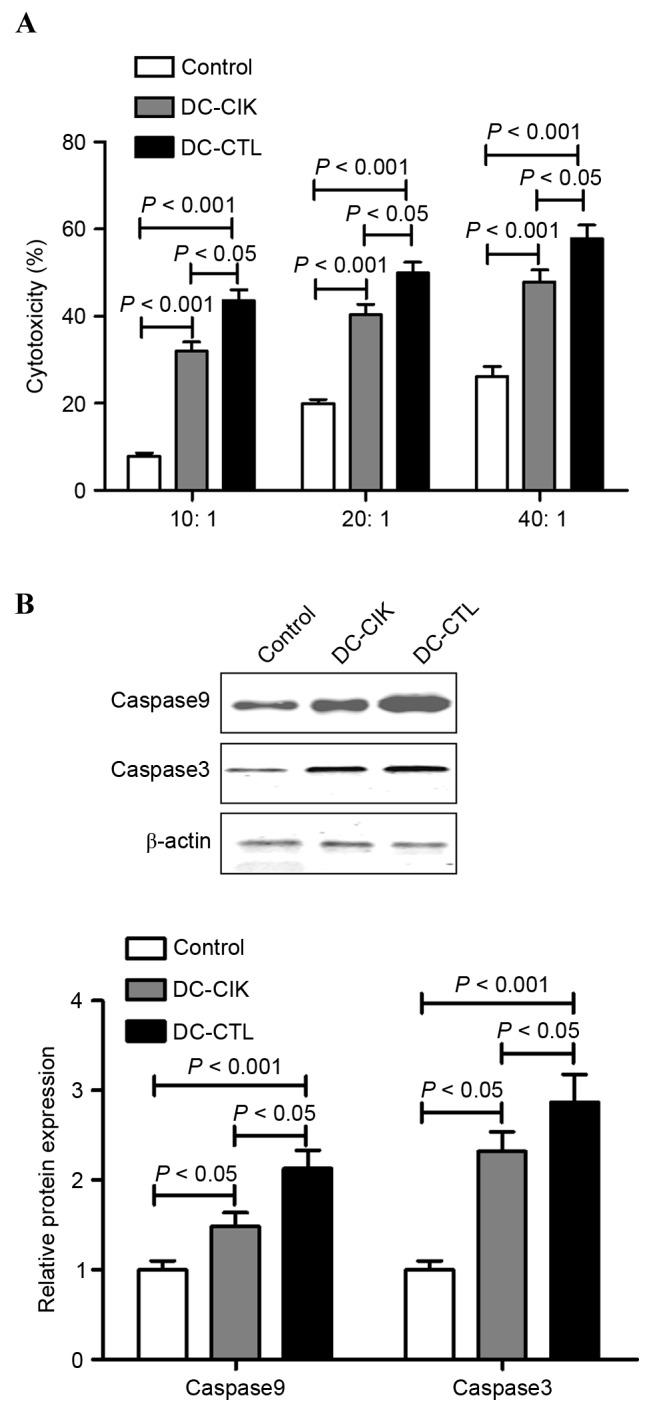
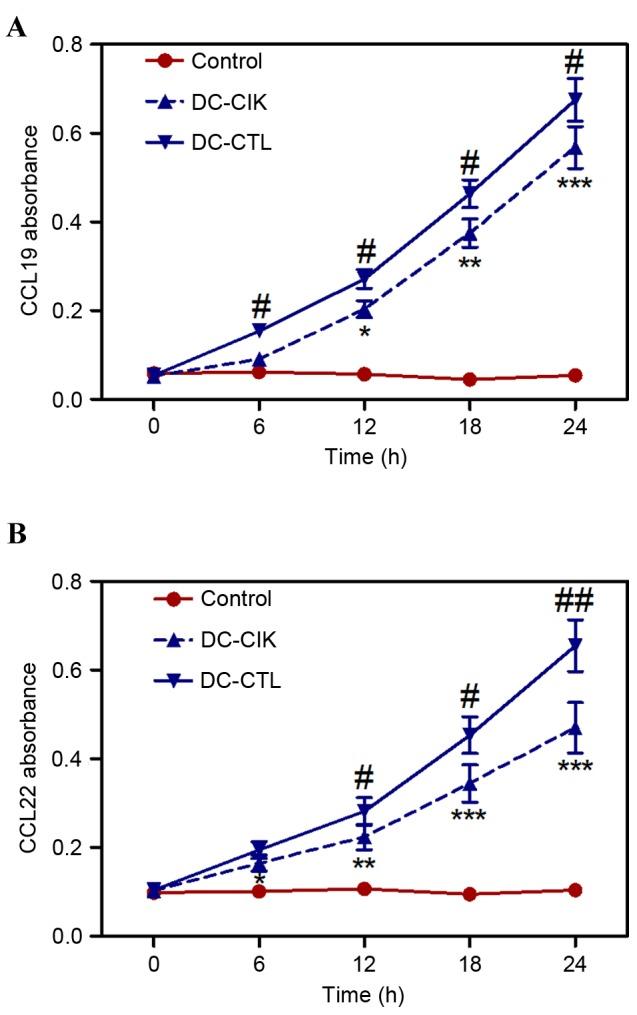
The use of personalized adoptive immunotherapy as a potential novel approach is promising in the treatment of tumors resistant to conventional therapies. In the present study, dendritic cell (DC)‑cytokine‑induced killer (CIK) and DC‑cytotoxic lymphocyte (CTL) cells were cultured to examine their phenotype, proliferation and cytotoxicity against B16 melanoma tumor cells. In addition, comparative investigations of the effect of specific antigen‑sensitized DC‑CIK and DC‑CTL cells against B16 melanoma tumor cells were performed in vitro and in vivo. The results showed that the phenotypes of the co‑cultured cells were altered, and DCs promoted DC‑CIK cell and DC‑CTL cell differentiation and maturation in vitro. Lactate dehydrogenase cytotoxic analysis indicated that the cytotoxicity increased as the effector to target ratio increased between 10:1 and 40:1, and the cytotoxic effect towards B16 melanoma cells by DC‑CTL cells was significantly higher, compared with that of DC‑CIK cells. To further examine the antineoplastic efficacy of DC‑CIK and DC‑CTL cells in vivo, the present study performed tail‑intravenous injection of DC‑CIK cells and DC‑CTL cells, which attenuated B16 melanoma cell‑engrafted tumor growth, induced G0/G1 cell cycle arrest and accelerated cell apoptosis. Taken together, these results suggested that the use of DC‑CTL or DC‑CIK cell therapy as a personalized adoptive immunotherapy may regulate immune status and inhibit tumor growth in vivo. In addition, the experiments indicated that DC‑CTL cells offer superior antineoplastic activity, compared with DC‑CIK cells against B16 melanoma tumor cells.
将个性化过继性免疫疗法作为一种潜在的新方法用于治疗对传统疗法耐药的肿瘤,前景广阔。在本研究中,培养了树突状细胞(DC)-细胞因子诱导的杀伤细胞(CIK)和DC-细胞毒性淋巴细胞(CTL),以检测它们的表型、增殖情况以及对B16黑色素瘤肿瘤细胞的细胞毒性。此外,还在体外和体内对特异性抗原致敏的DC-CIK和DC-CTL细胞针对B16黑色素瘤肿瘤细胞的作用进行了比较研究。结果显示,共培养细胞的表型发生了改变,并且DC在体外促进了DC-CIK细胞和DC-CTL细胞的分化与成熟。乳酸脱氢酶细胞毒性分析表明,随着效应细胞与靶细胞比例在10:1至40:1之间增加,细胞毒性增强,并且与DC-CIK细胞相比,DC-CTL细胞对B16黑色素瘤细胞的细胞毒性作用显著更高。为了进一步检测DC-CIK和DC-CTL细胞在体内的抗肿瘤疗效,本研究进行了尾静脉注射DC-CIK细胞和DC-CTL细胞,这减弱了接种B16黑色素瘤细胞的肿瘤生长,诱导了G0/G1期细胞周期阻滞并加速了细胞凋亡。综上所述,这些结果表明,将DC-CTL或DC-CIK细胞疗法作为个性化过继性免疫疗法可能会调节体内免疫状态并抑制肿瘤生长。此外,实验表明,与DC-CIK细胞相比,DC-CTL细胞对B16黑色素瘤肿瘤细胞具有更强的抗肿瘤活性。

 Zotero 插件