
过氧化氢酶作为一种硫化物-硫氧化还原酶:一种古老(以及现代?)的活性硫物质(RSS)调节因子。
Catalase as a sulfide-sulfur oxido-reductase: An ancient (and modern?) regulator of reactive sulfur species (RSS).
作者信息
Olson Kenneth R, Gao Yan, DeLeon Eric R, Arif Maaz, Arif Faihaan, Arora Nitin, Straub Karl D
机构信息
Indiana University School of Medicine - South Bend, South Bend, IN 46617, USA.
Indiana University School of Medicine - South Bend, South Bend, IN 46617, USA.
出版信息
Redox Biol. 2017 Aug;12:325-339. doi: 10.1016/j.redox.2017.02.021. Epub 2017 Mar 1.
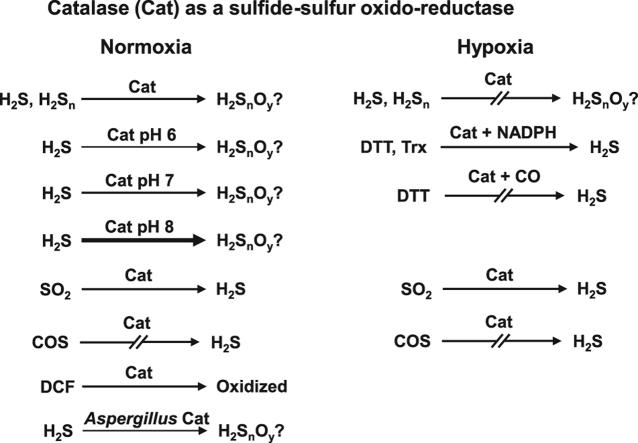
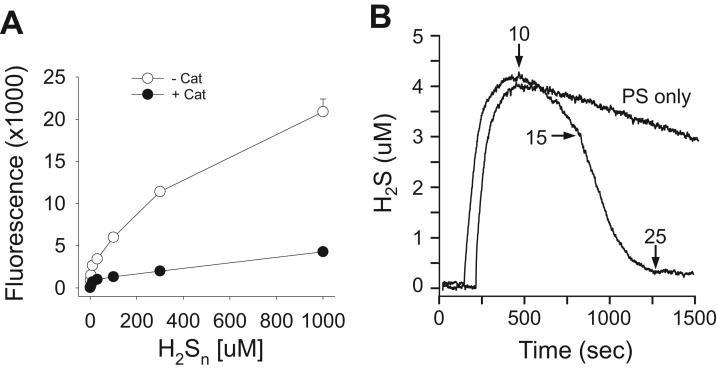
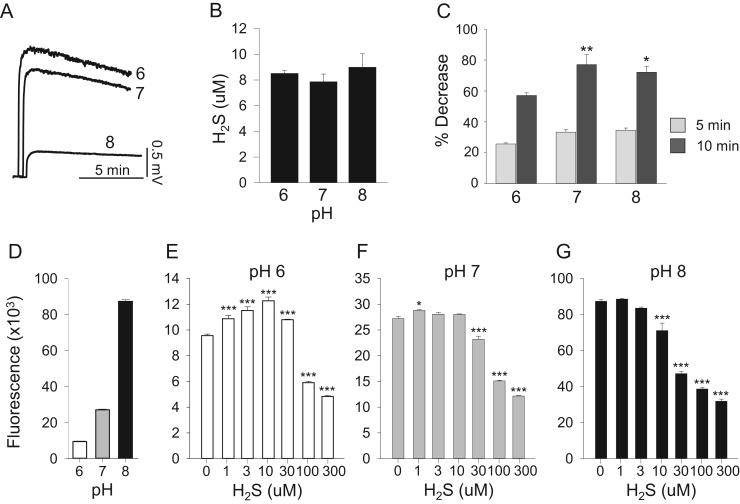
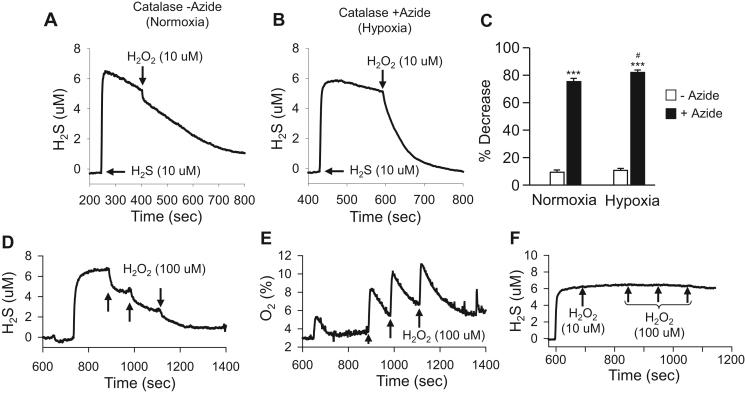
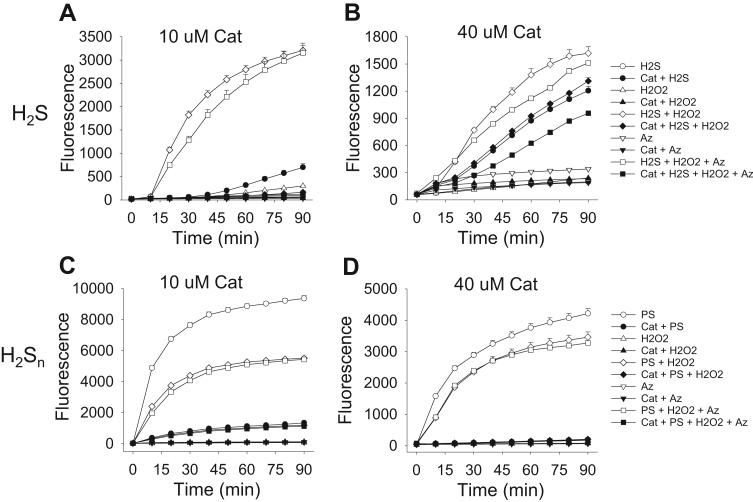
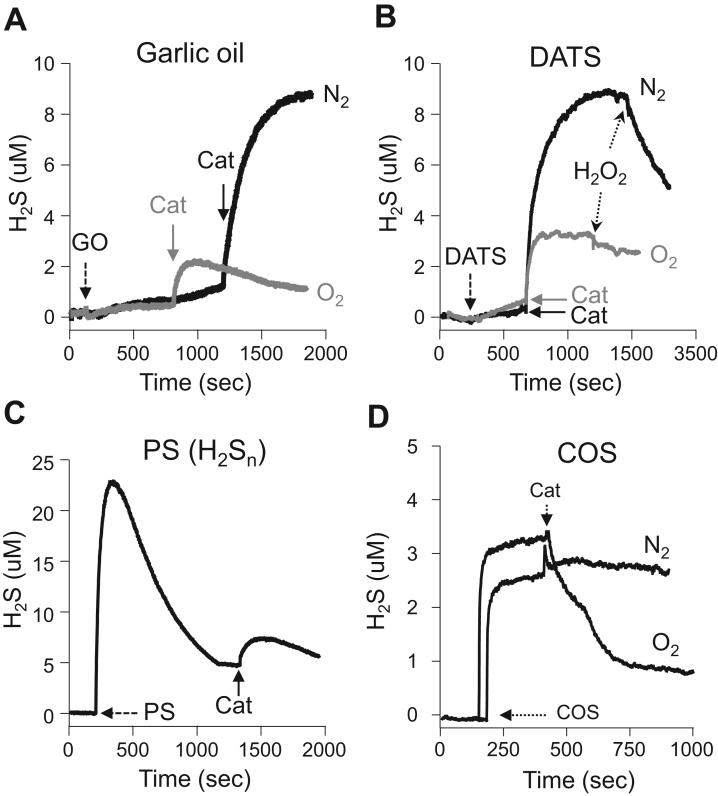
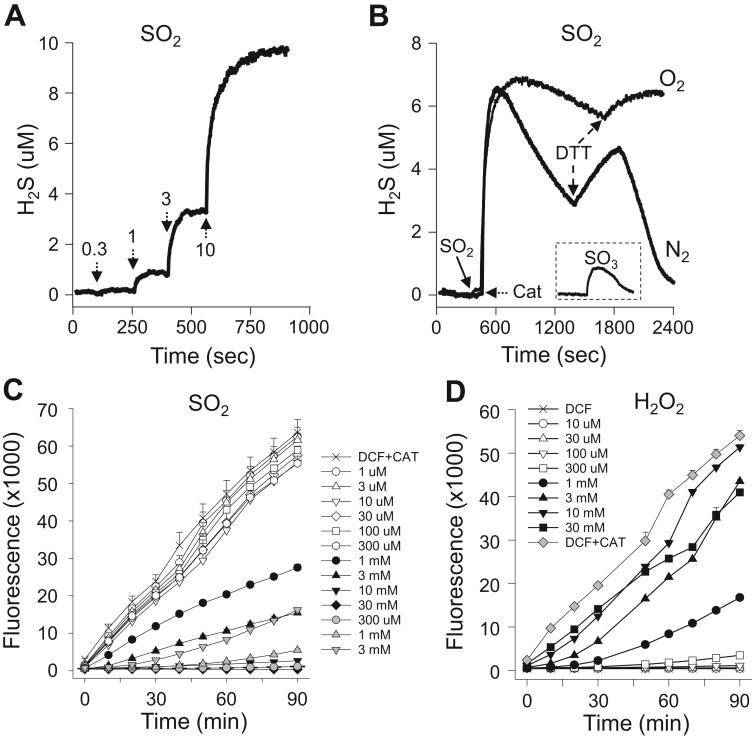
Catalase is well-known as an antioxidant dismutating HO to O and HO. However, catalases evolved when metabolism was largely sulfur-based, long before O and reactive oxygen species (ROS) became abundant, suggesting catalase metabolizes reactive sulfide species (RSS). Here we examine catalase metabolism of HS, the sulfur analog of HO, hydrogen sulfide (HS) and other sulfur-bearing molecules using HS-specific amperometric electrodes and fluorophores to measure polysulfides (HS; SSP4) and ROS (dichlorofluorescein, DCF). Catalase eliminated HS, but did not anaerobically generate HS, the expected product of dismutation. Instead, catalase concentration- and oxygen-dependently metabolized HS and in so doing acted as a sulfide oxidase with a P of 20mmHg. HO had little effect on catalase-mediated HS metabolism but in the presence of the catalase inhibitor, sodium azide (Az), HO rapidly and efficiently expedited HS metabolism in both normoxia and hypoxia suggesting HO is an effective electron acceptor in this reaction. Unexpectedly, catalase concentration-dependently generated HS from dithiothreitol (DTT) in both normoxia and hypoxia, concomitantly oxidizing HS in the presence of O. HS production from DTT was inhibited by carbon monoxide and augmented by NADPH suggesting that catalase heme-iron is the catalytic site and that NADPH provides reducing equivalents. Catalase also generated HS from garlic oil, diallyltrisulfide, thioredoxin and sulfur dioxide, but not from sulfite, metabisulfite, carbonyl sulfide, cysteine, cystine, glutathione or oxidized glutathione. Oxidase activity was also present in catalase from Aspergillus niger. These results show that catalase can act as either a sulfide oxidase or sulfur reductase and they suggest that these activities likely played a prominent role in sulfur metabolism during evolution and may continue do so in modern cells as well. This also appears to be the first observation of catalase reductase activity independent of peroxide dismutation.
过氧化氢酶作为一种抗氧化剂,能将过氧化氢歧化为氧气和水,广为人知。然而,过氧化氢酶是在新陈代谢主要基于硫的时候进化而来的,远早于氧气和活性氧(ROS)变得丰富的时候,这表明过氧化氢酶能代谢活性硫化物(RSS)。在这里,我们使用硫化氢特异性安培电极和荧光团来测量多硫化物(H₂Sₙ;n = 2 - 5)和活性氧(二氯荧光素,DCF),研究过氧化氢酶对硫化氢(HS⁻)、过氧化氢的硫类似物、硫化氢(H₂S)和其他含硫分子的代谢。过氧化氢酶消除了HS⁻,但在厌氧条件下并未产生预期的歧化产物H₂S。相反,过氧化氢酶以浓度和氧依赖的方式代谢HS⁻,在此过程中作为一种硫化物氧化酶,其P₅₀为20mmHg。H₂O₂对过氧化氢酶介导的HS⁻代谢影响很小,但在过氧化氢酶抑制剂叠氮化钠(Az)存在的情况下,H₂O₂在常氧和低氧条件下都能快速有效地加速HS⁻代谢,这表明H₂O₂是该反应中一种有效的电子受体。出乎意料的是,在常氧和低氧条件下,过氧化氢酶浓度依赖性地从二硫苏糖醇(DTT)产生H₂S,同时在有氧存在的情况下氧化HS⁻。DTT产生H₂S的过程受到一氧化碳的抑制,并被NADPH增强,这表明过氧化氢酶的血红素铁是催化位点,NADPH提供还原当量。过氧化氢酶还能从大蒜油、二烯丙基三硫化物、硫氧还蛋白和二氧化硫中产生H₂S,但不能从亚硫酸盐、焦亚硫酸盐、羰基硫、半胱氨酸、胱氨酸、谷胱甘肽或氧化型谷胱甘肽中产生。黑曲霉的过氧化氢酶也具有氧化酶活性。这些结果表明,过氧化氢酶既可以作为硫化物氧化酶,也可以作为硫还原酶,它们表明这些活性在进化过程中可能在硫代谢中发挥了重要作用,并且在现代细胞中可能仍然如此。这似乎也是首次观察到过氧化氢酶的还原酶活性独立于过氧化物歧化反应。





 Zotero 插件