
LOXL2 通过激活 IRE1-XBP1 信号通路驱动上皮-间充质转化。
LOXL2 drives epithelial-mesenchymal transition via activation of IRE1-XBP1 signalling pathway.
机构信息
Departamento de Bioquímica, Universidad Autónoma de Madrid (UAM), Instituto de Investigaciones Biomédicas "Alberto Sols" (CSIC-UAM), IdiPAZ, CIBERONC, Madrid, Spain.
Fundación MD Anderson International, Madrid, Spain.
出版信息
Sci Rep. 2017 Mar 23;7:44988. doi: 10.1038/srep44988.
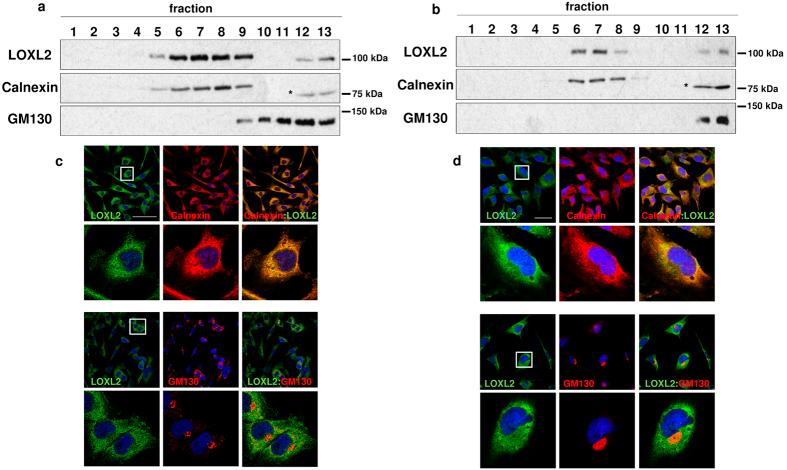
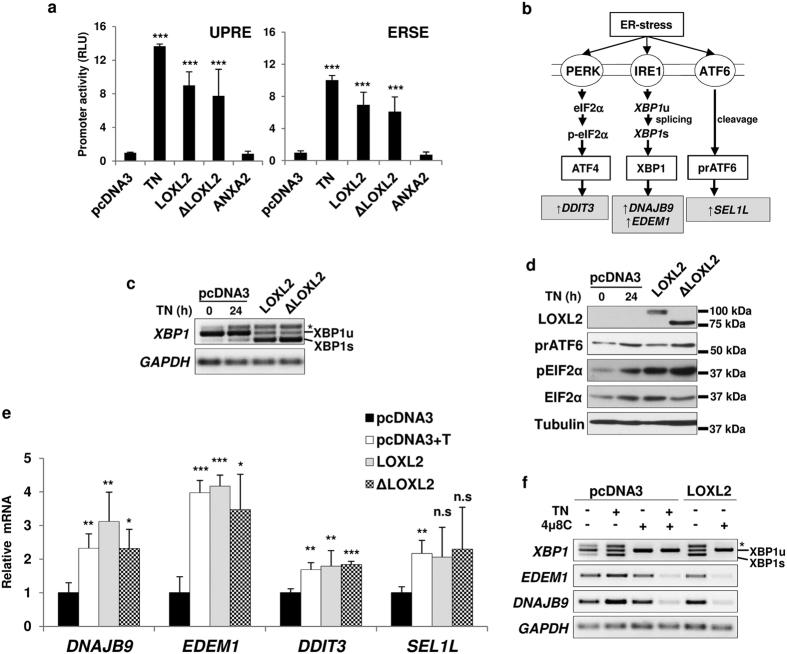
Epithelial-to-Mesenchymal Transition (EMT) is a key process contributing to the aggressiveness of cancer cells. EMT is triggered by activation of different transcription factors collectively known as EMT-TFs. Different cellular cues and cell signalling networks activate EMT at transcriptional and posttranscriptional level in different biological and pathological situations. Among them, overexpression of LOXL2 (lysyl oxidase-like 2) induces EMT independent of its catalytic activity. Remarkably, perinuclear/cytoplasmic accumulation of LOXL2 is a poor prognosis marker of squamous cell carcinomas and is associated to basal breast cancer metastasis by mechanisms no yet fully understood. Here, we report that overexpression of LOXL2 promotes its accumulation in the Endoplasmic Reticulum where it interacts with HSPA5 leading to activation of the IRE1-XBP1 signalling pathway of the ER-stress response. LOXL2-dependent IRE1-XBP1 activation induces the expression of several EMT-TFs: SNAI1, SNAI2, ZEB2 and TCF3 that are direct transcriptional targets of XBP1. Remarkably, inhibition of IRE1 blocks LOXL2-dependent upregulation of EMT-TFs thus hindering EMT induction.
上皮-间充质转化 (EMT) 是促进癌细胞侵袭性的关键过程。EMT 是由不同转录因子的激活触发的,这些转录因子统称为 EMT-TFs。在不同的生物学和病理情况下,不同的细胞信号和细胞信号网络在转录和转录后水平激活 EMT。其中,LOXL2(赖氨酰氧化酶样 2)的过表达独立于其催化活性诱导 EMT。值得注意的是,LOXL2 的核周/细胞质积累是鳞状细胞癌预后不良的标志物,并且通过尚未完全了解的机制与基底乳腺癌转移相关。在这里,我们报告 LOXL2 的过表达促进其在内质网中的积累,在那里它与 HSPA5 相互作用,导致内质网应激反应的 IRE1-XBP1 信号通路的激活。LOXL2 依赖性 IRE1-XBP1 激活诱导 EMT-TFs 的表达:SNAI1、SNAI2、ZEB2 和 TCF3,它们是 XBP1 的直接转录靶标。值得注意的是,IRE1 的抑制阻止了 LOXL2 依赖性 EMT-TFs 的上调,从而阻碍了 EMT 的诱导。



 Zotero 插件