
磷酸二酯酶抑制剂作为神经保护和修复的治疗方法
Phosphodiesterase Inhibitors as a Therapeutic Approach to Neuroprotection and Repair.
作者信息
Knott Eric P, Assi Mazen, Rao Sudheendra N R, Ghosh Mousumi, Pearse Damien D
机构信息
Herbert Wertheim College of Medicine, Florida International University, Miami, FL 33199, USA.
The Miami Project to Cure Paralysis, The Miller School of Medicine at the University of Miami, Miami, FL 33136, USA.
出版信息
Int J Mol Sci. 2017 Mar 24;18(4):696. doi: 10.3390/ijms18040696.
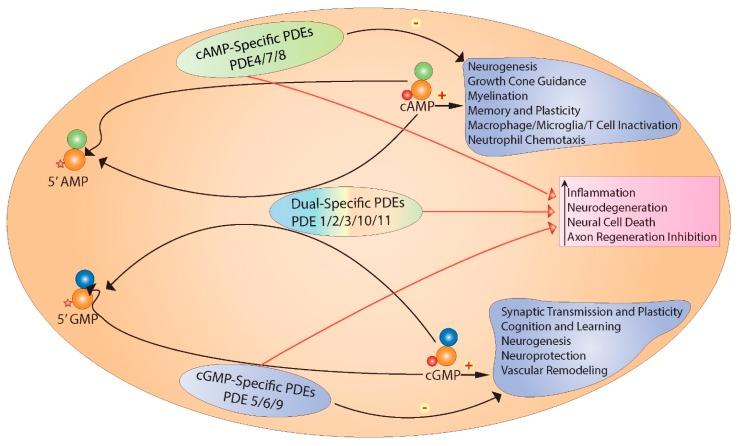
A wide diversity of perturbations of the central nervous system (CNS) result in structural damage to the neuroarchitecture and cellular defects, which in turn are accompanied by neurological dysfunction and abortive endogenous neurorepair. Altering intracellular signaling pathways involved in inflammation and immune regulation, neural cell death, axon plasticity and remyelination has shown therapeutic benefit in experimental models of neurological disease and trauma. The second messengers, cyclic adenosine monophosphate (cyclic AMP) and cyclic guanosine monophosphate (cyclic GMP), are two such intracellular signaling targets, the elevation of which has produced beneficial cellular effects within a range of CNS pathologies. The only known negative regulators of cyclic nucleotides are a family of enzymes called phosphodiesterases (PDEs) that hydrolyze cyclic nucleotides into adenosine monophosphate (AMP) or guanylate monophosphate (GMP). Herein, we discuss the structure and physiological function as well as the roles PDEs play in pathological processes of the diseased or injured CNS. Further we review the approaches that have been employed therapeutically in experimental paradigms to block PDE expression or activity and in turn elevate cyclic nucleotide levels to mediate neuroprotection or neurorepair as well as discuss both the translational pathway and current limitations in moving new PDE-targeted therapies to the clinic.
中枢神经系统(CNS)的多种扰动会导致神经结构的结构性损伤和细胞缺陷,进而伴随神经功能障碍和内源性神经修复失败。改变参与炎症和免疫调节、神经细胞死亡、轴突可塑性和髓鞘再生的细胞内信号通路,已在神经疾病和创伤的实验模型中显示出治疗益处。第二信使环磷酸腺苷(cAMP)和环磷酸鸟苷(cGMP)就是这样两个细胞内信号靶点,其水平升高已在一系列中枢神经系统病变中产生了有益的细胞效应。环核苷酸唯一已知的负调节因子是一类称为磷酸二酯酶(PDEs)的酶,它们将环核苷酸水解为单磷酸腺苷(AMP)或单磷酸鸟苷(GMP)。在此,我们讨论磷酸二酯酶的结构和生理功能,以及它们在患病或受损中枢神经系统病理过程中所起的作用。此外,我们回顾了在实验范式中用于治疗性阻断磷酸二酯酶表达或活性,进而提高环核苷酸水平以介导神经保护或神经修复的方法,并讨论了将新的以磷酸二酯酶为靶点的疗法推向临床的转化途径和当前局限性。
 Zotero 插件