
定位良好的核小体在多顺反子RNA聚合酶II转录单元中形成间隔,并位于沉默基因阵列的两侧。
Well-positioned nucleosomes punctuate polycistronic pol II transcription units and flank silent gene arrays in .
作者信息
Maree Johannes Petrus, Povelones Megan Lindsay, Clark David Johannes, Rudenko Gloria, Patterton Hugh-George
机构信息
Department of Biochemistry, Stellenbosch University, Matieland, 7602 South Africa.
Department of Biology, Pennsylvania State University (Brandywine Campus), Media, PA 19063 USA.
出版信息
Epigenetics Chromatin. 2017 Mar 20;10:14. doi: 10.1186/s13072-017-0121-9. eCollection 2017.
BACKGROUND
The compaction of DNA in chromatin in eukaryotes allowed the expansion of genome size and coincided with significant evolutionary diversification. However, chromatin generally represses DNA function, and mechanisms coevolved to regulate chromatin structure and its impact on DNA. This included the selection of specific nucleosome positions to modulate accessibility to the DNA molecule. , a member of the Excavates supergroup, falls in an ancient evolutionary branch of eukaryotes and provides valuable insight into the organization of chromatin in early genomes.
RESULTS
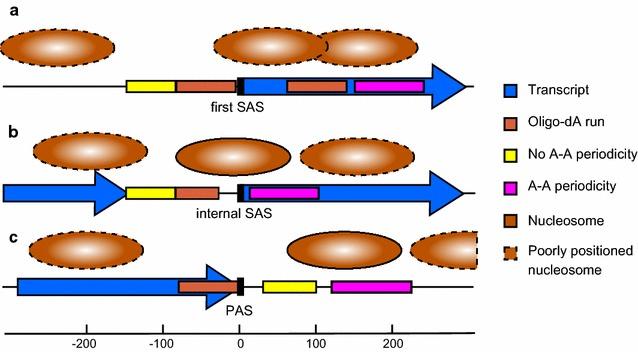
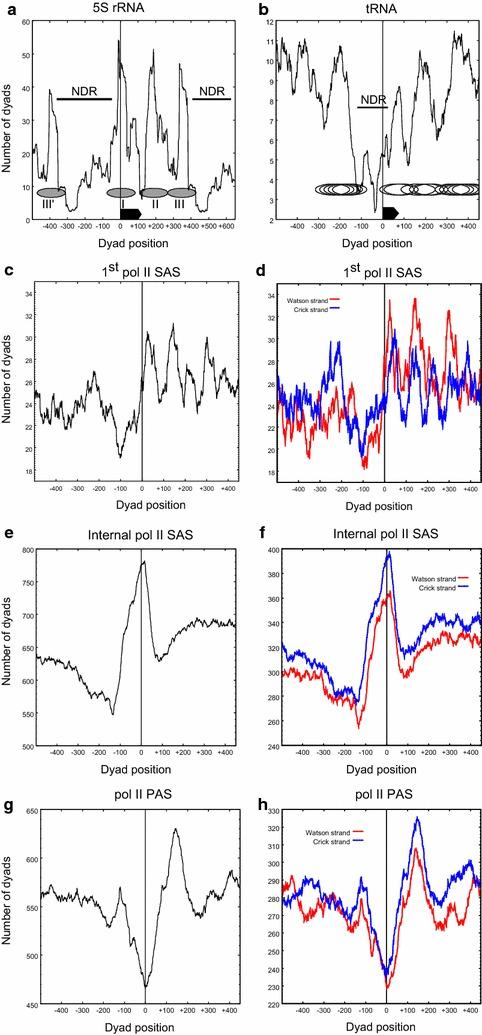
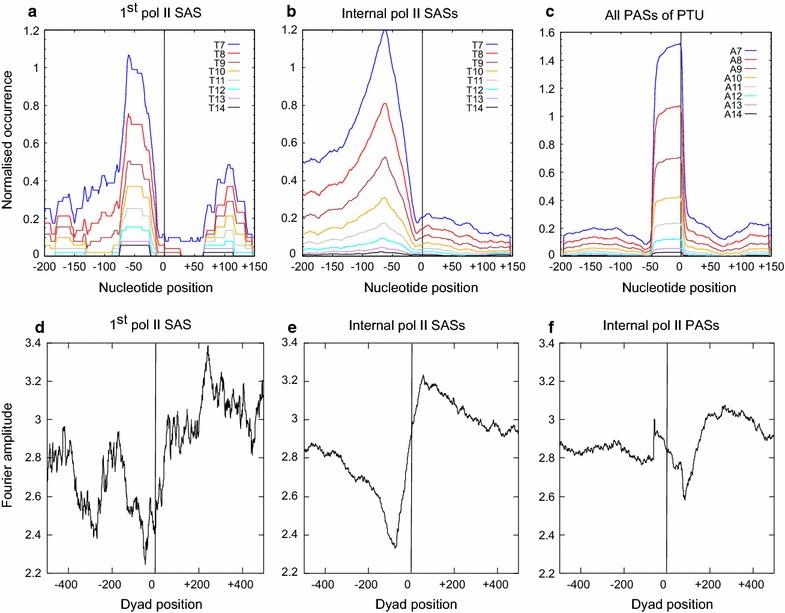
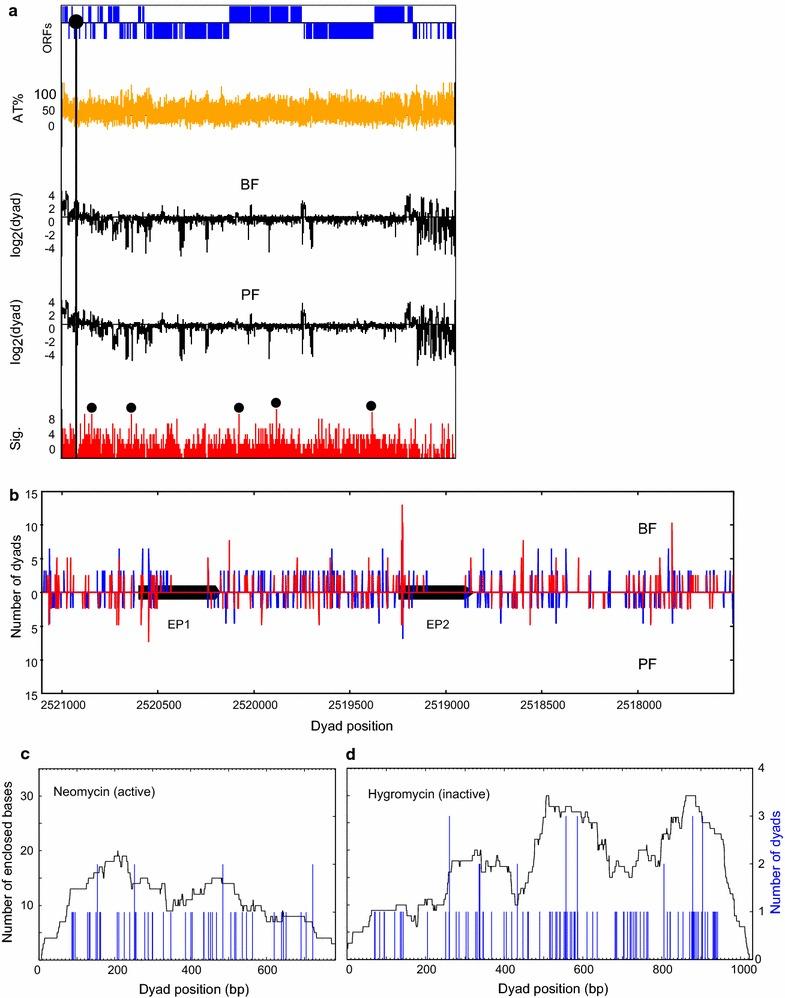
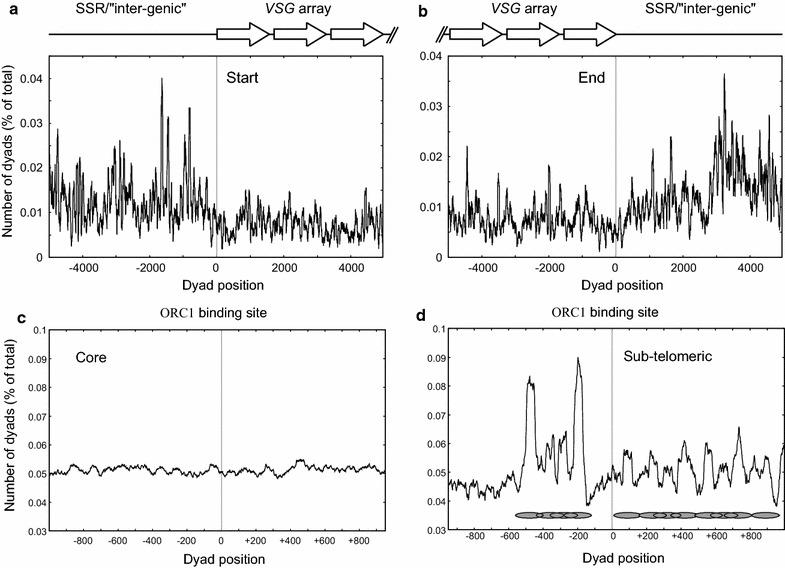
We have mapped nucleosome positions in and identified important differences compared to other eukaryotes: The RNA polymerase II initiation regions in do not exhibit pronounced nucleosome depletion, and show little evidence for defined -1 and +1 nucleosomes. In contrast, a well-positioned nucleosome is present directly on the splice acceptor sites within the polycistronic transcription units. The RNA polyadenylation sites were depleted of nucleosomes, with a single well-positioned nucleosome present immediately downstream of the predicted sites. The regions flanking the silent variant surface glycoprotein (VSG) gene cassettes showed extensive arrays of well-positioned nucleosomes, which may repress cryptic transcription initiation. The silent VSG genes themselves exhibited a less regular nucleosomal pattern in both bloodstream and procyclic form trypanosomes. The DNA replication origins, when present within silent VSG gene cassettes, displayed a defined nucleosomal organization compared with replication origins in other chromosomal core regions.
CONCLUSIONS
Our results indicate that some organizational features of chromatin are evolutionarily ancient, and may already have been present in the last eukaryotic common ancestor.
背景
真核生物中染色质内DNA的压缩使得基因组大小得以扩展,并且与显著的进化多样化同时发生。然而,染色质通常会抑制DNA功能,同时也共同进化出了调控染色质结构及其对DNA影响的机制。这包括选择特定的核小体位置来调节对DNA分子的可及性。锥虫属于挖掘类超群的一员,处于真核生物古老的进化分支中,为早期基因组中染色质的组织提供了有价值的见解。
结果
我们绘制了锥虫中的核小体位置,并确定了与其他真核生物相比的重要差异:锥虫中的RNA聚合酶II起始区域没有表现出明显的核小体缺失,并且几乎没有证据表明存在明确的-1和+1核小体。相反,在多顺反子转录单元内的剪接受体位点上直接存在一个定位良好的核小体。RNA聚腺苷酸化位点没有核小体,在预测位点的紧邻下游存在一个定位良好的核小体。沉默变异表面糖蛋白(VSG)基因盒两侧的区域显示出大量定位良好的核小体阵列,这可能会抑制隐蔽的转录起始。沉默的VSG基因本身在血流型和前循环型锥虫中均表现出不太规则的核小体模式。当DNA复制起点存在于沉默的VSG基因盒内时,与其他染色体核心区域的复制起点相比,呈现出特定的核小体组织。
结论
我们的结果表明,染色质的一些组织特征在进化上是古老的,可能在最后的真核生物共同祖先中就已经存在。
 Zotero 插件