
短暂的微生物群暴露会激活膀胱中潜伏的大肠杆菌感染,并导致复发性疾病的严重后果。
Transient microbiota exposures activate dormant Escherichia coli infection in the bladder and drive severe outcomes of recurrent disease.
作者信息
Gilbert Nicole M, O'Brien Valerie P, Lewis Amanda L
机构信息
Department of Obstetrics and Gynecology, Center for Reproductive Health Sciences, Washington University School of Medicine, St. Louis, Missouri, United States of America.
Department of Molecular Microbiology, Center for Women's Infectious Disease Research, Washington University School of Medicine, St. Louis, Missouri, United States of America.
出版信息
PLoS Pathog. 2017 Mar 30;13(3):e1006238. doi: 10.1371/journal.ppat.1006238. eCollection 2017 Mar.
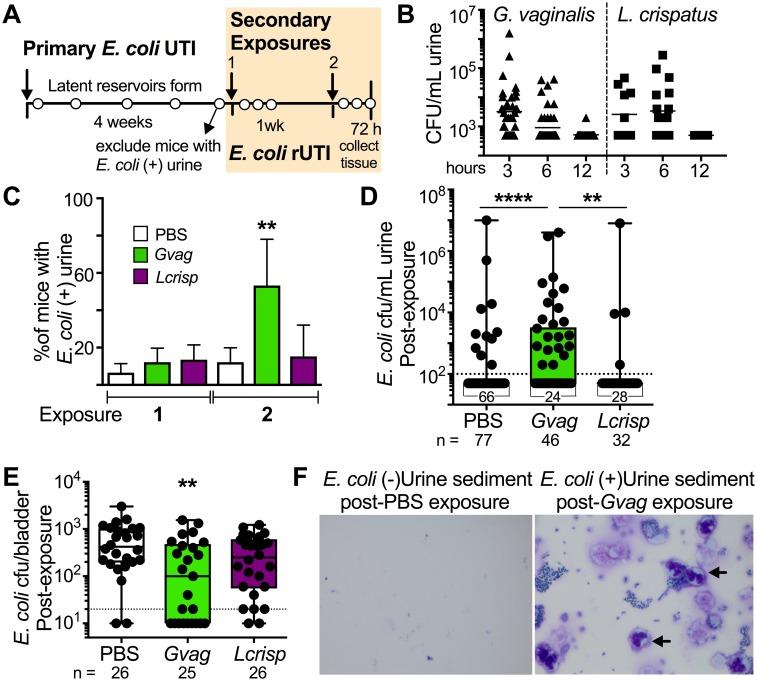
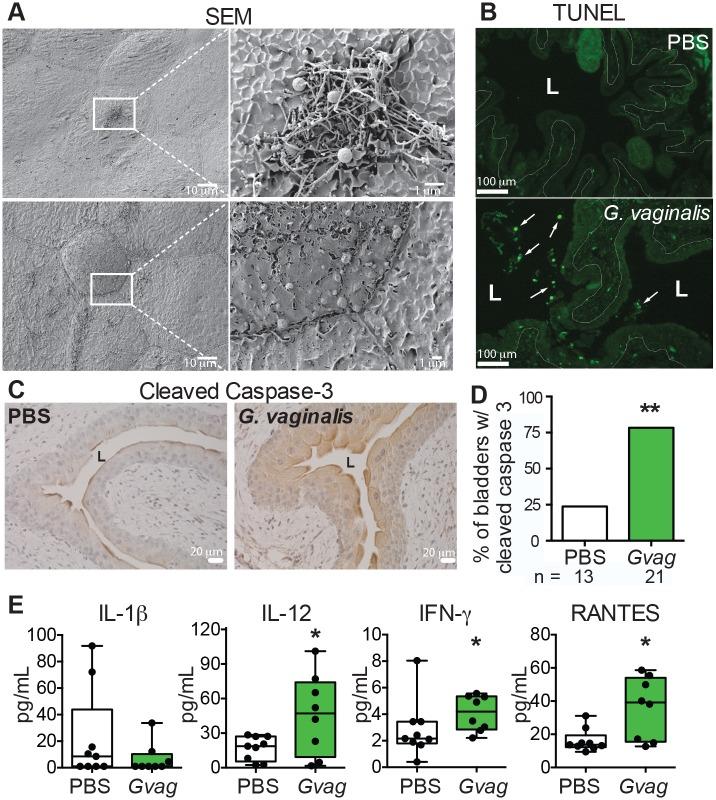
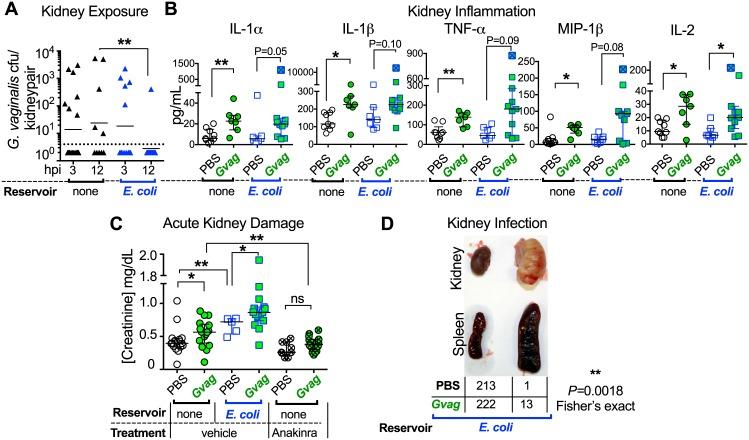
Pathogens often inhabit the body asymptomatically, emerging to cause disease in response to unknown triggers. In the bladder, latent intracellular Escherichia coli reservoirs are regarded as likely origins of recurrent urinary tract infection (rUTI), a problem affecting millions of women worldwide. However, clinically plausible triggers that activate these reservoirs are unknown. Clinical studies suggest that the composition of a woman's vaginal microbiota influences her susceptibility to rUTI, but the mechanisms behind these associations are unclear. Several lines of evidence suggest that the urinary tract is routinely exposed to vaginal bacteria, including Gardnerella vaginalis, a dominant member of the vaginal microbiota in some women. Using a mouse model, we show that bladder exposure to G. vaginalis triggers E. coli egress from latent bladder reservoirs and enhances the potential for life-threatening outcomes of the resulting E. coli rUTI. Transient G. vaginalis exposures were sufficient to cause bladder epithelial apoptosis and exfoliation and interleukin-1-receptor-mediated kidney injury, which persisted after G. vaginalis clearance from the urinary tract. These results support a broader view of UTI pathogenesis in which disease can be driven by short-lived but powerful urinary tract exposures to vaginal bacteria that are themselves not "uropathogenic" in the classic sense. This "covert pathogenesis" paradigm may apply to other latent infections, (e.g., tuberculosis), or for diseases currently defined as noninfectious because routine culture fails to detect microbes of recognized significance.
病原体常常在体内无症状地存在,在未知触发因素的作用下引发疾病。在膀胱中,潜伏的细胞内大肠杆菌储存库被认为是复发性尿路感染(rUTI)的可能起源,这一问题影响着全球数百万女性。然而,激活这些储存库的临床上看似合理的触发因素尚不清楚。临床研究表明,女性阴道微生物群的组成会影响其对rUTI的易感性,但这些关联背后的机制尚不清楚。有几条证据表明,尿路经常暴露于阴道细菌,包括阴道加德纳菌,它是一些女性阴道微生物群中的主要成员。使用小鼠模型,我们发现膀胱暴露于阴道加德纳菌会触发大肠杆菌从潜伏的膀胱储存库中释放出来,并增加由此导致的大肠杆菌rUTI出现危及生命后果的可能性。短暂暴露于阴道加德纳菌足以导致膀胱上皮细胞凋亡和脱落以及白细胞介素-1受体介导的肾损伤,在阴道加德纳菌从尿路清除后这些损伤仍会持续。这些结果支持了对UTI发病机制的更广泛观点,即疾病可能由尿路短暂但强烈地暴露于阴道细菌所驱动,而这些细菌本身在经典意义上并非“尿路致病性”。这种“隐匿性发病机制”范式可能适用于其他潜伏感染(如结核病),或适用于目前被定义为非感染性的疾病,因为常规培养未能检测到具有公认意义的微生物。


 Zotero 插件