
苔藓对微生物防御进化中的适应机制。
Adaptation Mechanisms in the Evolution of Moss Defenses to Microbes.
作者信息
Ponce de León Inés, Montesano Marcos
机构信息
Departamento de Biología Molecular, Instituto de Investigaciones Biológicas Clemente Estable Montevideo, Uruguay.
Departamento de Biología Molecular, Instituto de Investigaciones Biológicas Clemente EstableMontevideo, Uruguay; Laboratorio de Fisiología Vegetal, Centro de Investigaciones Nucleares, Facultad de Ciencias, Universidad de la RepúblicaMontevideo, Uruguay.
出版信息
Front Plant Sci. 2017 Mar 15;8:366. doi: 10.3389/fpls.2017.00366. eCollection 2017.
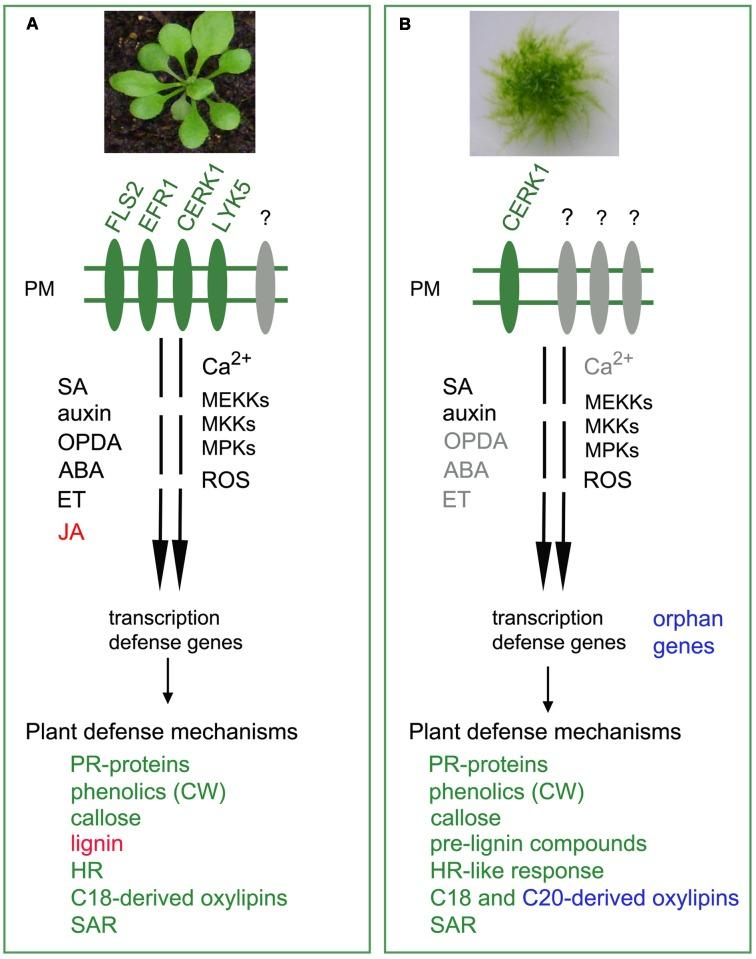
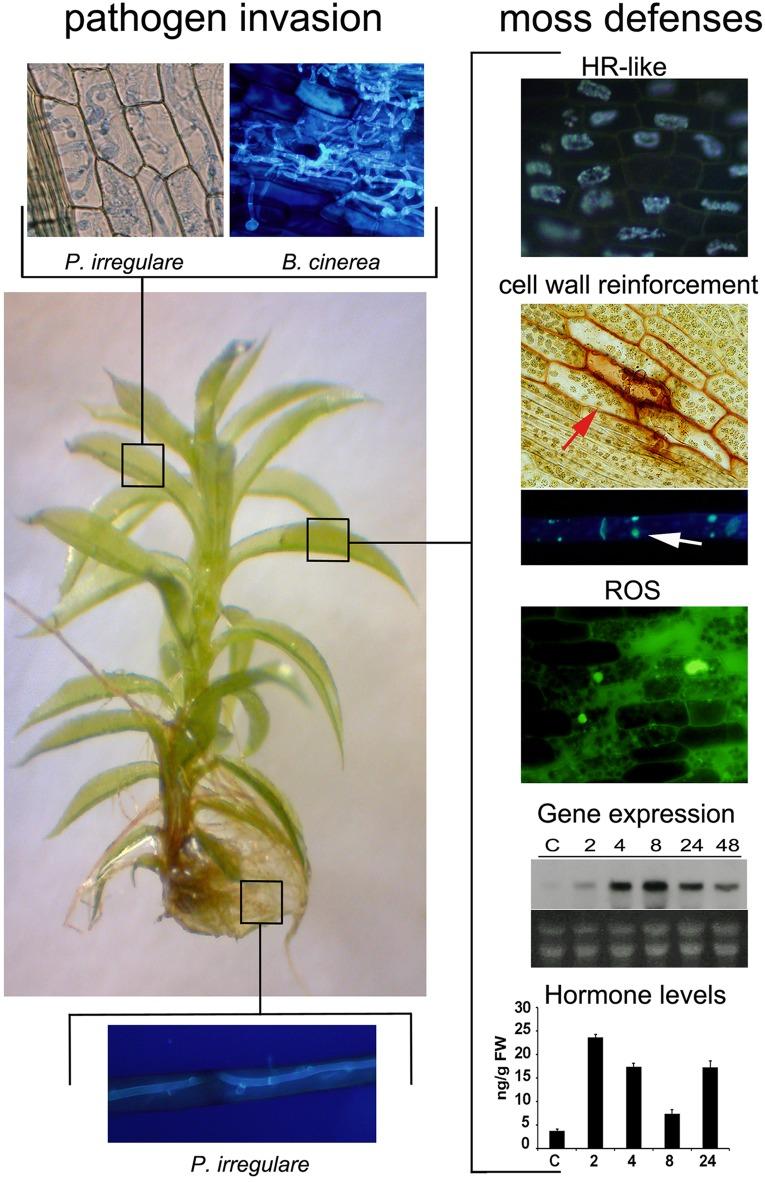
Bryophytes, including mosses, liverworts and hornworts are early land plants that have evolved key adaptation mechanisms to cope with abiotic stresses and microorganisms. Microbial symbioses facilitated plant colonization of land by enhancing nutrient uptake leading to improved plant growth and fitness. In addition, early land plants acquired novel defense mechanisms to protect plant tissues from pre-existing microbial pathogens. Due to its evolutionary stage linking unicellular green algae to vascular plants, the non-vascular moss is an interesting organism to explore the adaptation mechanisms developed in the evolution of plant defenses to microbes. Cellular and biochemical approaches, gene expression profiles, and functional analysis of genes by targeted gene disruption have revealed that several defense mechanisms against microbial pathogens are conserved between mosses and flowering plants. perceives pathogen associated molecular patterns by plasma membrane receptor(s) and transduces the signal through a MAP kinase (MAPK) cascade leading to the activation of cell wall associated defenses and expression of genes that encode proteins with different roles in plant resistance. After pathogen assault, also activates the production of ROS, induces a HR-like reaction and increases levels of some hormones. Furthermore, alternative metabolic pathways are present in leading to the production of a distinct metabolic scenario than flowering plants that could contribute to defense. has acquired genes by horizontal transfer from prokaryotes and fungi, and some of them could represent adaptive benefits for resistance to biotic stress. In this review, the current knowledge related to the evolution of plant defense responses against pathogens will be discussed, focusing on the latest advances made in the model plant .
苔藓植物,包括苔类、藓类和角苔类,是早期登陆植物,它们进化出了关键的适应机制来应对非生物胁迫和微生物。微生物共生通过增强养分吸收促进了植物在陆地上的定殖,从而导致植物生长和适应性的改善。此外,早期登陆植物获得了新的防御机制,以保护植物组织免受已存在的微生物病原体的侵害。由于其进化阶段将单细胞绿藻与维管植物联系起来,非维管藓类是一种有趣的生物体,可用于探索植物防御微生物进化过程中发展出的适应机制。细胞和生化方法、基因表达谱以及通过靶向基因破坏对基因进行功能分析表明,藓类和开花植物之间存在几种针对微生物病原体的保守防御机制。藓类通过质膜受体感知病原体相关分子模式,并通过丝裂原活化蛋白激酶(MAPK)级联传导信号,从而导致细胞壁相关防御的激活以及编码在植物抗性中起不同作用的蛋白质的基因表达。病原体攻击后,藓类还会激活活性氧的产生,诱导类似过敏反应的反应,并增加一些激素的水平。此外,藓类中存在替代代谢途径,导致产生与开花植物不同的代谢情景,这可能有助于防御。藓类通过水平基因转移从原核生物和真菌中获得了基因,其中一些基因可能代表了对生物胁迫抗性的适应性益处。在这篇综述中,将讨论与植物对病原体防御反应进化相关的当前知识,重点关注模式植物藓类取得的最新进展。
 Zotero 插件