
虽痛仍乐:一项为期8周的基于网络的积极心理学干预对改善慢性疼痛患者幸福感的随机对照试验
Happy Despite Pain: A Randomized Controlled Trial of an 8-Week Internet-delivered Positive Psychology Intervention for Enhancing Well-being in Patients With Chronic Pain.
作者信息
Peters Madelon L, Smeets Elke, Feijge Marion, van Breukelen Gerard, Andersson Gerhard, Buhrman Monica, Linton Steven J
机构信息
*Department of Clinical Psychological Science †MEMIC ‡Department of Methodology and Statistics, and CAPHRI School for Care and Public Health, Maastricht University, The Netherlands §Department of Behavioural Sciences and Learning, Linköping University, Linköping ∥Department of Clinical Neuroscience, Karolinska Institute, Stockholm ¶Department of Psychology, Uppsala University, Uppsala #Center for Health and Medical Psychology, Örebro University, Sweden.
出版信息
Clin J Pain. 2017 Nov;33(11):962-975. doi: 10.1097/AJP.0000000000000494.
OBJECTIVES
There is preliminary evidence for the efficacy of positive psychology interventions for pain management. The current study examined the effects of an internet-based positive psychology self-help program for patients with chronic musculoskeletal pain and compared it with an internet-based cognitive-behavioral program.
MATERIALS AND METHODS
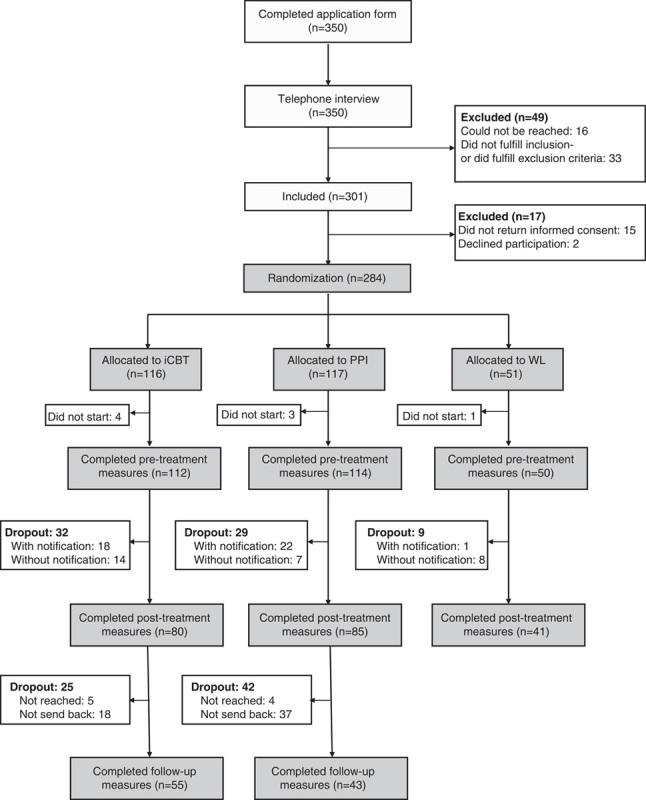
A randomized controlled trial was carried out with 3 conditions: an internet-delivered positive psychology program, an internet-delivered cognitive-behavioral program and waitlist control. A total of 276 patients were randomized to 1 of the 3 conditions and posttreatment data were obtained from 206 patients. Primary outcomes were happiness, depression, and physical impairments at posttreatment and at 6-month follow-up. Intention-to-treat analyses were carried out using mixed regression analyses.
RESULTS
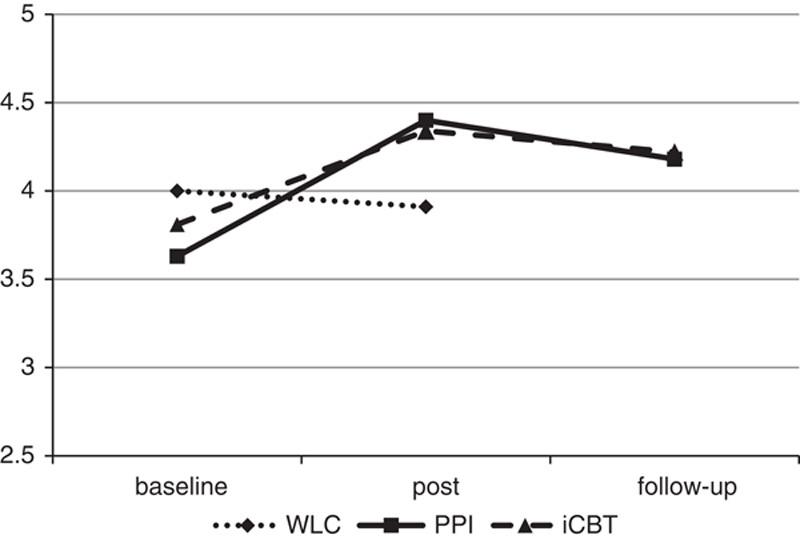
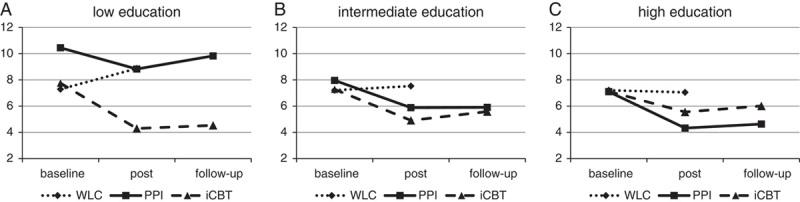
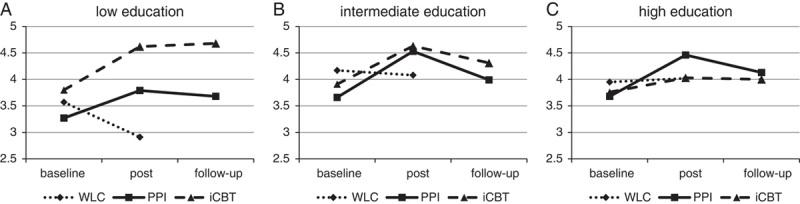
Both treatments led to significant increases in happiness and decreases in depression. Physical impairments did not significantly decrease compared with waitlist. Improvements in happiness and depression were maintained until 6-month follow-up. There were no overall differences in the efficacy of the 2 active interventions but effects seemed to be moderated by education. Patients with a higher level of education profited slightly more from the positive psychology intervention than from the cognitive-behavioral program.
DISCUSSION
The results suggest that an internet-based positive psychology and cognitive-behavioral self-help interventions for the management of chronic pain are clinically useful. Because the self-help exercises as used in the current program do not require therapist involvement, dissemination potential is large. Further studies should examine whether it can best be used as stand-alone or add-on treatment combined with established pain treatment programs.
目的
有初步证据表明积极心理学干预对疼痛管理有效。本研究考察了基于互联网的积极心理学自助项目对慢性肌肉骨骼疼痛患者的影响,并将其与基于互联网的认知行为项目进行比较。
材料与方法
进行了一项随机对照试验,设有3种条件:基于互联网的积极心理学项目、基于互联网的认知行为项目和等待名单对照组。共有276名患者被随机分配到3种条件中的一种,从206名患者处获得了治疗后的数据。主要结局指标为治疗后及6个月随访时的幸福感、抑郁程度和身体损伤情况。采用混合回归分析进行意向性分析。
结果
两种治疗均导致幸福感显著增加,抑郁程度显著降低。与等待名单对照组相比,身体损伤情况没有显著改善。幸福感和抑郁程度的改善一直维持到6个月随访时。两种积极干预措施的疗效总体上没有差异,但效果似乎受到教育程度的调节。教育程度较高的患者从积极心理学干预中获得的益处略多于认知行为项目。
讨论
结果表明,基于互联网的积极心理学和认知行为自助干预措施对慢性疼痛的管理具有临床实用性。由于本项目中使用的自助练习不需要治疗师参与,因此传播潜力很大。进一步的研究应考察它是否最适合作为独立治疗方法,或与既定的疼痛治疗项目联合作为附加治疗方法使用。


 Zotero 插件