
丙戊酸保护原代多巴胺神经元免受MPP诱导的神经毒性:Akt和ERK通过线粒体内在凋亡途径使GSK3磷酸化的作用。
Valproic Acid Protects Primary Dopamine Neurons from MPP-Induced Neurotoxicity: Involvement of GSK3 Phosphorylation by Akt and ERK through the Mitochondrial Intrinsic Apoptotic Pathway.
作者信息
Zhang Chi, Yuan Xianrui, Hu Zhongliang, Liu Songlin, Li Haoyu, Wu Ming, Yuan Jian, Zhao Zijin, Su Jun, Wang Xiangyu, Liao Yiwei, Liu Qing
机构信息
Department of Neurosurgery, Xiangya Hospital, Central South University, Changsha, Hunan 410008, China.
Department of Pathology, Xiangya Hospital, Central South University, Changsha, Hunan 410008, China.
出版信息
Biomed Res Int. 2017;2017:8124501. doi: 10.1155/2017/8124501. Epub 2017 Mar 22.
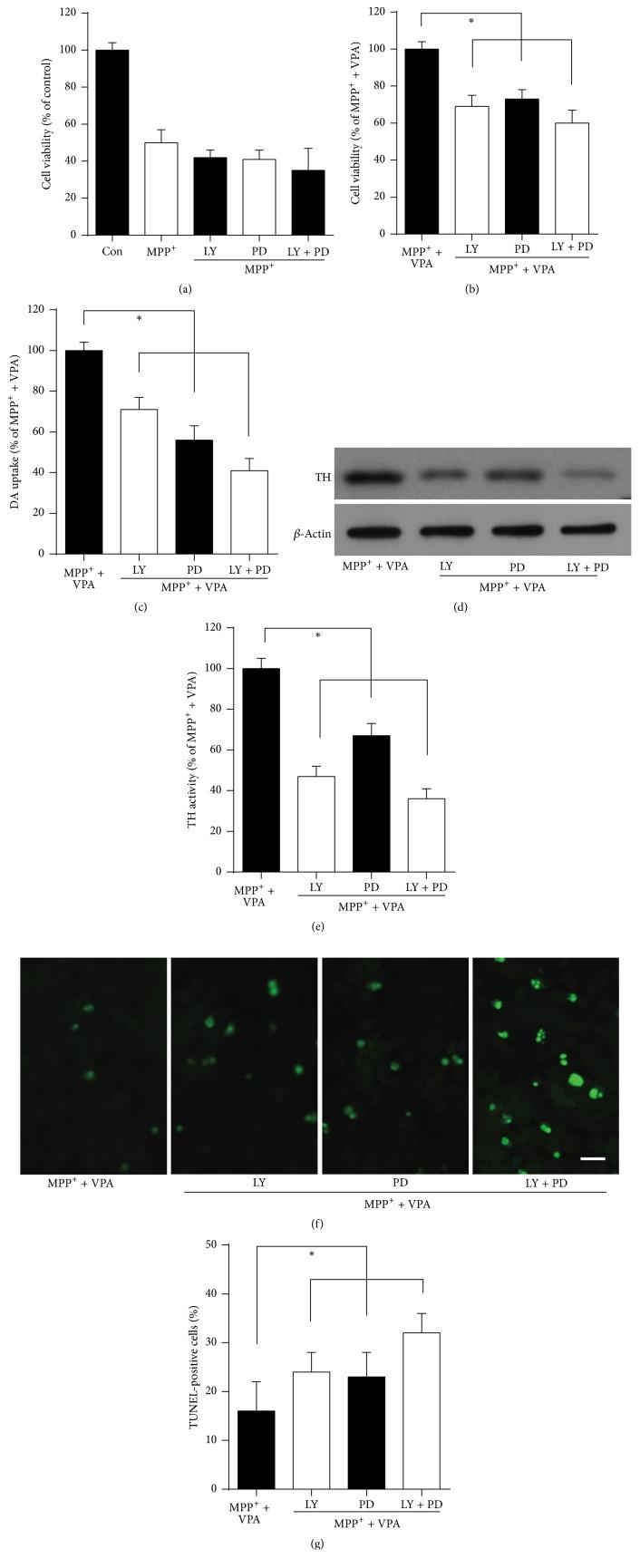
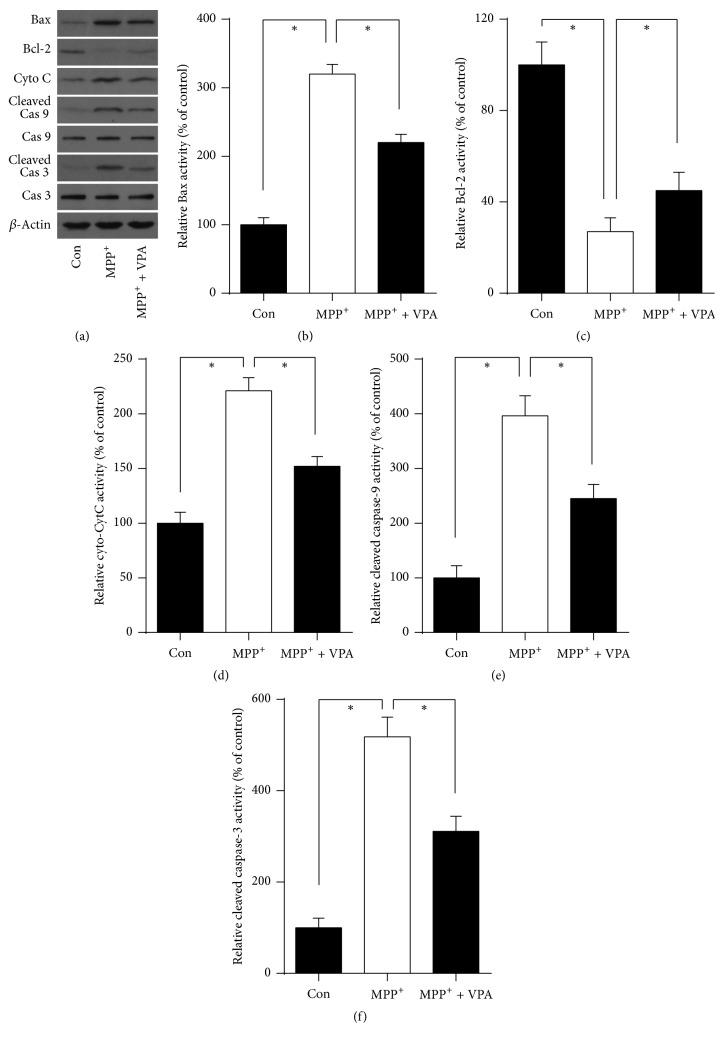
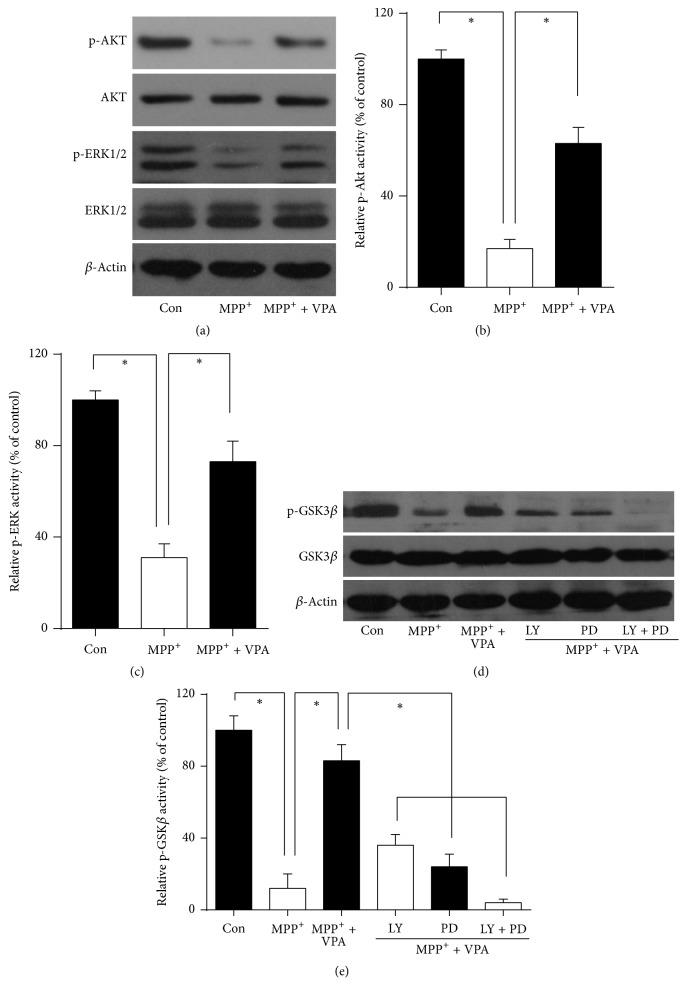
Valproic acid (VPA), a drug widely used to treat manic disorder and epilepsy, has recently shown neuroprotective effects in several neurological diseases, particularly in Parkinson's disease (PD). The goal of the present study was to confirm VPA's dose-dependent neuroprotective propensities in the MPP model of PD in primary dopamine (DA) neurons and to investigate the underlying molecular mechanisms using specific mitogen-activated protein kinases (MAPKs) and phosphatidylinositol 3-kinase- (PI3K-) Akt signaling inhibitors. VPA reversed MPP-induced mitochondrial apoptosis and counteracted MPP-induced extracellular signal-regulated kinase (ERK) and Akt repression and inhibited glycogen synthase kinase 3 (GSK3) activation through induction of GSK3 phosphorylation. Moreover, inhibitors of the PI3K and MAPK pathways abolished GSK3 phosphorylation and diminished the VPA-induced neuroprotective effect. These findings indicated that VPA's neuroprotective effect in the MPP-model of PD is associated with GSK3 phosphorylation via Akt and ERK activation in the mitochondrial intrinsic apoptotic pathway. Thus, VPA may be a promising therapeutic candidate for clinical treatment of PD.
丙戊酸(VPA)是一种广泛用于治疗躁狂症和癫痫的药物,最近在几种神经系统疾病中显示出神经保护作用,尤其是在帕金森病(PD)中。本研究的目的是在原代多巴胺(DA)神经元的PD的MPP模型中证实VPA剂量依赖性的神经保护倾向,并使用特定的丝裂原活化蛋白激酶(MAPK)和磷脂酰肌醇3激酶-(PI3K)-Akt信号抑制剂研究其潜在的分子机制。VPA逆转了MPP诱导的线粒体凋亡,抵消了MPP诱导的细胞外信号调节激酶(ERK)和Akt抑制,并通过诱导GSK3磷酸化抑制糖原合酶激酶3(GSK3)活化。此外,PI3K和MAPK途径的抑制剂消除了GSK3磷酸化,并减弱了VPA诱导的神经保护作用。这些发现表明,VPA在PD的MPP模型中的神经保护作用与线粒体内在凋亡途径中通过Akt和ERK活化的GSK3磷酸化有关。因此,VPA可能是PD临床治疗的一个有前途的候选药物。

 Zotero 插件