
姜酮通过恢复AMPK调节的脂肪生成和microRNA-146b/SIRT1介导的脂肪形成来改善高脂饮食诱导的肥胖。
Zerumbone ameliorates high-fat diet-induced adiposity by restoring AMPK-regulated lipogenesis and microRNA-146b/SIRT1-mediated adipogenesis.
作者信息
Ahn Jiyun, Lee Hyunjung, Jung Chang Hwa, Choi Won Hee, Ha Tae Youl
机构信息
Research Group of Metabolic Mechanism, Korea Food Research Institute, Seongnam, Korea.
Division of Food Biotechnology, University of Science & Technology, Daejeon, Korea.
出版信息
Oncotarget. 2017 Jun 6;8(23):36984-36995. doi: 10.18632/oncotarget.16974.
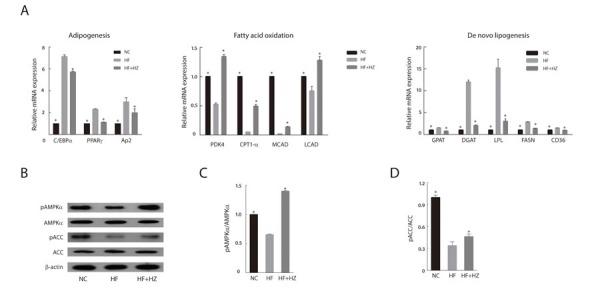
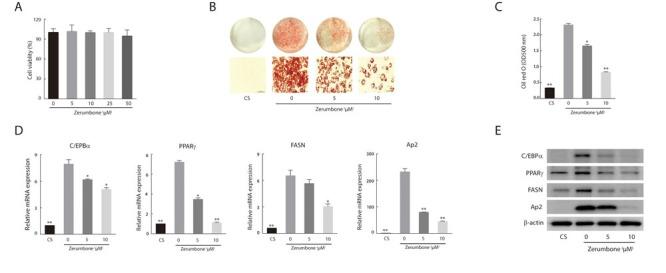
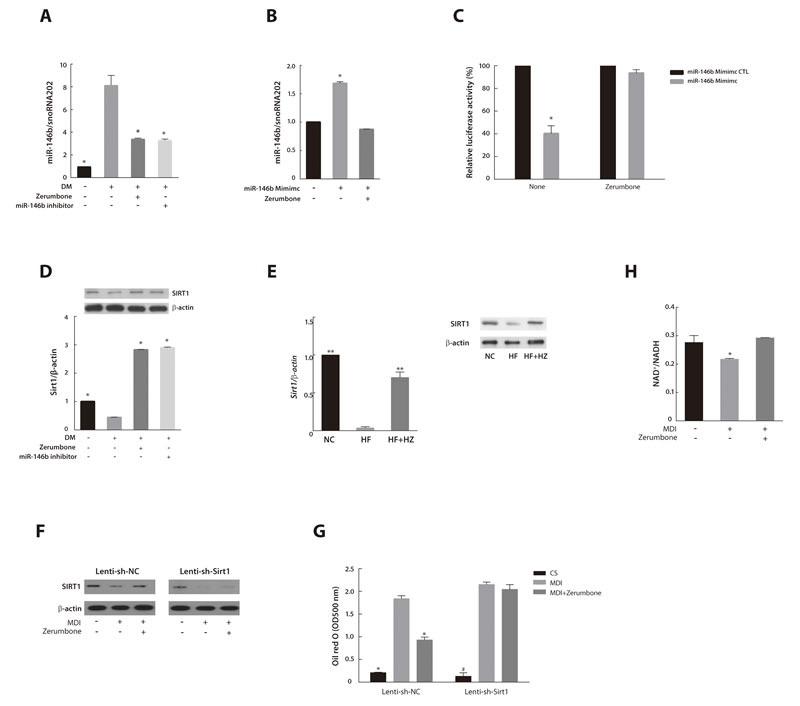
Obesity is characterized by increased fat mass, as adipose tissue serves as a storage site for excess energy from food consumption. In obesity, altered lipid metabolism of adipose tissue, characterized by fatty acid uptake, de novo lipogenesis, and lipolysis, are induced. In this study, we examined the effect of zerumbone, a major sesquiterpene from wild ginger, on high-fat diet (HF)-induced obesity and dysregulated lipid metabolism in the white adipose tissues (WAT) of C57BL/6N mice. Dietary supplementation with zerumbone ameliorated HF-induced obesity and improved impaired lipid metabolism in WAT. Zerumbone additionally induced AMPK activation and phosphorylation of acetyl-CoA carboxylase, and effectively decreased adipogenic differentiation, in a concentration-dependent manner in the 3T3-L1 cells. Dysregulated microRNAs in obese WAT and adipocytes were examined, and zerumbone treatment was found to effectively reverse the robust upregulation of microRNA-146b. An increase in the levels of SIRT1, the direct target of microRNA-146b, was observed in zerumbone-treated differentiated adipocytes. This increase was additionally observed in WAT of zerumbone-supplemented mice. The antiadipogenic effect of zerumbone was found to be abolished in SIRT1-silenced 3T3-L1 cells. The increase in SIRT1 levels induced by zerumbone led to deacetylation of FOXO1 and PGC1α in WAT and differentiated 3T3-L1 cells. These findings indicate that zerumbone ameliorated diet-induced obesity and inhibited adipogenesis, and that the underlying mechanisms involved AMPK and the microRNA-146b/SIRT1 pathway. Zerumbone may represent a potential therapeutic candidate for the prevention and treatment of metabolic diseases, particularly obesity.
肥胖的特征是脂肪量增加,因为脂肪组织是食物摄入中多余能量的储存场所。在肥胖状态下,脂肪组织的脂质代谢发生改变,其特征为脂肪酸摄取、从头脂肪生成和脂肪分解增加。在本研究中,我们检测了来自野生姜的主要倍半萜烯——莪术二酮,对高脂饮食(HF)诱导的C57BL/6N小鼠白色脂肪组织(WAT)肥胖及脂质代谢失调的影响。饮食中补充莪术二酮可改善HF诱导的肥胖,并改善WAT中受损的脂质代谢。莪术二酮还能以浓度依赖的方式诱导3T3-L1细胞中的AMPK激活和乙酰辅酶A羧化酶的磷酸化,并有效降低脂肪生成分化。我们检测了肥胖WAT和脂肪细胞中失调的微小RNA,发现莪术二酮处理可有效逆转微小RNA-146b的强烈上调。在莪术二酮处理的分化脂肪细胞中,观察到微小RNA-146b的直接靶点SIRT1水平升高。在补充莪术二酮的小鼠的WAT中也观察到了这种升高。莪术二酮的抗脂肪生成作用在SIRT1沉默的3T3-L1细胞中被消除。莪术二酮诱导的SIRT1水平升高导致WAT和分化的3T3-L1细胞中FOXO1和PGC1α的去乙酰化。这些发现表明,莪术二酮改善了饮食诱导的肥胖并抑制了脂肪生成,其潜在机制涉及AMPK以及微小RNA-146b/SIRT1途径。莪术二酮可能是预防和治疗代谢性疾病,特别是肥胖症的潜在治疗候选药物。



 Zotero 插件