
基于体外细胞毒性和细胞摄取筛选用于乳腺癌治疗的潜在氧化铁纳米颗粒。
Selection of potential iron oxide nanoparticles for breast cancer treatment based on in vitro cytotoxicity and cellular uptake.
作者信息
Poller Johanna M, Zaloga Jan, Schreiber Eveline, Unterweger Harald, Janko Christina, Radon Patricia, Eberbeck Dietmar, Trahms Lutz, Alexiou Christoph, Friedrich Ralf P
机构信息
Department of Otorhinolaryngology, Head and Neck Surgery, Section for Experimental Oncology & Nanomedicine (SEON), Else Kröner-Fresenius-Stiftung Professorship, Universitätsklinikum Erlangen, Erlangen.
Friedrich-Alexander-Universität Erlangen-Nürnberg (FAU).
出版信息
Int J Nanomedicine. 2017 Apr 19;12:3207-3220. doi: 10.2147/IJN.S132369. eCollection 2017.
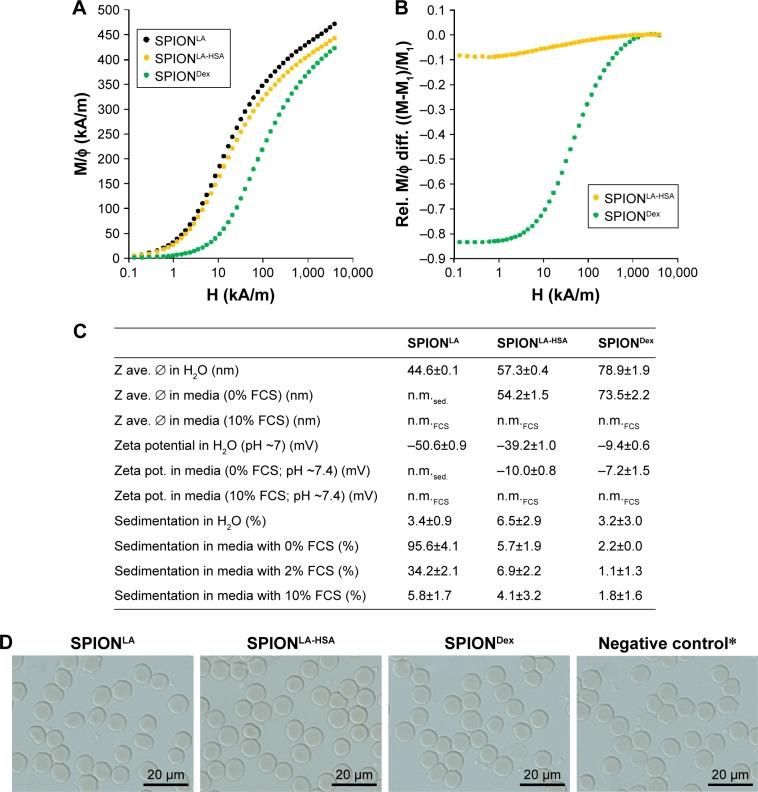
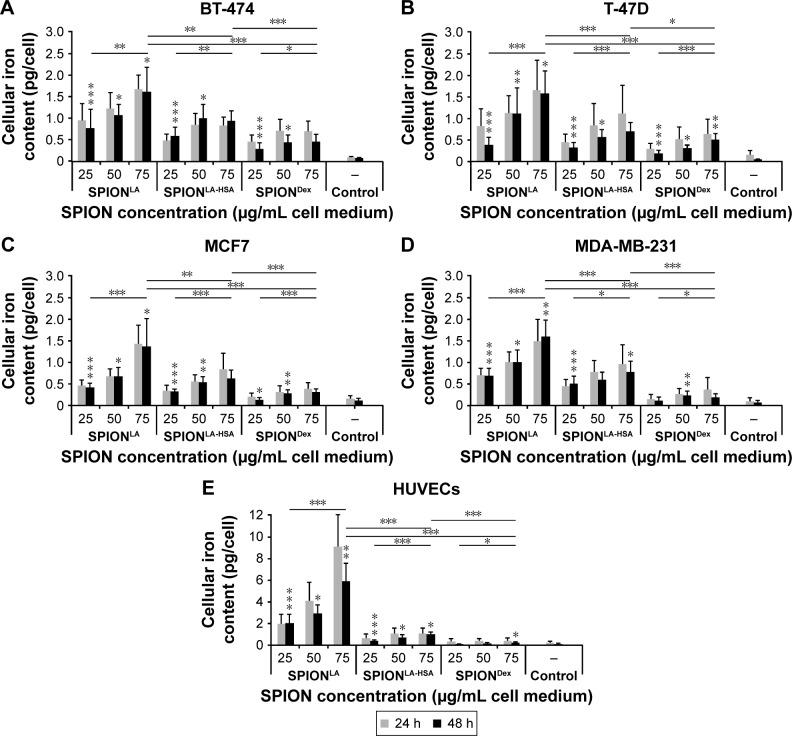
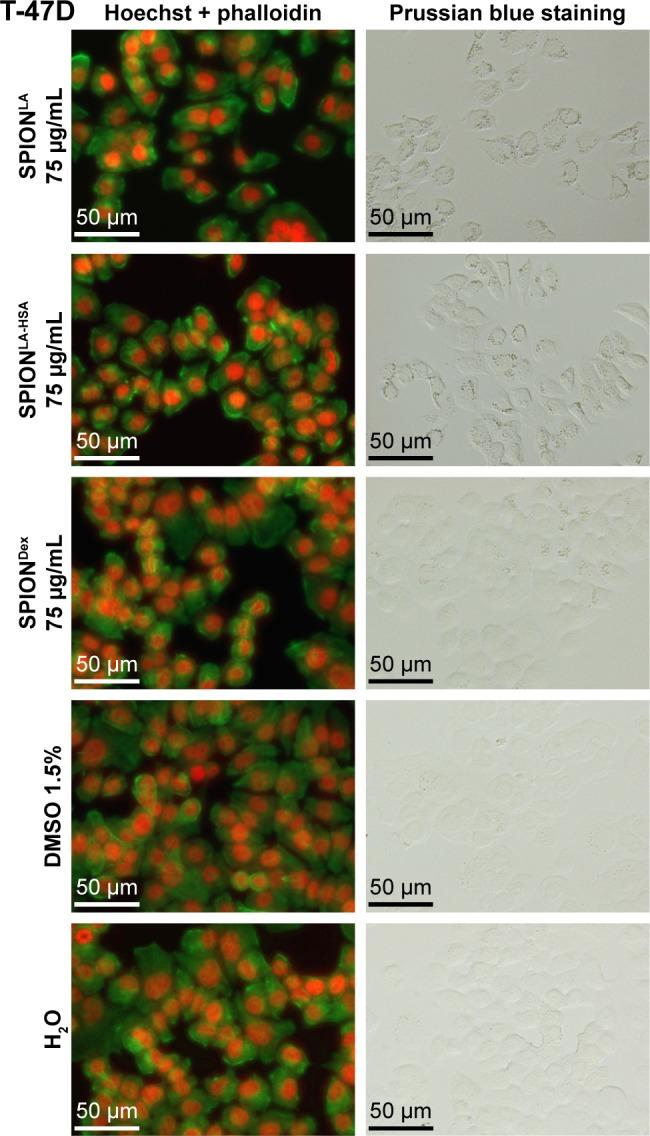
Superparamagnetic iron oxide nanoparticles (SPIONs) are promising tools for the treatment of different diseases. Their magnetic properties enable therapies involving magnetic drug targeting (MDT), hyperthermia or imaging. Depending on the intended treatment, specific characteristics of SPIONs are required. While particles used for imaging should circulate for extended periods of time in the vascular system, SPIONs intended for MDT or hyperthermia should be accumulated in the target area to come into close proximity of, or to be incorporated into, specific tumor cells. In this study, we determined the impact of several accurately characterized SPION types varying in size, zeta potential and surface coating on various human breast cancer cell lines and endothelial cells to identify the most suitable particle for future breast cancer therapy. We analyzed cellular SPION uptake, magnetic properties, cell proliferation and toxicity using atomic emission spectroscopy, magnetic susceptometry, flow cytometry and microscopy. The results demonstrated that treatment with dextran-coated SPIONs (SPION) and lauric acid-coated SPIONs (SPION) with an additional protein corona formed by human serum albumin (SPION) resulted in very moderate particle uptake and low cytotoxicity, whereas SPION had in part much stronger effects on cellular uptake and cellular toxicity. In summary, our data show significant dose-dependent and particle type-related response differences between various breast cancer and endothelial cells, indicating the utility of these particle types for distinct medical applications.
超顺磁性氧化铁纳米颗粒(SPIONs)是治疗多种疾病的有前景的工具。它们的磁性使涉及磁性药物靶向(MDT)、热疗或成像的治疗成为可能。根据预期的治疗方法,需要SPIONs具有特定的特性。用于成像的颗粒应在血管系统中长时间循环,而用于MDT或热疗的SPIONs应在靶区域积累,以接近或掺入特定的肿瘤细胞。在本研究中,我们确定了几种尺寸、zeta电位和表面涂层不同但已精确表征的SPION类型对各种人乳腺癌细胞系和内皮细胞的影响,以确定最适合未来乳腺癌治疗的颗粒。我们使用原子发射光谱法、磁敏测量法、流式细胞术和显微镜术分析了细胞对SPION的摄取、磁性、细胞增殖和毒性。结果表明,用葡聚糖包被的SPIONs(SPION)、月桂酸包被的SPIONs(SPION)以及由人血清白蛋白形成的额外蛋白冠层的SPIONs(SPION)处理导致颗粒摄取非常适度且细胞毒性低,而SPION对细胞摄取和细胞毒性部分有更强的影响。总之,我们的数据显示了各种乳腺癌细胞和内皮细胞之间显著的剂量依赖性和颗粒类型相关的反应差异,表明这些颗粒类型在不同医学应用中的效用。


 Zotero 插件