
幕上性卒中患者慢性吞咽困难的病变特征
Lesion Characteristics of Chronic Dysphagia in Patients With Supratentorial Stroke.
作者信息
Jang Sol, Yang Hea Eun, Yang Hee Seung, Kim Dae Hyun
机构信息
Department of Physical Medicine and Rehabilitation, Veterans Health Service Medical Center, Seoul, Korea.
出版信息
Ann Rehabil Med. 2017 Apr;41(2):225-230. doi: 10.5535/arm.2017.41.2.225. Epub 2017 Apr 27.
OBJECTIVE
To analyze the relationship between brain lesion location and type of chronic dysphagia in patients with supratentorial stroke.
METHODS
Data from 82 chronic stroke patients who underwent videofluoroscopic swallowing studies at >6 months after an initial stroke event were retrospectively analyzed. Delayed oral transit time, delayed pharyngeal transit time, and the presence of aspiration were extracted. A voxel-based lesion symptom mapping (VLSM) analysis was used to correlate types of dysphagia with specific brain lesions.
RESULTS
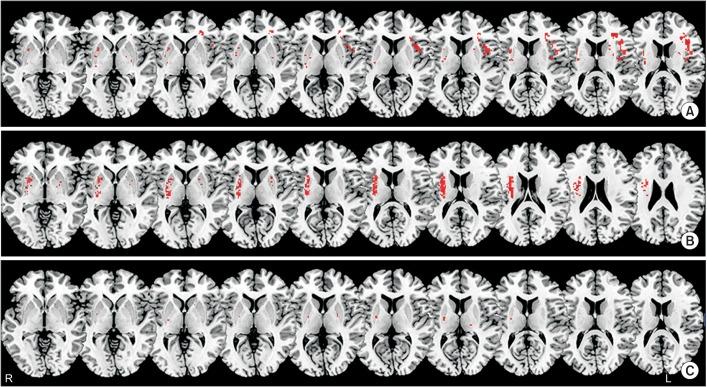
VLSM identified several clusters of voxels that significantly correlated with type of dysphagia. Delayed oral transit time mainly correlated with lesions in the left inferior frontal lobe and precentral gyrus; delayed pharyngeal time mainly correlated with lesions in the right basal ganglia and corona radiate; and aspiration was mainly correlated with lesions in the putamen.
CONCLUSION
Understanding the association between lesion location and dysphagia in chronic stroke patients is an important first step towards predicting permanent dysphagia after stroke. Improved understanding of the neural correlates of dysphagia will inform the utility of interventions for its treatment and prevention after stroke.
目的
分析幕上卒中患者脑损伤部位与慢性吞咽困难类型之间的关系。
方法
回顾性分析82例慢性卒中患者的数据,这些患者在首次卒中事件发生6个月后接受了视频荧光吞咽造影检查。提取口腔通过时间延迟、咽部通过时间延迟和误吸情况。采用基于体素的损伤症状映射(VLSM)分析来关联吞咽困难类型与特定脑损伤。
结果
VLSM确定了几个与吞咽困难类型显著相关的体素簇。口腔通过时间延迟主要与左侧额下回和中央前回的损伤相关;咽部通过时间延迟主要与右侧基底节和放射冠的损伤相关;误吸主要与壳核的损伤相关。
结论
了解慢性卒中患者损伤部位与吞咽困难之间的关联是预测卒中后永久性吞咽困难的重要第一步。对吞咽困难神经相关性的更好理解将为卒中后其治疗和预防干预措施的效用提供依据。

 Zotero 插件