
基于机构的个性化孕产妇营养咨询对改善儿童至18个月时生长和发病率的效果:布基纳法索农村地区的一项整群随机对照试验
Effectiveness of facility-based personalized maternal nutrition counseling in improving child growth and morbidity up to 18 months: A cluster-randomized controlled trial in rural Burkina Faso.
作者信息
Nikièma Laetitia, Huybregts Lieven, Martin-Prevel Yves, Donnen Philippe, Lanou Hermann, Grosemans Joep, Offoh Priscilla, Dramaix-Wilmet Michèle, Sondo Blaise, Roberfroid Dominique, Kolsteren Patrick
机构信息
Institut de Recherche en Sciences de la Santé (IRSS), Ministry of Scientific Research and Innovation, Ouagadougou, Burkina Faso.
Poverty, Health and Nutrition Division, International Food Policy Research Institute, Washington DC, United States of America.
出版信息
PLoS One. 2017 May 25;12(5):e0177839. doi: 10.1371/journal.pone.0177839. eCollection 2017.
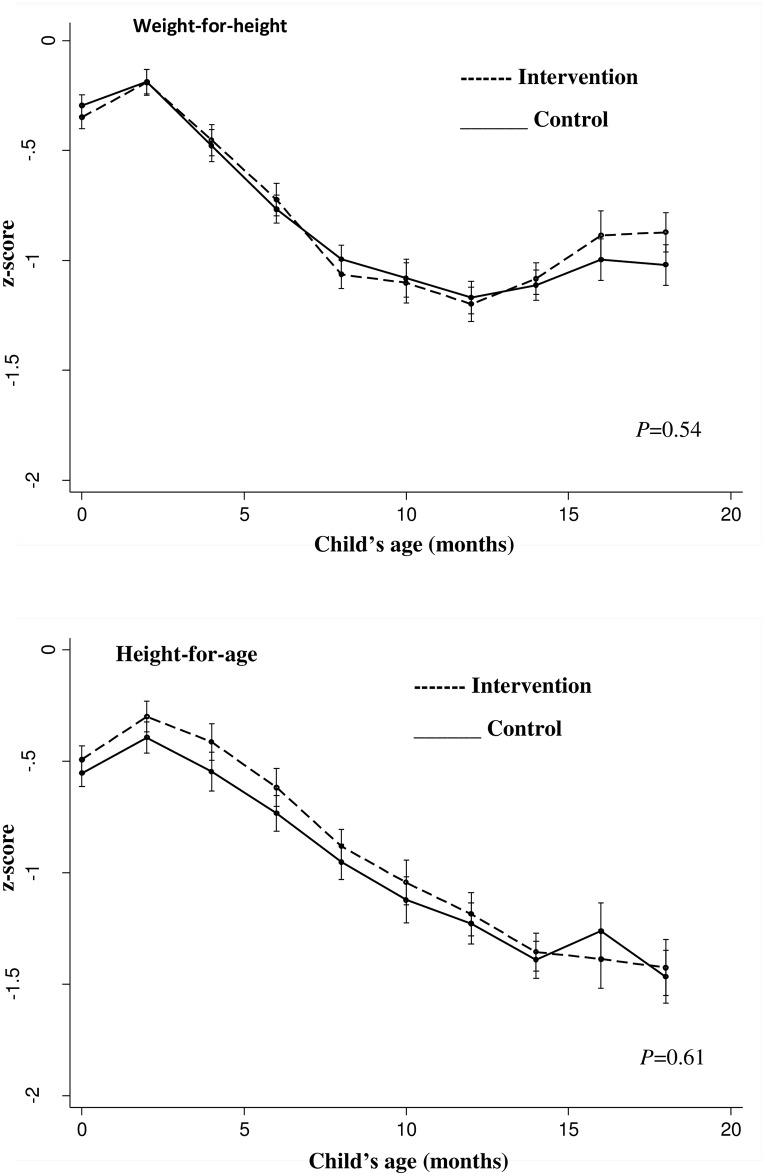
The period from conception to 24 months of age is a crucial window for nutrition interventions. Personalized maternal counseling may improve childbirth outcomes, growth, and health. We assessed the effectiveness of facility-based personalized maternal nutrition counseling (from pregnancy to 18 months after birth) in improving child growth and health in rural Burkina Faso. We conducted a paired cluster randomized controlled trial in a rural district of Burkina Faso with 12 primary health centers (clusters). Healthcare providers in the intervention centers received patient-centered communication and nutrition counseling training. Pregnant women in the third trimester living in the center catchment areas and intending to stay for the next 2 years were prospectively included. We followed 2253 mother-child pairs quarterly until the child was aged 18 months. Women were interviewed about counseling experiences, dietary practices during pregnancy, and their child's feeding practices and morbidity history. Anthropometric measurements were taken at each visit using standardized methods. The primary outcomes were the cumulative incidence of wasting, and changes in child weight-for-height z-score (WHZ). Secondary outcomes were the women's prenatal dietary practices, early breastfeeding practices, exclusive breastfeeding, timely introduction of complementary food, child's feeding frequency and dietary diversity, children's mean birth weight, endpoint prevalence of stunting, and cumulative incidence of diarrhea, fever, and acute respiratory infection. All analyses were by intention-to-treat using mixed effects models. The intervention and control arms each included six health centers. Mothers in the intervention arm had a significantly higher exposure to counseling with 11.2% for breastfeeding techniques to 75.7% for counseling on exclusive breastfeeding. Mothers of infants below 6 months of age in the intervention arm were more likely to exclusively breastfeed (54.3% vs 42.3%; Difference of Proportion (DP) 12.8%; 95% CI: 2.1, 23.6; p = 0.020) as compared to the control arm. Between 6 and 18 months of age, more children in the intervention arm benefited from the required feeding frequency (68.8% vs 53.4%; DP 14.1%; 95% CI: 9.0, 19.2; p<0.001) and a larger proportion had a minimum dietary diversity (28.6% vs 22.0%; DP 5.9%; 95% CI: 2.7, 9.2; p<0.001). Birth weight of newborns in the intervention arm was on average 84.8 g (p = 0.037) larger compared to the control arm. However, we found no significant differences in child anthropometry or morbidity between study arms. Facility-based personalized maternal nutrition counseling was associated with an improved prenatal dietary practices, Infant and Young Child Feeding practices, and child birth weight. Complementary strategies are warranted to obtain meaningful impact on child growth and morbidity. This includes strategies to ensure good coverage of facility-based services and effective nutrition/care practices in early childhood.
从受孕到24个月龄这段时期是营养干预的关键窗口期。个性化的孕产妇咨询可能会改善分娩结局、生长发育和健康状况。我们评估了在布基纳法索农村地区基于机构的个性化孕产妇营养咨询(从怀孕到产后18个月)对改善儿童生长发育和健康状况的效果。我们在布基纳法索的一个农村地区进行了一项配对整群随机对照试验,该地区有12个初级卫生保健中心(整群)。干预中心的医护人员接受了以患者为中心的沟通和营养咨询培训。前瞻性纳入了居住在中心服务区域内、处于妊娠晚期且打算在接下来两年内居住的孕妇。我们每季度对2253对母婴进行随访,直至儿童年满18个月。就咨询经历、孕期饮食习惯、孩子的喂养习惯和发病史对妇女进行访谈。每次随访时使用标准化方法进行人体测量。主要结局是消瘦的累积发生率以及儿童身高别体重Z评分(WHZ)的变化。次要结局包括妇女的产前饮食习惯、早期母乳喂养情况、纯母乳喂养、适时引入辅食、儿童的喂养频率和饮食多样性、儿童的平均出生体重、发育迟缓的终点患病率以及腹泻、发热和急性呼吸道感染的累积发生率。所有分析均采用意向性分析,使用混合效应模型。干预组和对照组各包括6个卫生中心。干预组的母亲接受咨询的比例显著更高,从母乳喂养技巧的11.2%到纯母乳喂养咨询的75.7%不等。与对照组相比,干预组中6个月龄以下婴儿的母亲更有可能进行纯母乳喂养(54.3%对42.3%;比例差异(DP)12.8%;95%置信区间:2.1,23.6;p = 0.020)。在6至18个月龄期间,干预组中更多儿童受益于所需的喂养频率(68.8%对53.4%;DP 14.1%;95%置信区间:9.0,19.2;p<0.001)而且有更大比例的儿童达到了最低饮食多样性(28.6%对22.0%;DP 5.9%;95%置信区间:2.7,9.2;p<0.001)。干预组新生儿的出生体重平均比对照组重84.8克(p = 0.037)。然而,我们发现研究组之间在儿童人体测量指标或发病率方面没有显著差异。基于机构的个性化孕产妇营养咨询与改善产前饮食习惯、婴幼儿喂养习惯以及儿童出生体重相关。需要采取补充策略以对儿童生长发育和发病率产生有意义的影响。这包括确保基于机构的服务良好覆盖以及幼儿期有效营养/照护措施的策略。

 Zotero 插件