
病毒去泛素化酶的结构与功能
Structure and Function of Viral Deubiquitinating Enzymes.
作者信息
Bailey-Elkin Ben A, Knaap Robert C M, Kikkert Marjolein, Mark Brian L
机构信息
Department of Microbiology, University of Manitoba, Winnipeg, Manitoba R3T2N2, Canada.
Department of Medical Microbiology, Leiden University Medical Center, 2333 ZA Leiden, The Netherlands.
出版信息
J Mol Biol. 2017 Nov 10;429(22):3441-3470. doi: 10.1016/j.jmb.2017.06.010. Epub 2017 Jun 16.
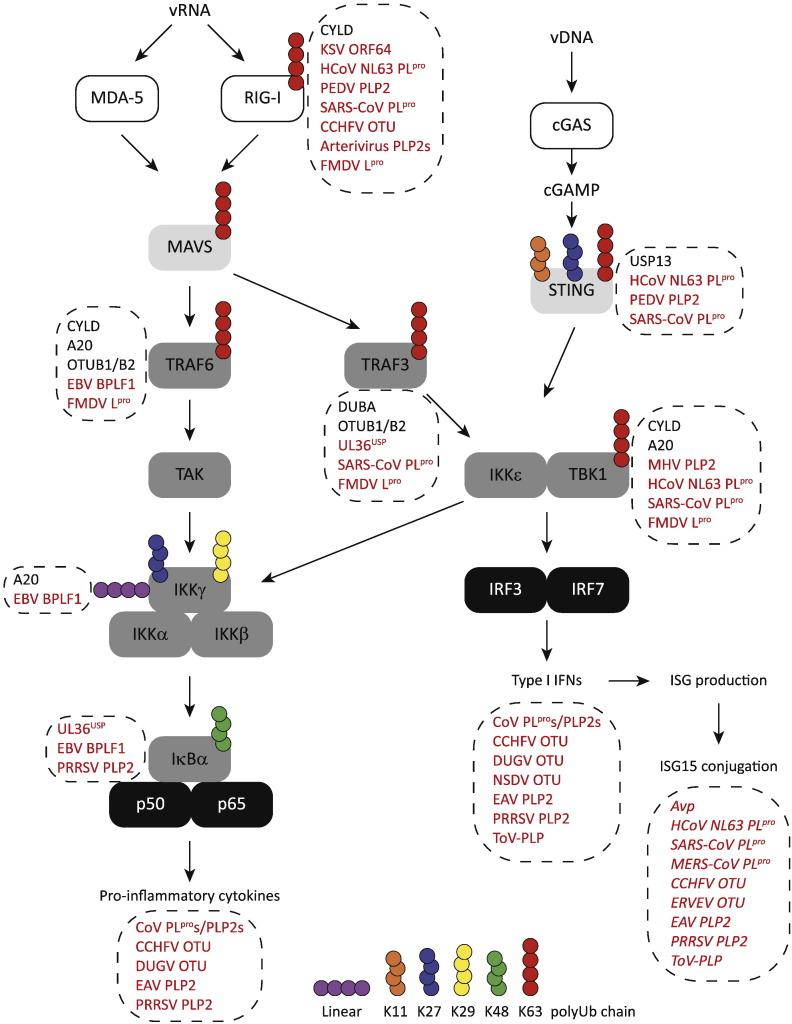
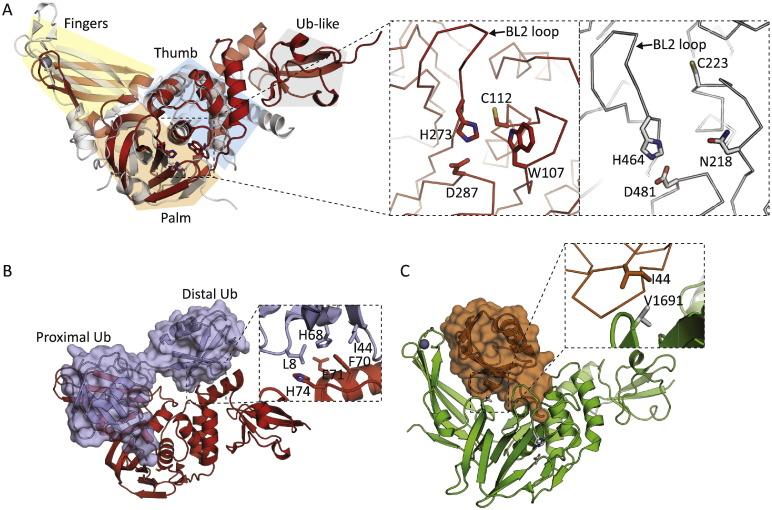
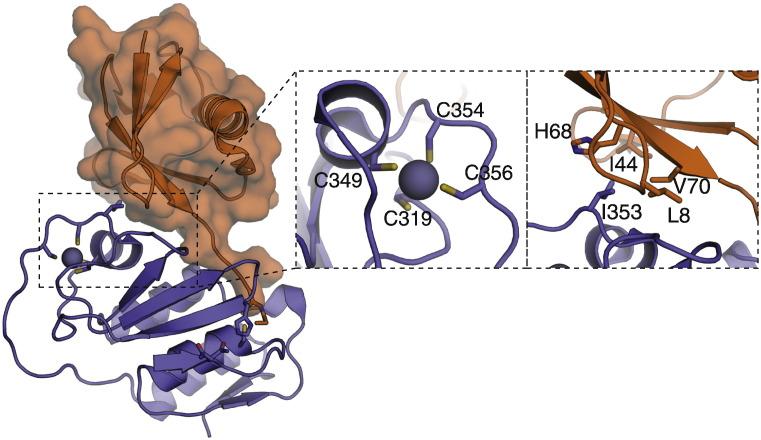
Post-translational modification of cellular proteins by ubiquitin regulates numerous cellular processes, including innate and adaptive immune responses. Ubiquitin-mediated control over these processes can be reversed by cellular deubiquitinating enzymes (DUBs), which remove ubiquitin from cellular targets and depolymerize polyubiquitin chains. The importance of protein ubiquitination to host immunity has been underscored by the discovery of viruses that encode proteases with deubiquitinating activity, many of which have been demonstrated to actively corrupt cellular ubiquitin-dependent processes to suppress innate antiviral responses and promote viral replication. DUBs have now been identified in diverse viral lineages, and their characterization is providing valuable insights into virus biology and the role of the ubiquitin system in host antiviral mechanisms. Here, we provide an overview of the structural biology of these fascinating viral enzymes and their role innate immune evasion and viral replication.
泛素对细胞蛋白质的翻译后修饰调节着众多细胞过程,包括先天性和适应性免疫反应。细胞去泛素化酶(DUBs)可逆转泛素介导的对这些过程的控制,这些酶从细胞靶标上移除泛素并使多聚泛素链解聚。编码具有去泛素化活性蛋白酶的病毒的发现突出了蛋白质泛素化对宿主免疫的重要性,其中许多病毒已被证明能积极破坏细胞内依赖泛素的过程,以抑制先天性抗病毒反应并促进病毒复制。现已在多种病毒谱系中鉴定出DUBs,并对它们的表征为病毒生物学以及泛素系统在宿主抗病毒机制中的作用提供了宝贵见解。在此,我们概述了这些迷人的病毒酶的结构生物学及其在先天性免疫逃避和病毒复制中的作用。






 Zotero 插件