
AKR1C3介导的脂肪雄激素生成导致多囊卵巢综合征女性的脂毒性。
AKR1C3-Mediated Adipose Androgen Generation Drives Lipotoxicity in Women With Polycystic Ovary Syndrome.
作者信息
O'Reilly Michael W, Kempegowda Punith, Walsh Mark, Taylor Angela E, Manolopoulos Konstantinos N, Allwood J William, Semple Robert K, Hebenstreit Daniel, Dunn Warwick B, Tomlinson Jeremy W, Arlt Wiebke
机构信息
Institute of Metabolism and Systems Research, University of Birmingham, Edgbaston, Birmingham B15 2TT, United Kingdom.
Centre for Endocrinology, Diabetes and Metabolism, Birmingham Health Partners, Edgbaston, Birmingham B15 2TH, United Kingdom.
出版信息
J Clin Endocrinol Metab. 2017 Sep 1;102(9):3327-3339. doi: 10.1210/jc.2017-00947.
CONTEXT
Polycystic ovary syndrome (PCOS) is a prevalent metabolic disorder occurring in up to 10% of women of reproductive age. PCOS is associated with insulin resistance and cardiovascular risk. Androgen excess is a defining feature of PCOS and has been suggested as causally associated with insulin resistance; however, mechanistic evidence linking both is lacking. We hypothesized that adipose tissue is an important site linking androgen activation and metabolic dysfunction in PCOS.
METHODS
We performed a human deep metabolic in vivo phenotyping study examining the systemic and intra-adipose effects of acute and chronic androgen exposure in 10 PCOS women, in comparison with 10 body mass index-matched healthy controls, complemented by in vitro experiments.
RESULTS
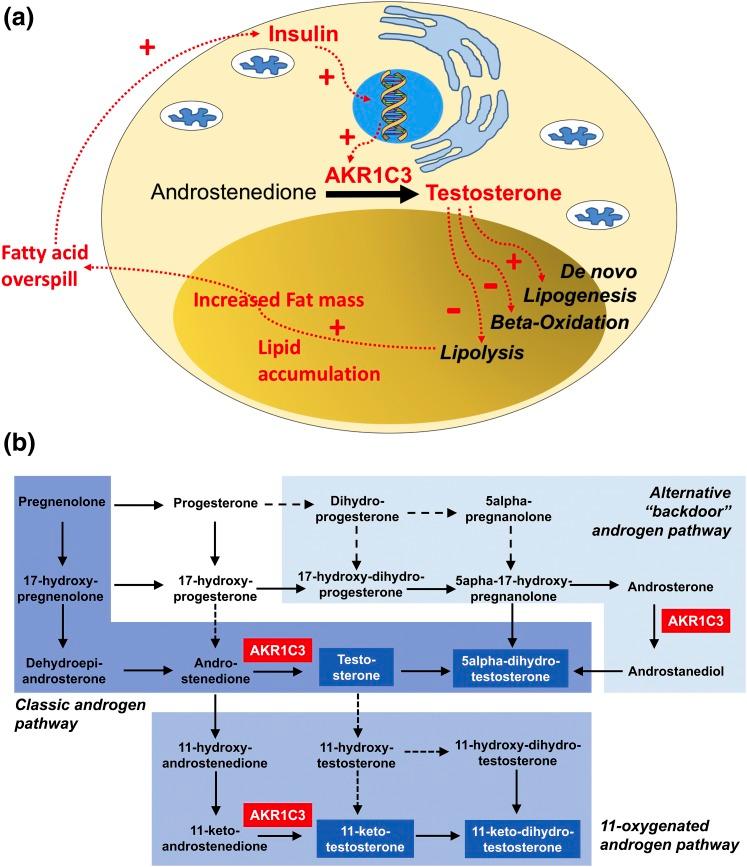
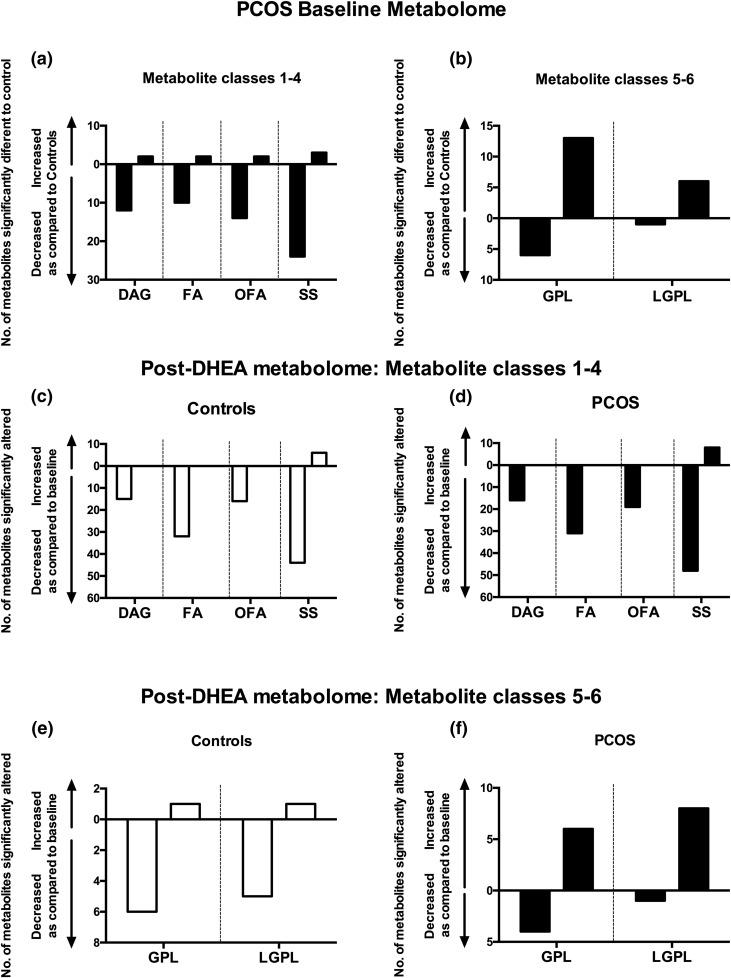
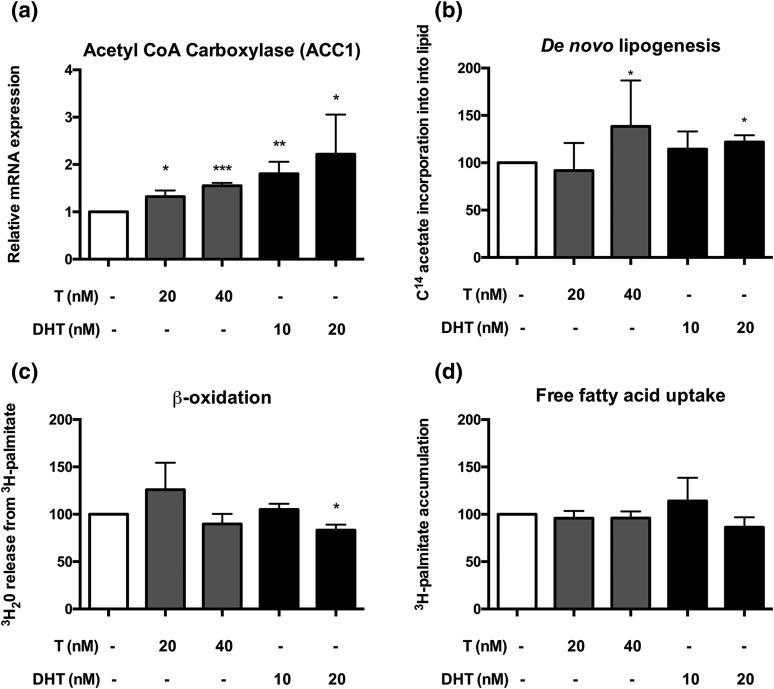
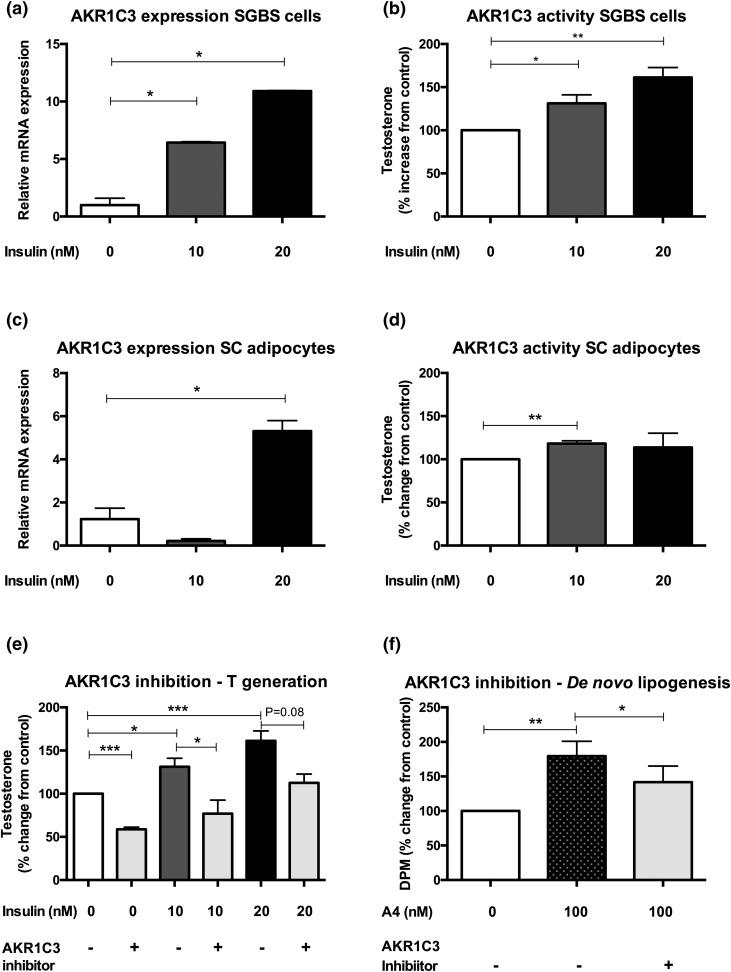
PCOS women had increased intra-adipose concentrations of testosterone (P = 0.0006) and dihydrotestosterone (P = 0.01), with increased expression of the androgen-activating enzyme aldo-ketoreductase type 1 C3 (AKR1C3) (P = 0.04) in subcutaneous adipose tissue. Adipose glycerol levels in subcutaneous adipose tissue microdialysate supported in vivo suppression of lipolysis after acute androgen exposure in PCOS (P = 0.04). Mirroring this, nontargeted serum metabolomics revealed prolipogenic effects of androgens in PCOS women only. In vitro studies showed that insulin increased adipose AKR1C3 expression and activity, whereas androgen exposure increased adipocyte de novo lipid synthesis. Pharmacologic AKR1C3 inhibition in vitro decreased de novo lipogenesis.
CONCLUSIONS
These findings define an intra-adipose mechanism of androgen activation that contributes to adipose remodeling and a systemic lipotoxic metabolome, with intra-adipose androgens driving lipid accumulation and insulin resistance in PCOS. AKR1C3 represents a promising therapeutic target in PCOS.
背景
多囊卵巢综合征(PCOS)是一种常见的代谢紊乱疾病,在育龄女性中的发病率高达10%。PCOS与胰岛素抵抗和心血管风险相关。雄激素过多是PCOS的一个决定性特征,并且被认为与胰岛素抵抗存在因果关系;然而,缺乏将两者联系起来的机制证据。我们推测脂肪组织是PCOS中连接雄激素激活和代谢功能障碍的重要部位。
方法
我们进行了一项人体深度代谢体内表型研究,在10名PCOS女性中检测急性和慢性雄激素暴露的全身和脂肪内效应,并与10名体重指数匹配的健康对照进行比较,同时辅以体外实验。
结果
PCOS女性皮下脂肪组织中睾酮(P = 0.0006)和双氢睾酮(P = 0.01)的脂肪内浓度升高,雄激素激活酶1C3型醛酮还原酶(AKR1C3)的表达增加(P = 0.04)。皮下脂肪组织微透析液中的脂肪甘油水平支持PCOS女性急性雄激素暴露后体内脂解作用受到抑制(P = 0.04)。与此一致,非靶向血清代谢组学显示雄激素仅在PCOS女性中具有促脂肪生成作用。体外研究表明,胰岛素增加脂肪组织中AKR1C3的表达和活性,而雄激素暴露增加脂肪细胞的从头脂质合成。体外药理学抑制AKR1C3可降低从头脂肪生成。
结论
这些发现确定了一种雄激素激活的脂肪内机制,该机制导致脂肪重塑和全身脂毒性代谢组,脂肪内雄激素在PCOS中驱动脂质积累和胰岛素抵抗。AKR1C3是PCOS中一个有前景的治疗靶点。


 Zotero 插件