
由介孔生物活性CaO-SiO-PO玻璃形成的仿生磷酸钙中的质子环境:来自固态核磁共振的见解
Proton Environments in Biomimetic Calcium Phosphates Formed from Mesoporous Bioactive CaO-SiO-PO Glasses : Insights from Solid-State NMR.
作者信息
Mathew Renny, Turdean-Ionescu Claudia, Yu Yang, Stevensson Baltzar, Izquierdo-Barba Isabel, García Ana, Arcos Daniel, Vallet-Regí María, Edén Mattias
机构信息
Department of Materials and Environmental Chemistry, Arrhenius Laboratory, Stockholm University, SE-106 91 Stockholm, Sweden.
Departamento de Química Inorgánica y Bioinorgánica, Facultad de Farmacia, Universidad Complutense de Madrid, Instituto de Investigación Sanitaria Hospital 12 de Octubre i+12, 28040 Madrid, Spain.
出版信息
J Phys Chem C Nanomater Interfaces. 2017 Jun 22;121(24):13223-13238. doi: 10.1021/acs.jpcc.7b03469. Epub 2017 May 23.
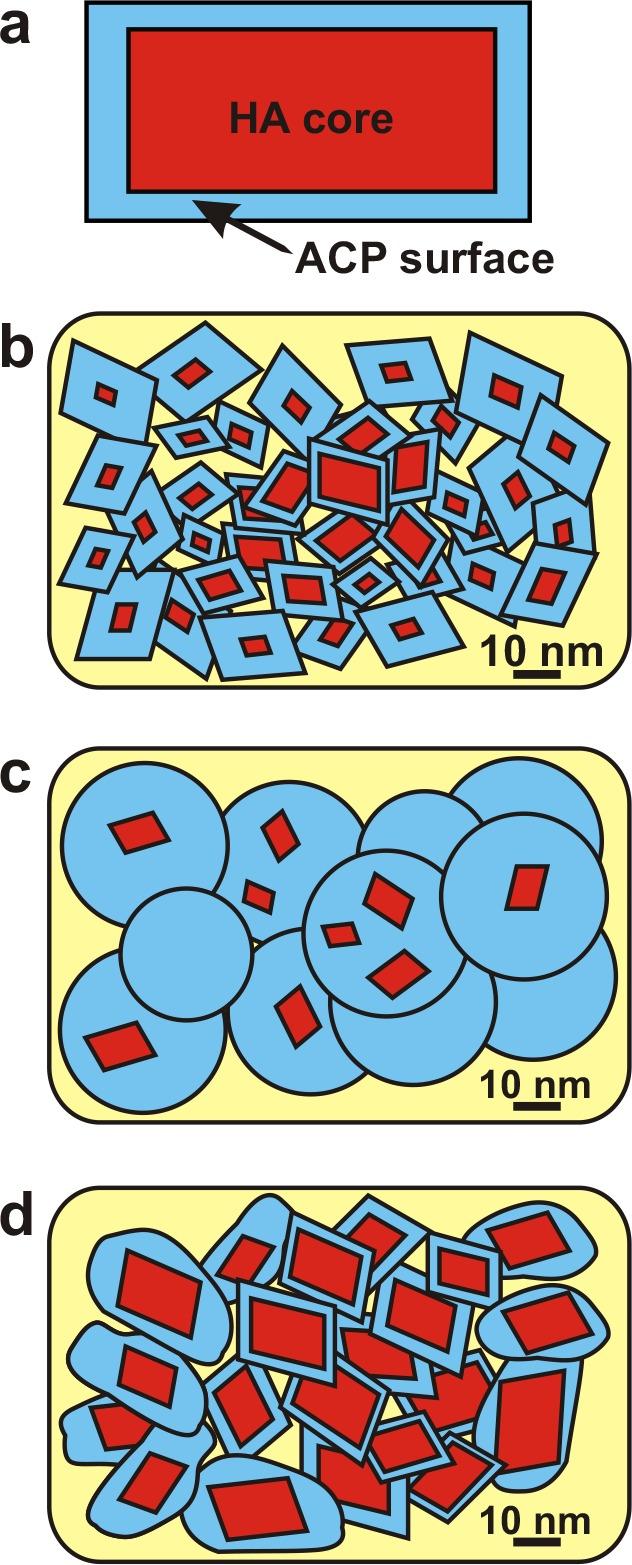
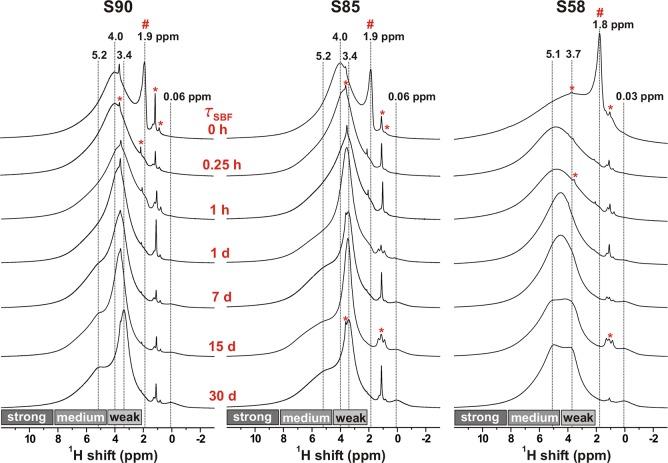
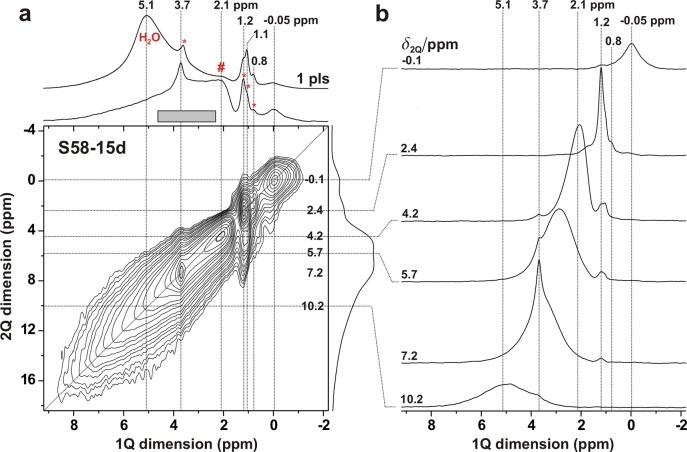
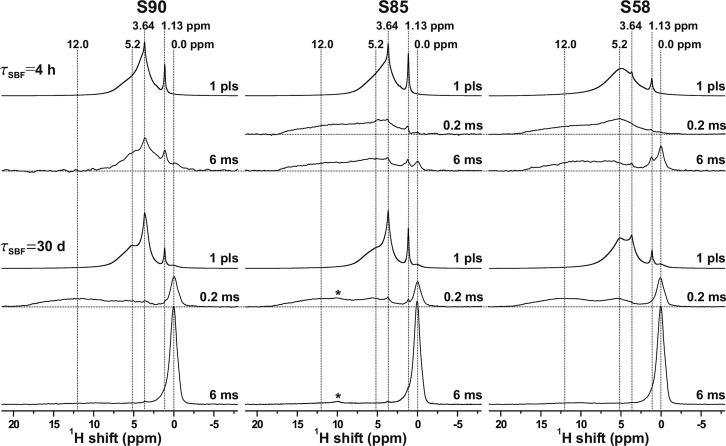
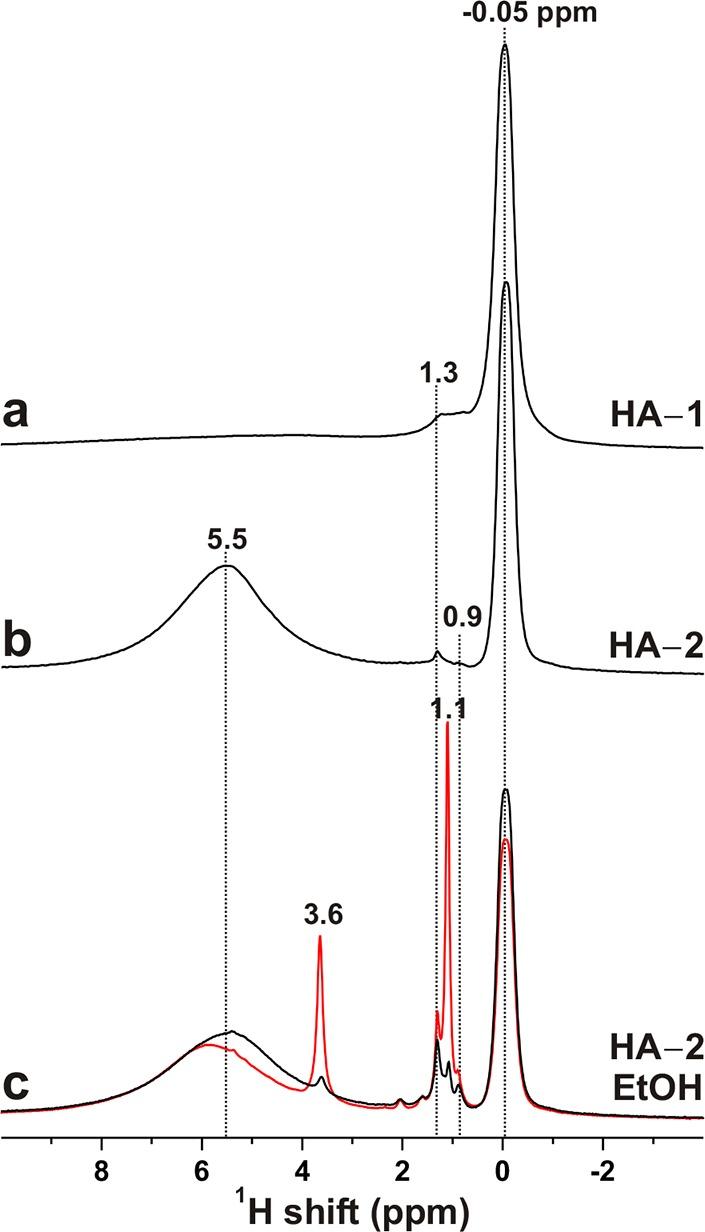
When exposed to body fluids, mesoporous bioactive glasses (MBGs) of the CaO-SiO-PO system develop a bone-bonding surface layer that initially consists of amorphous calcium phosphate (ACP), which transforms into hydroxy-carbonate apatite (HCA) with a very similar composition as bone/dentin mineral. Information from various H-based solid-state nuclear magnetic resonance (NMR) experiments was combined to elucidate the evolution of the proton speciations both at the MBG surface and within each ACP/HCA constituent of the biomimetic phosphate layer formed when each of three MBGs with distinct Ca, Si, and P contents was immersed in a simulated body fluid (SBF) for variable periods between 15 min and 30 days. Directly excited magic-angle-spinning (MAS) H NMR spectra mainly reflect the MBG component, whose surface is rich in water and silanol (SiOH) moieties. Double-quantum-single-quantum correlation H NMR experimentation at fast MAS revealed their interatomic proximities. The comparatively minor H species of each ACP and HCA component were probed selectively by heteronuclear H-P NMR experimentation. The initially prevailing ACP phase comprises HO and "nonapatitic" HPO/PO groups, whereas for prolonged MBG soaking over days, a well-progressed ACP → HCA transformation was evidenced by a dominating OH resonance from HCA. We show that H-detected H → P cross-polarization NMR is markedly more sensitive than utilizing powder X-ray diffraction or P NMR for detecting the onset of HCA formation, notably so for P-bearing (M)BGs. In relation to the long-standing controversy as to whether bone mineral comprises ACP and/or forms via an ACP precursor, we discuss a recently accepted structural core-shell picture of both synthetic and biological HCA, highlighting the close relationship between the disordered surface layer and ACP.
当暴露于体液中时,CaO-SiO-PO体系的介孔生物活性玻璃(MBG)会形成一个骨结合表面层,该表面层最初由无定形磷酸钙(ACP)组成,随后会转变为与骨/牙本质矿物质组成非常相似的羟基碳酸盐磷灰石(HCA)。结合各种基于氢的固态核磁共振(NMR)实验信息,以阐明当三种具有不同钙、硅和磷含量的MBG分别在模拟体液(SBF)中浸泡15分钟至30天的不同时间段时,MBG表面以及仿生磷酸盐层的每个ACP/HCA成分内质子形态的演变。直接激发的魔角旋转(MAS)氢核磁共振谱主要反映MBG成分,其表面富含水和硅醇(SiOH)基团。快速MAS下的双量子-单量子相关氢核磁共振实验揭示了它们的原子间接近程度。通过异核氢-磷核磁共振实验选择性地探测了每个ACP和HCA成分中相对较少的氢物种。最初占主导的ACP相包含HO和“非磷灰石”的HPO/PO基团,而对于MBG长时间浸泡数天的情况,从HCA产生的占主导的OH共振证明了ACP向HCA的良好转化。我们表明,氢检测的氢→磷交叉极化核磁共振在检测HCA形成的起始方面比利用粉末X射线衍射或磷核磁共振明显更灵敏,对于含磷(M)BGs尤其如此。关于骨矿物质是否包含ACP和/或是否通过ACP前体形成这一长期存在的争议,我们讨论了最近被接受的合成和生物HCA的结构核壳模型,强调了无序表面层与ACP之间的密切关系。


 Zotero 插件