
肠道中的钙和胆汁盐有助于艰难梭菌孢子的萌发。
Intestinal calcium and bile salts facilitate germination of Clostridium difficile spores.
作者信息
Kochan Travis J, Somers Madeline J, Kaiser Alyssa M, Shoshiev Michelle S, Hagan Ada K, Hastie Jessica L, Giordano Nicole P, Smith Ashley D, Schubert Alyxandria M, Carlson Paul E, Hanna Philip C
机构信息
University of Michigan Medical School, Department of Microbiology and Immunology. Ann Arbor, Michigan, United States of America.
Center for Biologics Evaluation and Research, US Food and Drug Administration. Silver Spring, Maryland, United States of America.
出版信息
PLoS Pathog. 2017 Jul 13;13(7):e1006443. doi: 10.1371/journal.ppat.1006443. eCollection 2017 Jul.
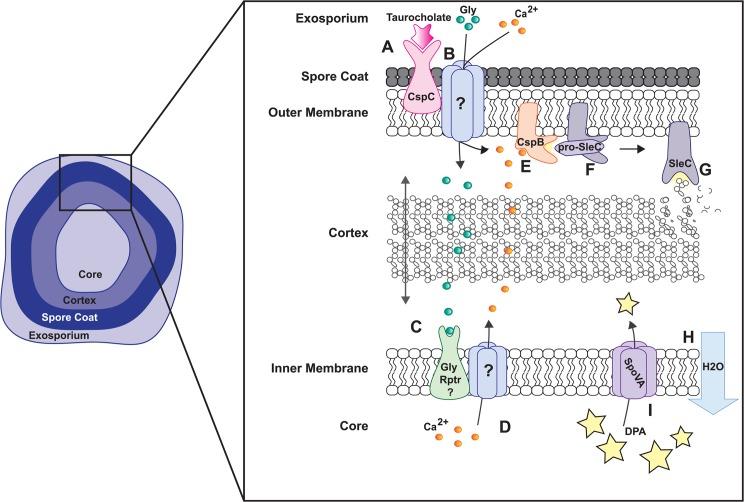
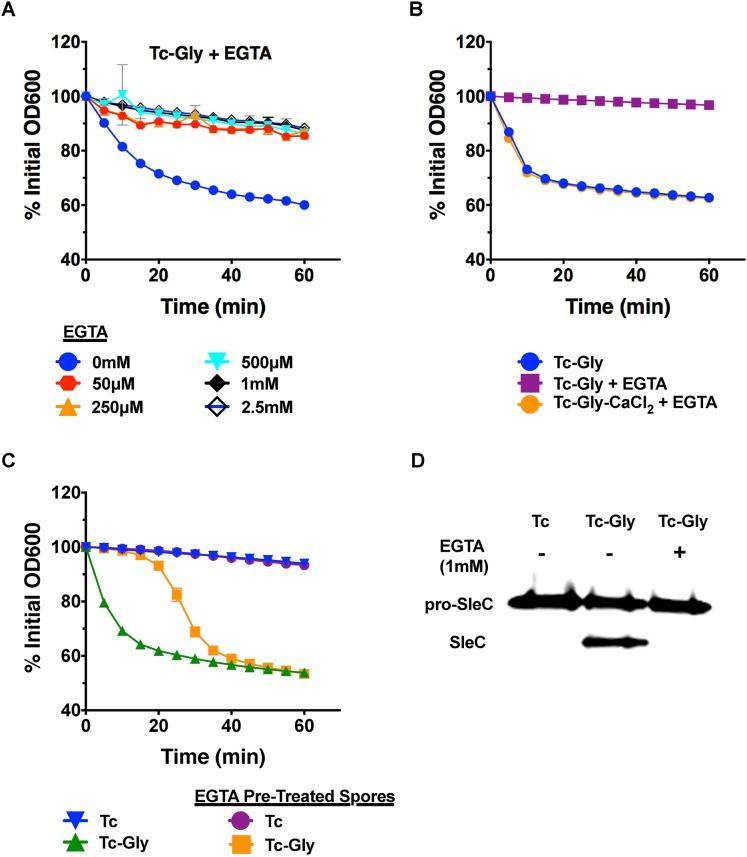
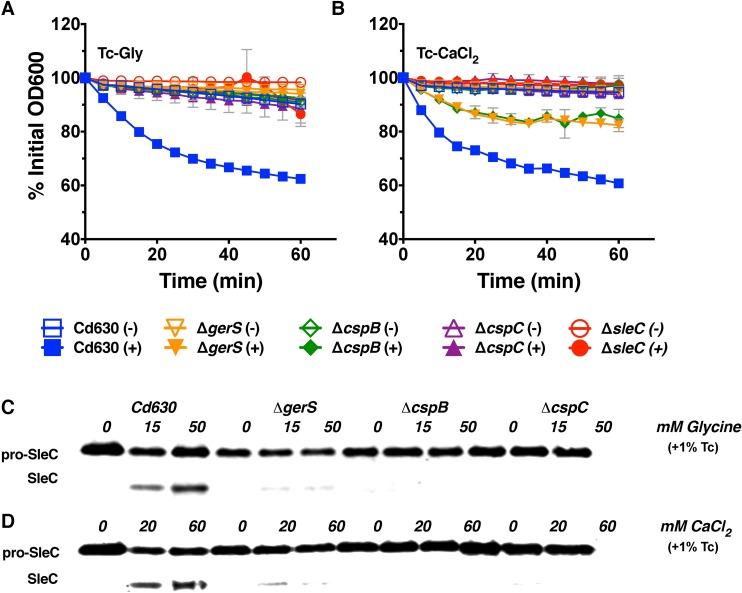
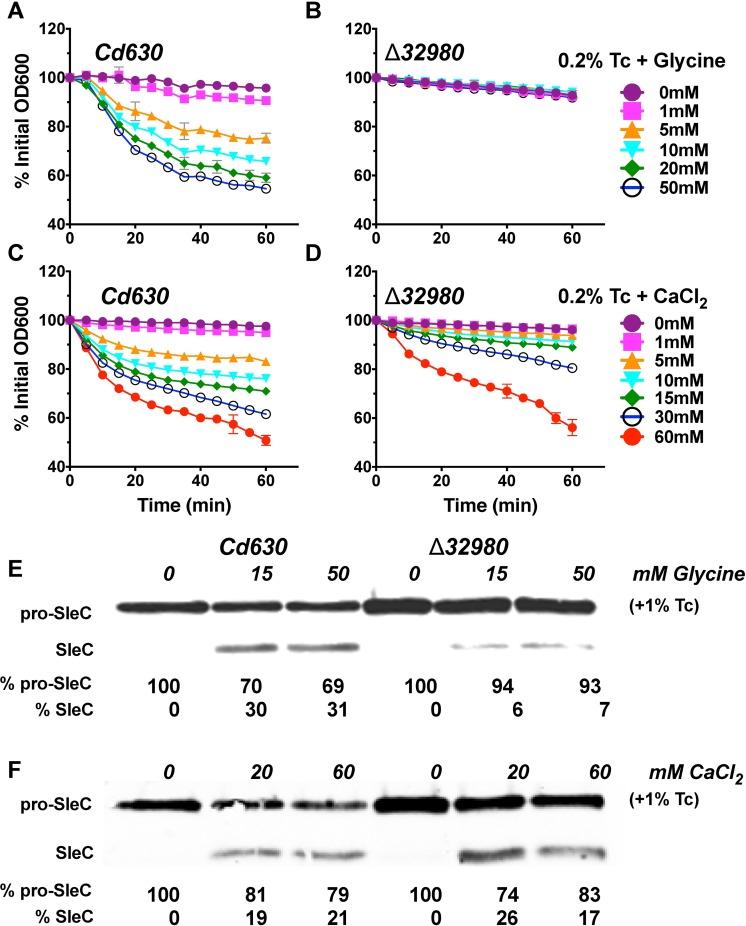
Clostridium difficile (C. difficile) is an anaerobic gram-positive pathogen that is the leading cause of nosocomial bacterial infection globally. C. difficile infection (CDI) typically occurs after ingestion of infectious spores by a patient that has been treated with broad-spectrum antibiotics. While CDI is a toxin-mediated disease, transmission and pathogenesis are dependent on the ability to produce viable spores. These spores must become metabolically active (germinate) in order to cause disease. C. difficile spore germination occurs when spores encounter bile salts and other co-germinants within the small intestine, however, the germination signaling cascade is unclear. Here we describe a signaling role for Ca2+ during C. difficile spore germination and provide direct evidence that intestinal Ca2+ coordinates with bile salts to stimulate germination. Endogenous Ca2+ (released from within the spore) and a putative AAA+ ATPase, encoded by Cd630_32980, are both essential for taurocholate-glycine induced germination in the absence of exogenous Ca2+. However, environmental Ca2+ replaces glycine as a co-germinant and circumvents the need for endogenous Ca2+ fluxes. Cd630_32980 is dispensable for colonization in a murine model of C. difficile infection and ex vivo germination in mouse ileal contents. Calcium-depletion of the ileal contents prevented mutant spore germination and reduced WT spore germination by 90%, indicating that Ca2+ present within the gastrointestinal tract plays a critical role in C. difficile germination, colonization, and pathogenesis. These data provide a biological mechanism that may explain why individuals with inefficient intestinal calcium absorption (e.g., vitamin D deficiency, proton pump inhibitor use) are more prone to CDI and suggest that modulating free intestinal calcium is a potential strategy to curb the incidence of CDI.
艰难梭菌是一种厌氧革兰氏阳性病原体,是全球医院内细菌感染的主要原因。艰难梭菌感染(CDI)通常发生在接受过广谱抗生素治疗的患者摄入感染性孢子之后。虽然CDI是一种毒素介导的疾病,但其传播和发病机制取决于产生活孢子的能力。这些孢子必须代谢活跃(萌发)才能致病。艰难梭菌孢子在小肠内遇到胆盐和其他共萌发剂时会发生萌发,然而,萌发信号级联尚不清楚。在这里,我们描述了Ca2+在艰难梭菌孢子萌发过程中的信号作用,并提供了直接证据表明肠道Ca2+与胆盐协同刺激萌发。内源性Ca2+(从孢子内部释放)和由Cd630_32980编码的一种假定的AAA+ATP酶,在没有外源Ca2+的情况下,对于牛磺胆酸盐-甘氨酸诱导的萌发都是必不可少的。然而,环境中的Ca2+取代甘氨酸作为共萌发剂,从而无需内源性Ca2+通量。Cd630_32980在艰难梭菌感染的小鼠模型定殖和小鼠回肠内容物的体外萌发中并非必需。回肠内容物的钙耗竭阻止了突变体孢子萌发,并使野生型孢子萌发减少了90%,这表明胃肠道中存在的Ca2+在艰难梭菌的萌发、定殖和发病机制中起关键作用。这些数据提供了一种生物学机制,可能解释了为什么肠道钙吸收效率低下的个体(如维生素D缺乏、使用质子泵抑制剂)更容易发生CDI,并表明调节肠道游离钙是控制CDI发病率的一种潜在策略。


 Zotero 插件