
整合通量测量以解析心肌细胞合成代谢和分解代谢的变化。
Integration of flux measurements to resolve changes in anabolic and catabolic metabolism in cardiac myocytes.
作者信息
Gibb Andrew A, Lorkiewicz Pawel K, Zheng Yu-Ting, Zhang Xiang, Bhatnagar Aruni, Jones Steven P, Hill Bradford G
机构信息
Institute of Molecular Cardiology, University of Louisville, Louisville, KY 40202, U.S.A.
Diabetes and Obesity Center, University of Louisville, Louisville, KY 40202, U.S.A.
出版信息
Biochem J. 2017 Aug 7;474(16):2785-2801. doi: 10.1042/BCJ20170474.
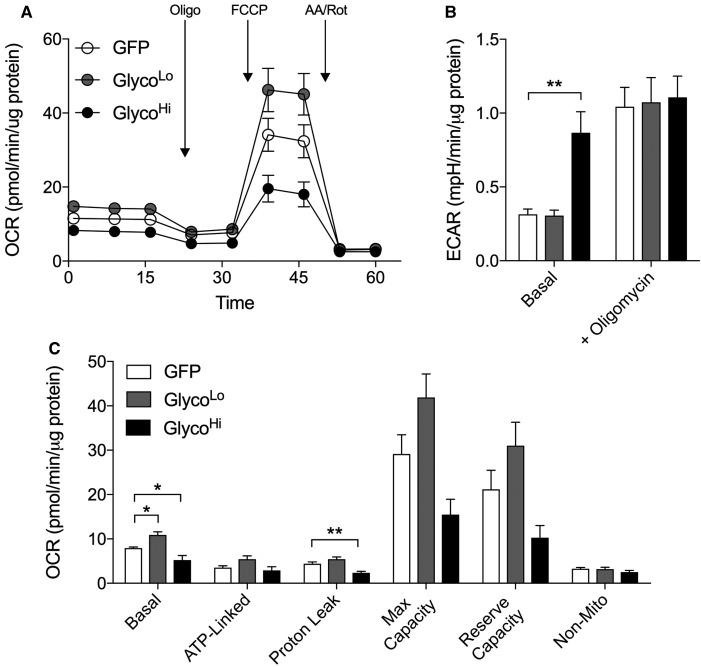
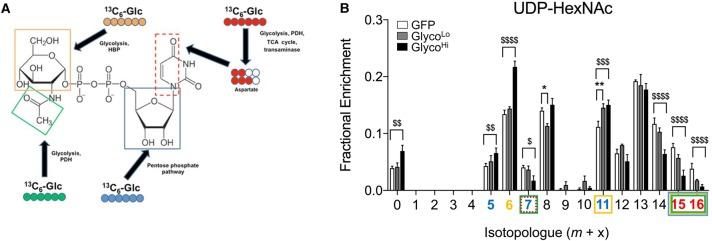
Although ancillary pathways of glucose metabolism are critical for synthesizing cellular building blocks and modulating stress responses, how they are regulated remains unclear. In the present study, we used radiometric glycolysis assays, [C]-glucose isotope tracing, and extracellular flux analysis to understand how phosphofructokinase (PFK)-mediated changes in glycolysis regulate glucose carbon partitioning into catabolic and anabolic pathways. Expression of kinase-deficient or phosphatase-deficient 6-phosphofructo-2-kinase/fructose-2,6-bisphosphatase in rat neonatal cardiomyocytes co-ordinately regulated glycolytic rate and lactate production. Nevertheless, in all groups, >40% of glucose consumed by the cells was unaccounted for via catabolism to pyruvate, which suggests entry of glucose carbons into ancillary pathways branching from metabolites formed in the preparatory phase of glycolysis. Analysis of C fractional enrichment patterns suggests that PFK activity regulates glucose carbon incorporation directly into the ribose and the glycerol moieties of purines and phospholipids, respectively. Pyrimidines, UDP--acetylhexosamine, and the fatty acyl chains of phosphatidylinositol and triglycerides showed lower C incorporation under conditions of high PFK activity; the isotopologue C enrichment pattern of each metabolite indicated limitations in mitochondria-engendered aspartate, acetyl CoA and fatty acids. Consistent with this notion, high glycolytic rate diminished mitochondrial activity and the coupling of glycolysis to glucose oxidation. These findings suggest that a major portion of intracellular glucose in cardiac myocytes is apportioned for ancillary biosynthetic reactions and that PFK co-ordinates the activities of the pentose phosphate, hexosamine biosynthetic, and glycerolipid synthesis pathways by directly modulating glycolytic intermediate entry into auxiliary glucose metabolism pathways and by indirectly regulating mitochondrial cataplerosis.
尽管葡萄糖代谢的辅助途径对于合成细胞组成成分和调节应激反应至关重要,但其调控方式仍不清楚。在本研究中,我们使用放射性糖酵解测定、[C] -葡萄糖同位素示踪和细胞外通量分析,以了解磷酸果糖激酶(PFK)介导的糖酵解变化如何调节葡萄糖碳分配到分解代谢和合成代谢途径中。在大鼠新生心肌细胞中表达激酶缺陷型或磷酸酶缺陷型6 -磷酸果糖 - 2 -激酶/果糖 - 2,6 -二磷酸酶可协调调节糖酵解速率和乳酸生成。然而,在所有组中,细胞消耗的葡萄糖中有超过40%无法通过分解代谢为丙酮酸来解释,这表明葡萄糖碳进入了从糖酵解准备阶段形成的代谢产物分支出来的辅助途径。对C分数富集模式的分析表明,PFK活性分别直接调节葡萄糖碳掺入嘌呤和磷脂的核糖及甘油部分。嘧啶、UDP - N -乙酰己糖胺以及磷脂酰肌醇和甘油三酯的脂肪酰链在高PFK活性条件下显示出较低的C掺入;每种代谢产物的同位素异构体C富集模式表明线粒体产生的天冬氨酸、乙酰辅酶A和脂肪酸存在限制。与此观点一致,高糖酵解速率降低了线粒体活性以及糖酵解与葡萄糖氧化的偶联。这些发现表明,心肌细胞内的大部分葡萄糖被分配用于辅助生物合成反应,并且PFK通过直接调节糖酵解中间产物进入辅助葡萄糖代谢途径以及间接调节线粒体物质外流来协调磷酸戊糖、己糖胺生物合成和甘油脂质合成途径的活性。



 Zotero 插件