
2002年至2012年芬兰青春期女孩接种人乳头瘤病毒(HPV)疫苗之前,格林-巴利综合征(GBS)、慢性疲劳/全身性劳力不耐受疾病(CFS/SEID)以及体位性直立性心动过速综合征(POTS)的发病率。
Incidence rates of Guillain Barré (GBS), chronic fatigue/systemic exertion intolerance disease (CFS/SEID) and postural orthostatic tachycardia syndrome (POTS) prior to introduction of human papilloma virus (HPV) vaccination among adolescent girls in Finland, 2002-2012.
作者信息
Skufca J, Ollgren J, Ruokokoski E, Lyytikäinen O, Nohynek H
机构信息
Department of Infectious Diseases, National Institute for Health and Welfare (THL), Helsinki, Finland; European Programme for Intervention Epidemiology Training (EPIET), European Centre for Disease Prevention and Control (ECDC), Stockholm, Sweden.
Department of Infectious Diseases, National Institute for Health and Welfare (THL), Helsinki, Finland.
出版信息
Papillomavirus Res. 2017 Jun;3:91-96. doi: 10.1016/j.pvr.2017.03.001. Epub 2017 Mar 16.
BACKGROUND
In Finland a vaccination programme against human papillomavirus (HPV) was introduced in November 2013 for girls aged 11-12 years with a catchup for girls 13-15 years. Allegations that HPV vaccine is causing Guillain Barré syndrome (GBS) and non-specific diagnostic entities, such as chronic fatigue syndrome/systemic exertion intolerance disease (CFS/SEID) and postural orthostatic tachycardia syndrome (POTS), continue to surface. We examined population register-based incidence rates of CFS/SEID, GBS and POTS to provide baseline data for future HPV vaccine safety evaluations.
METHODS
First diagnosis of CFS/SEID, GBS and POTS in girls aged 11-15 years were obtained from the National Hospital Discharge Register during 2002-2012. We considered the following ICD-10 codes: G93.3 for CFS; G61.0 for GBS and G90.9, G90.8, G93.3, I49.8 for POTS. We calculated incidence rates per 100,000 person-years with 95% confidence intervals (CI).
RESULTS
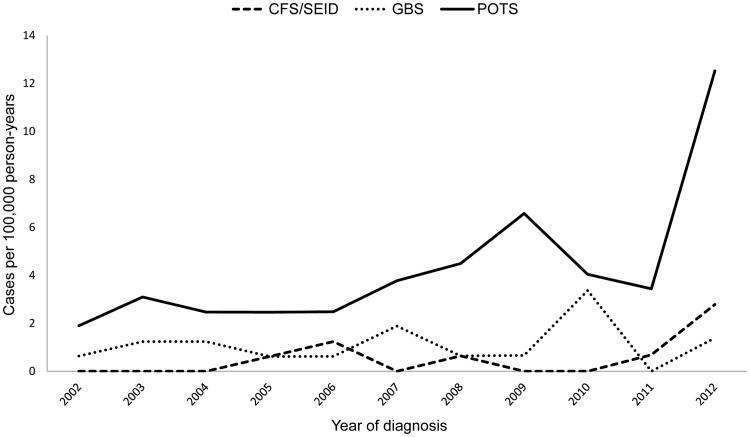
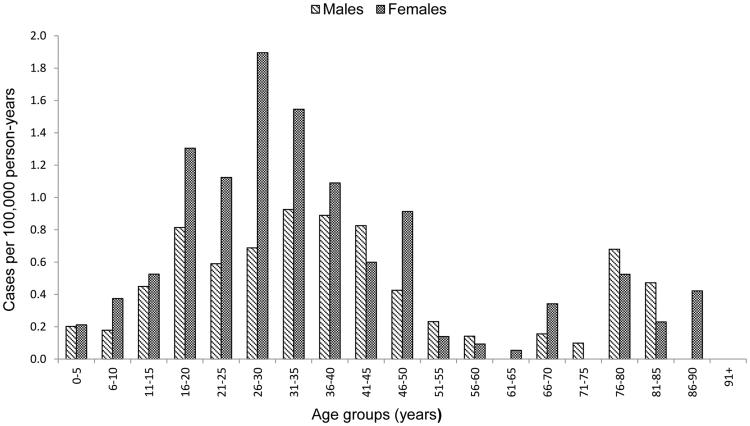
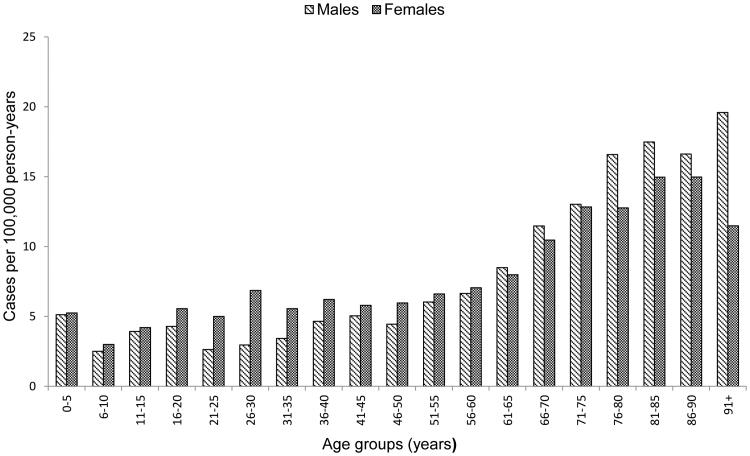
In total, 9 CFS/SEID, 19 GBS and 72 POTS cases were identified. The overall incidence rate was 0.53/100,000 (95% CI; 0.27-1.01) for CFS/SEID, 1.11 (95% CI; 0.71-1.74) for GBS and 4.21 (95%CI; 3.34-5.30) for POTS. Significant relative increase in annual incidence rate with a peak in 2012 was observed in CFS/SEID (33% (95% CI; 3.0-70.3: p=0.029) and POTS (16.5% (95% CI; 7.8-25.9: p<0.05), but not in GBS (5.4% (95% CI; -8.4-21.3: p=0.460).
CONCLUSIONS
Our findings provide baseline estimates of CFS/SEID, GBS and POTS incidences in Finland. However, rates based on register data should be interpreted with caution, especially for non-specific diagnostic entities for which internationally and even nationally agreed criteria are still being discussed. To assess the associations with HPV vaccine, methods using register linkage for cohort and self-controlled case series should be explored in addition to factors contributing to patients seeking care, treating physicians setting the diagnoses, and their preference of using of codes for these clinical entities.
背景
2013年11月,芬兰针对11至12岁女孩推行了人乳头瘤病毒(HPV)疫苗接种计划,13至15岁女孩可补种。有关HPV疫苗会引发吉兰-巴雷综合征(GBS)以及慢性疲劳综合征/全身性劳力不耐受疾病(CFS/SEID)和体位性直立性心动过速综合征(POTS)等非特异性诊断疾病的说法不断出现。我们调查了基于人群登记的CFS/SEID、GBS和POTS发病率,为未来HPV疫苗安全性评估提供基线数据。
方法
从国家医院出院登记处获取2002年至2012年期间11至15岁女孩首次诊断为CFS/SEID、GBS和POTS的信息。我们考虑了以下国际疾病分类第十版(ICD-10)编码:CFS为G93.3;GBS为G61.0;POTS为G90.9、G90.8、G93.3、I49.8。我们计算了每10万人年的发病率及95%置信区间(CI)。
结果
共识别出9例CFS/SEID、19例GBS和72例POTS病例。CFS/SEID的总体发病率为0.53/10万(95%CI;0.27 - 1.01),GBS为1.11(95%CI;0.71 - 1.74),POTS为4.21(95%CI;3.34 - 5.30)。观察到CFS/SEID(33%(95%CI;3.0 - 70.3:p = 0.029))和POTS(16.5%(95%CI;7.8 - 25.9:p < 0.05))的年发病率有显著相对增加,2012年达到峰值,但GBS(5.4%(95%CI; - 8.4 - 21.3:p = 0.460))没有。
结论
我们的研究结果提供了芬兰CFS/SEID、GBS和POTS发病率的基线估计。然而,基于登记数据的发病率应谨慎解读,尤其是对于仍在国际甚至国内讨论统一标准的非特异性诊断疾病。为评估与HPV疫苗的关联,除了考虑促使患者就医、治疗医生做出诊断以及他们对这些临床疾病编码使用偏好等因素外,还应探索使用队列登记链接和自我对照病例系列的方法。


 Zotero 插件